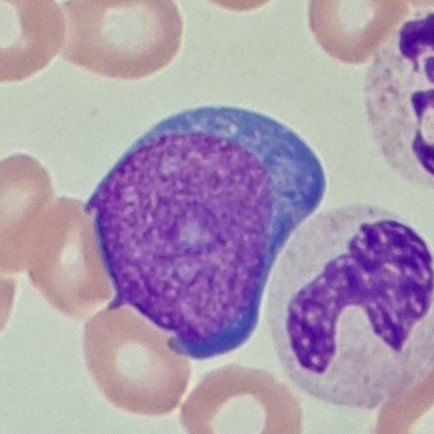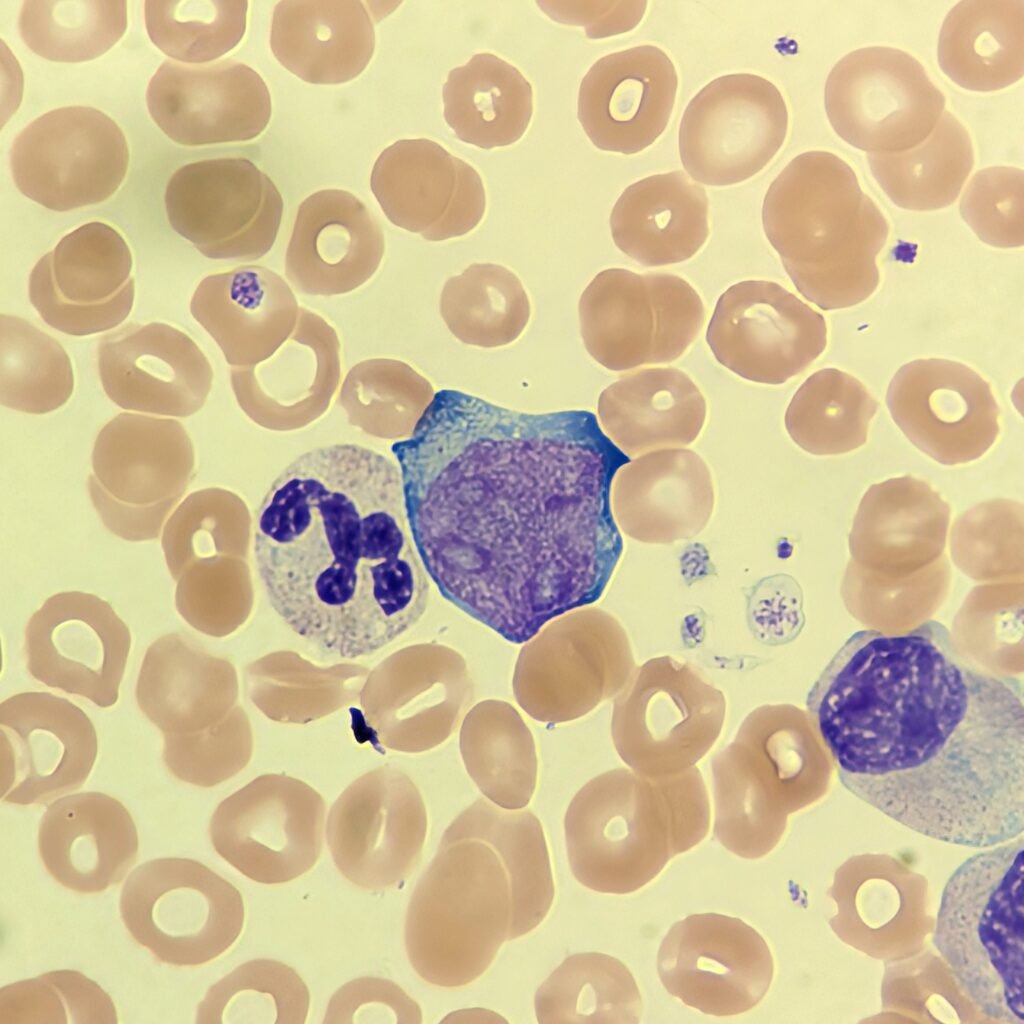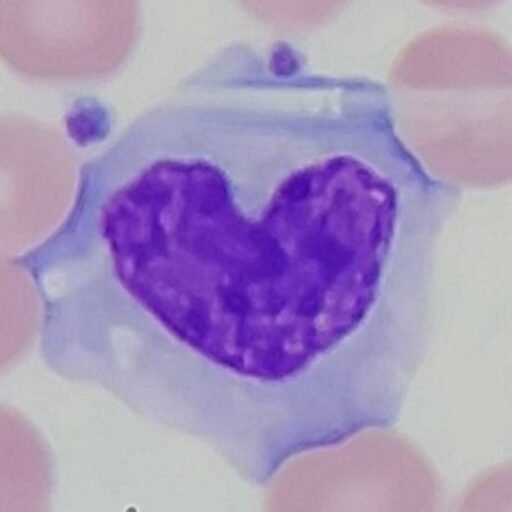
Small Resting Lymphs
Small with scant dark blue cytoplasm. The nucleus is about the size of an RBC with dark and clumpy chromatin.
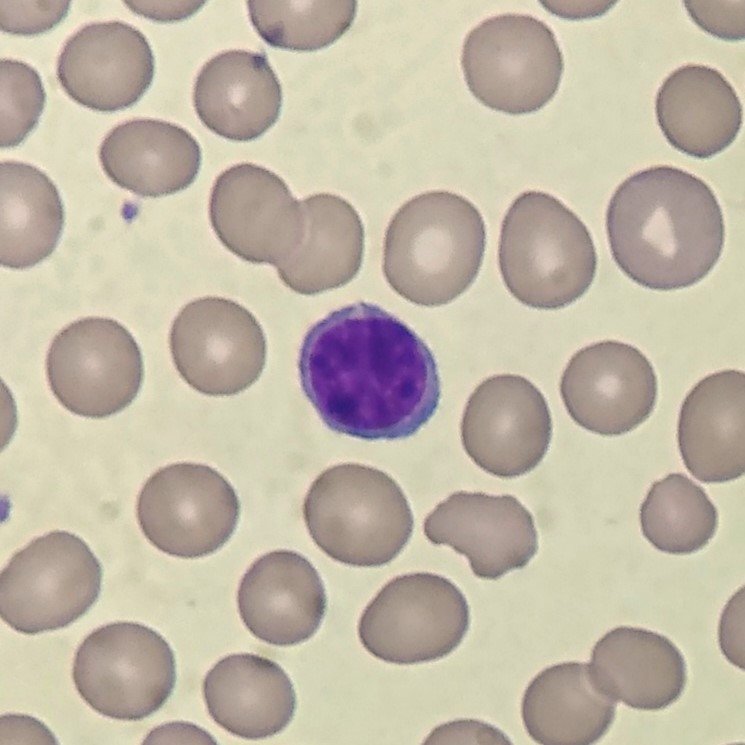
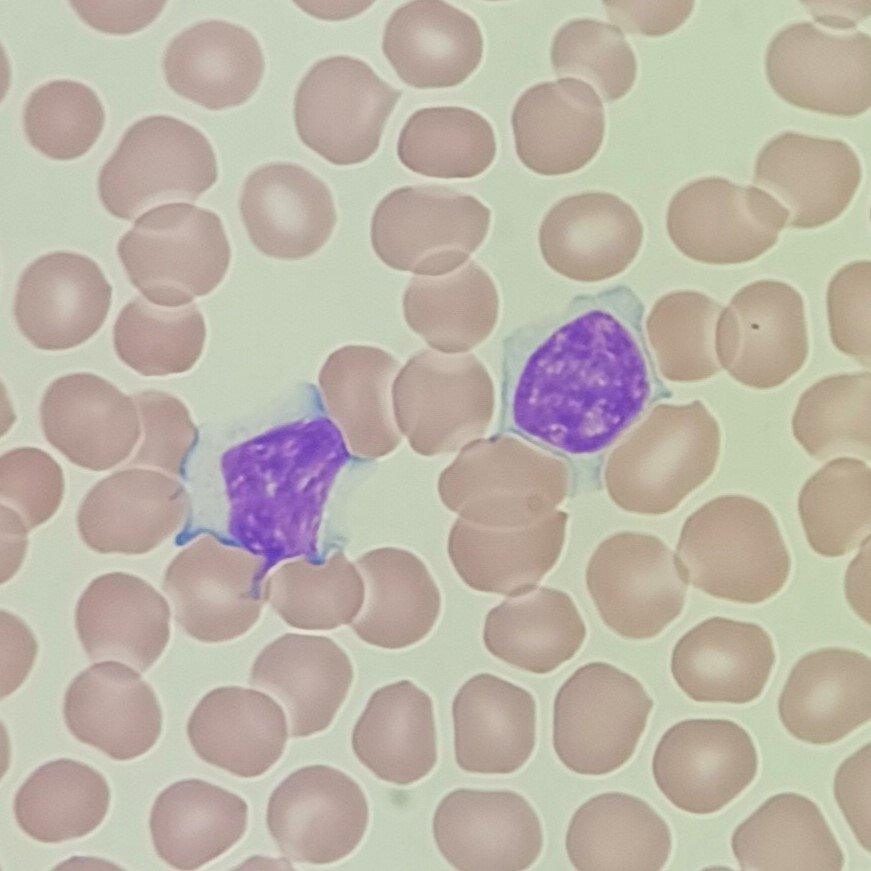
Activated Lymphs
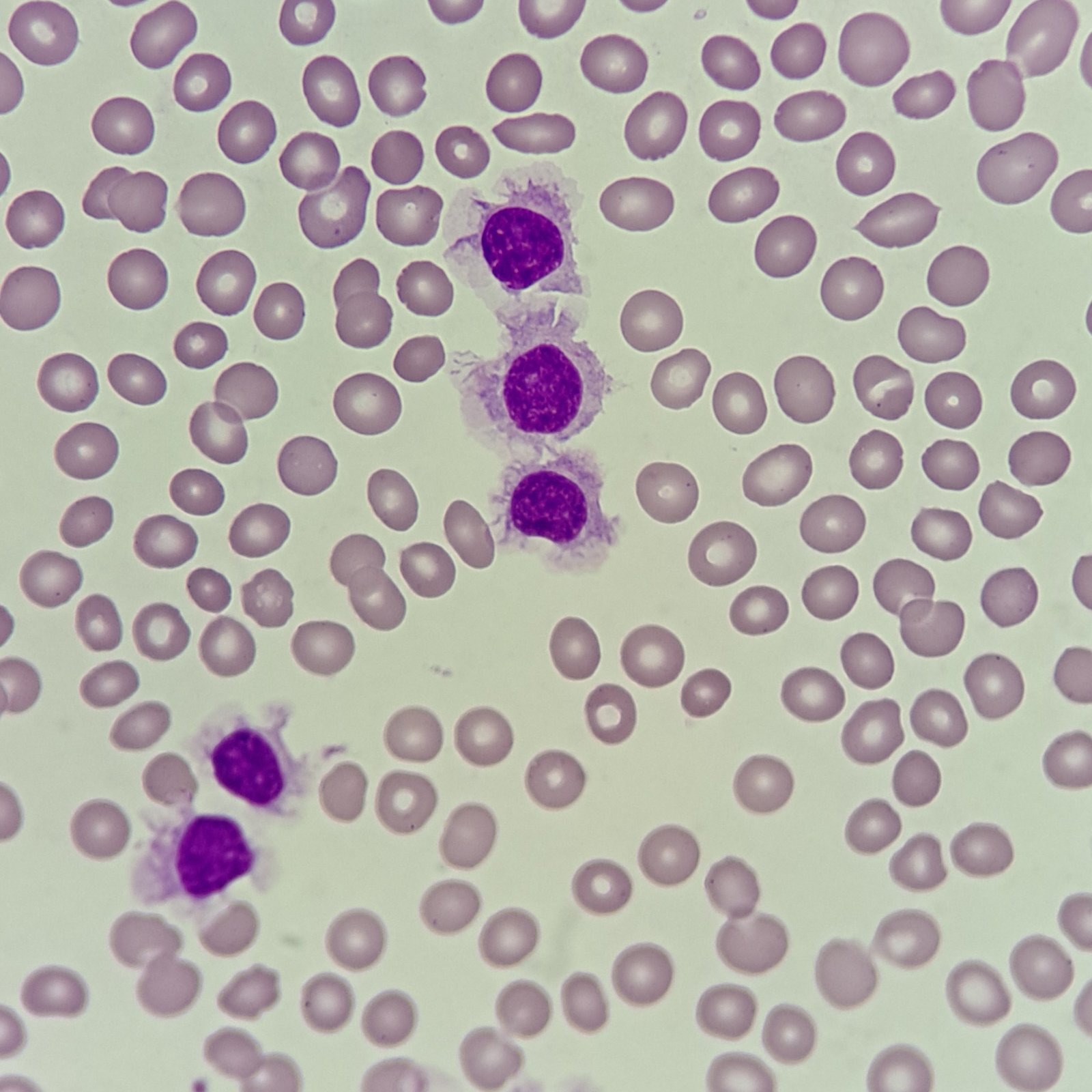
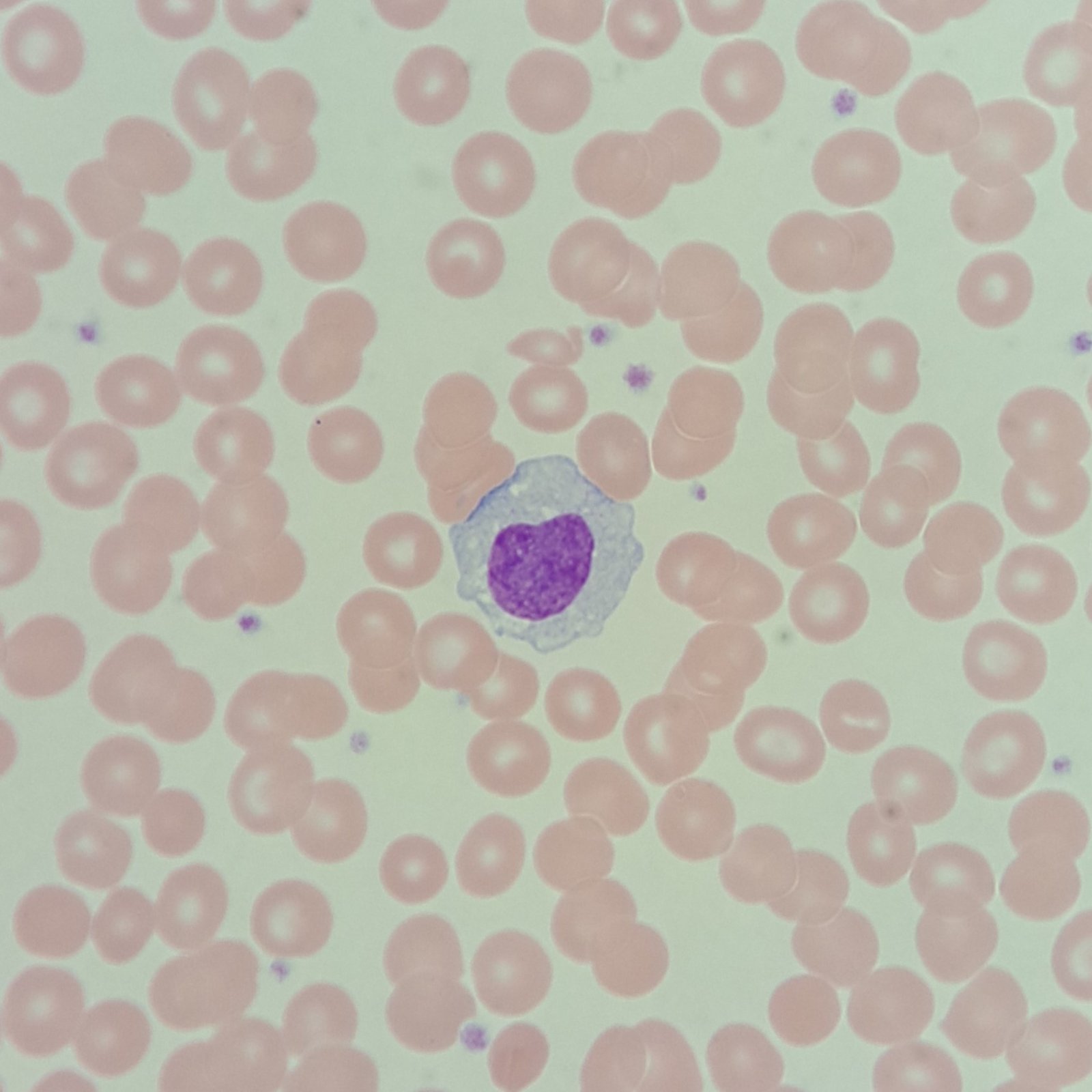
Typically activated effector T cells. Cytoplasm is indented by RBCs. Cytoplasm is more abundant than seen in resting lymphs. Edge of cytoplasm is more basophilic. Chromatin is also looser.
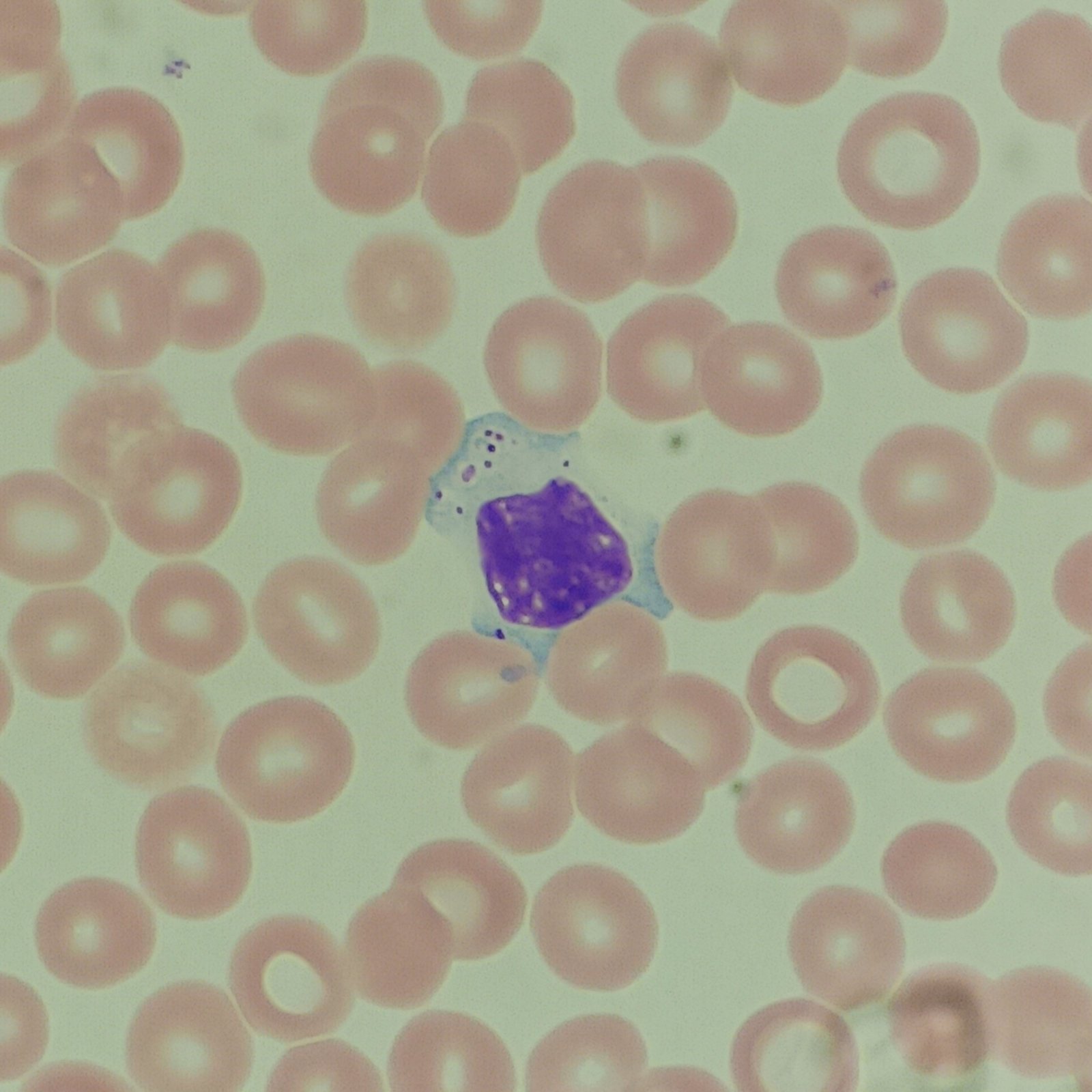
Large Granular Lymphs
Cytotoxic (CD8+) T cells or NK cells. Cytoplasm is more abundant than resting lymphs and less basophilic.
Contains few azurophilic granules.
Plasma Cells
Effector B Cells capable of producing antibodies. Deeply basophilic cytoplasm with eccentrically-placed nucleus. Perinuclear hof.

Mott Cells
Mott cells are plasma cells that produce excess amounts of with immunoglobulin inclusions known as Russell Bodies filling the cytoplasm.
Can be seen in response to infection or in patients with multiple myeloma.

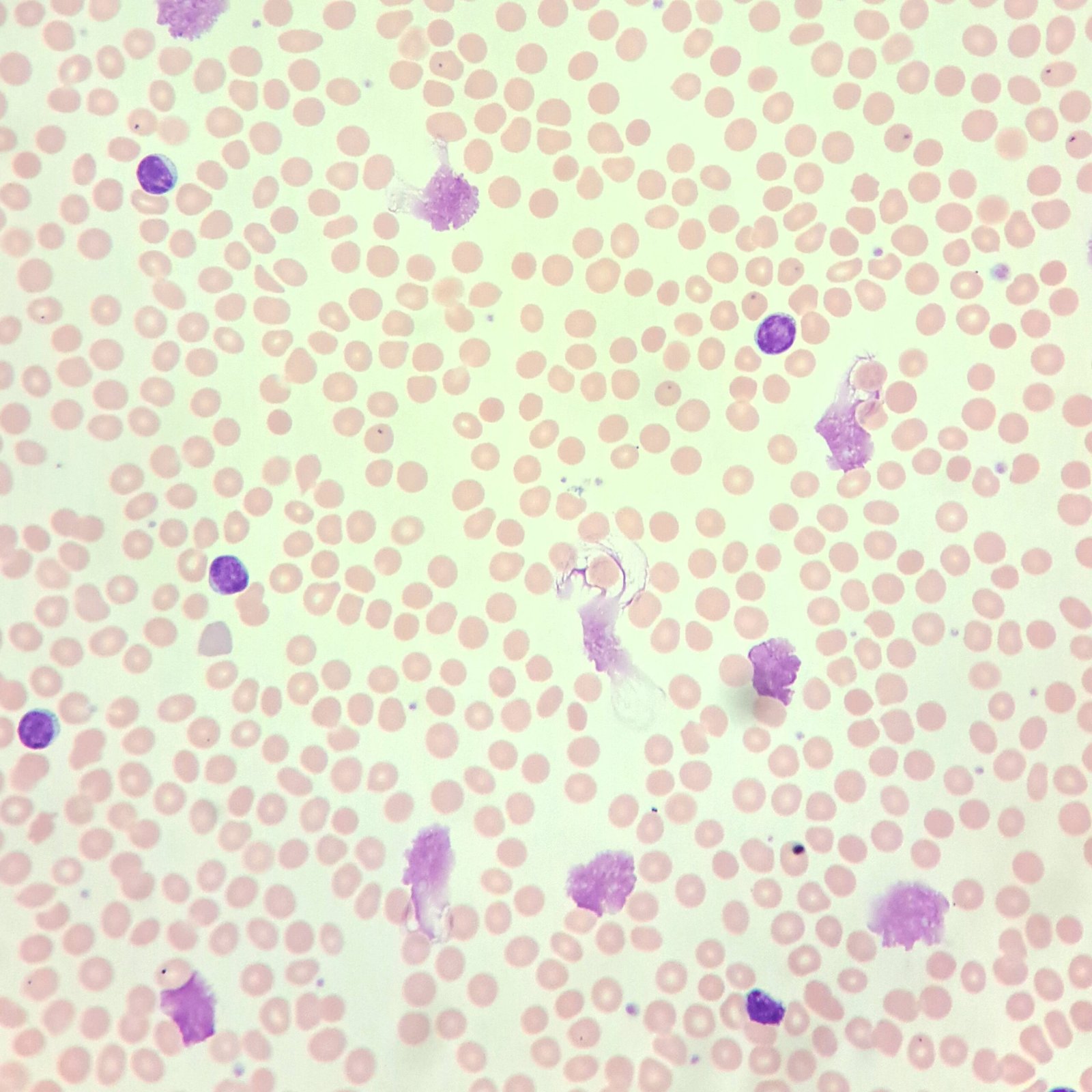
Smudge Cells
Smudge cells (AKA basket cells) are the nuclear remnants of leukocytes destroyed by the slide-making process. A few in normal blood may be artifactual. When accompanied by lymphocytosis however, smudge cells may indicate chronic lymphocytic leukemia, as the abnormal lymphocytes have increased fragility.
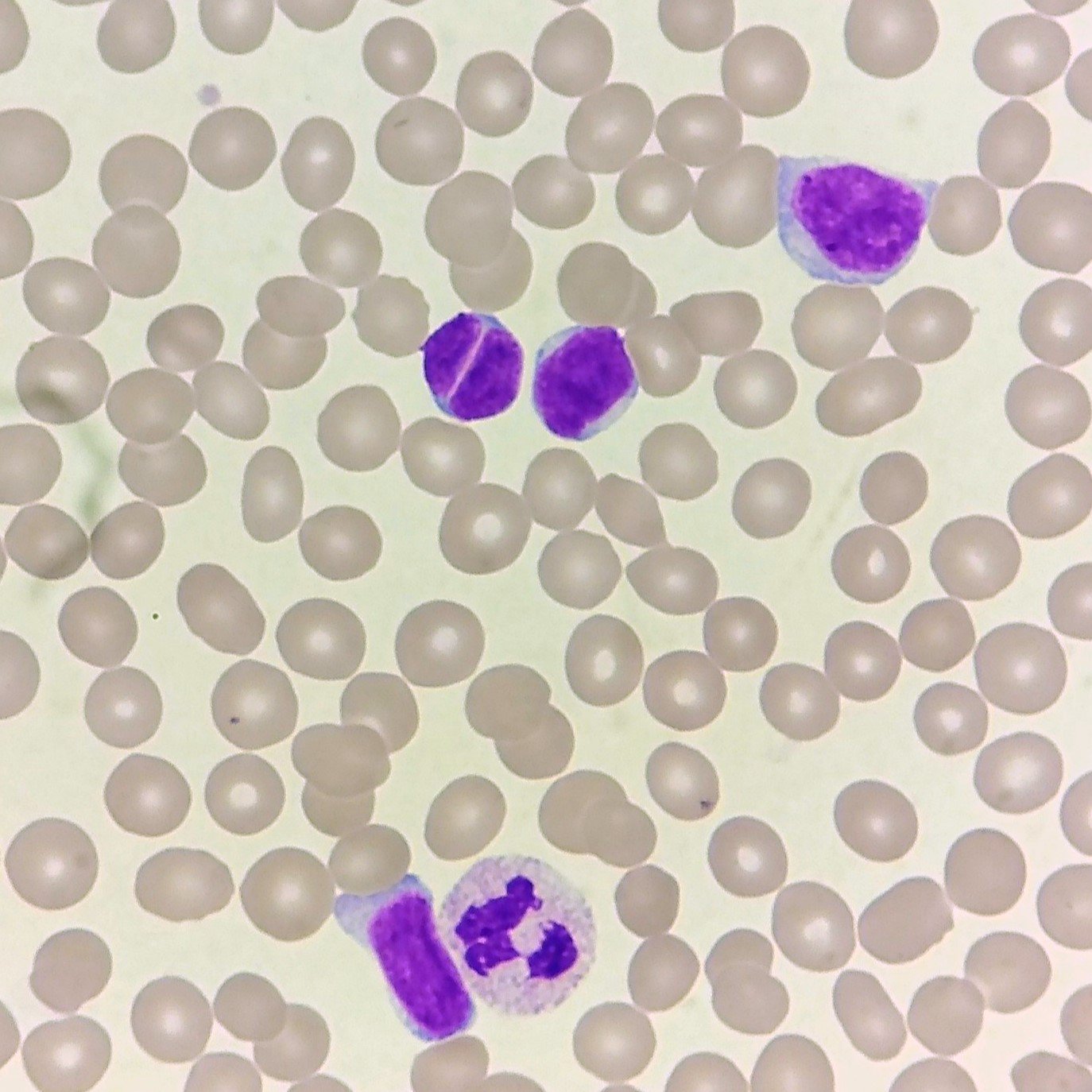
Cleaved Lymph (Butt Cells)
Nucleus of lymphocyte is indented, or cleaved. Seen in Chronic Lymphocytic Leukemia, Pertussis (whooping cough), or lymphoma.
Hairy Cell
Cytoplasm has hair-like projections. Seen in hairy cell leukemia. Usually accompanied by pancytopenia.