
A urinalysis is ordered on a cloudy urine with a pH of 8.0. All other values on the urine chemistry are completely normal. Heating did nothing to clear the specimen.
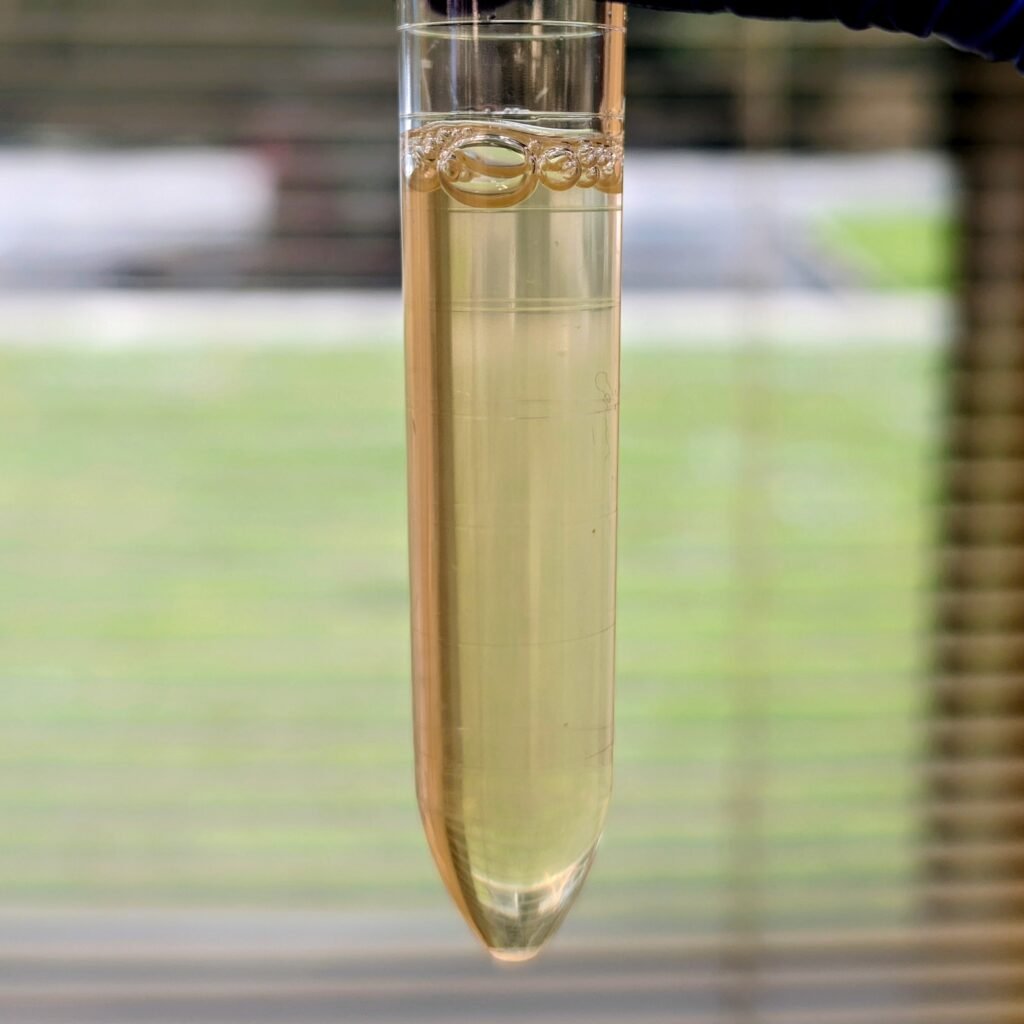
After spinning the urine sample, a layer of white sediment can be seen at the bottom.
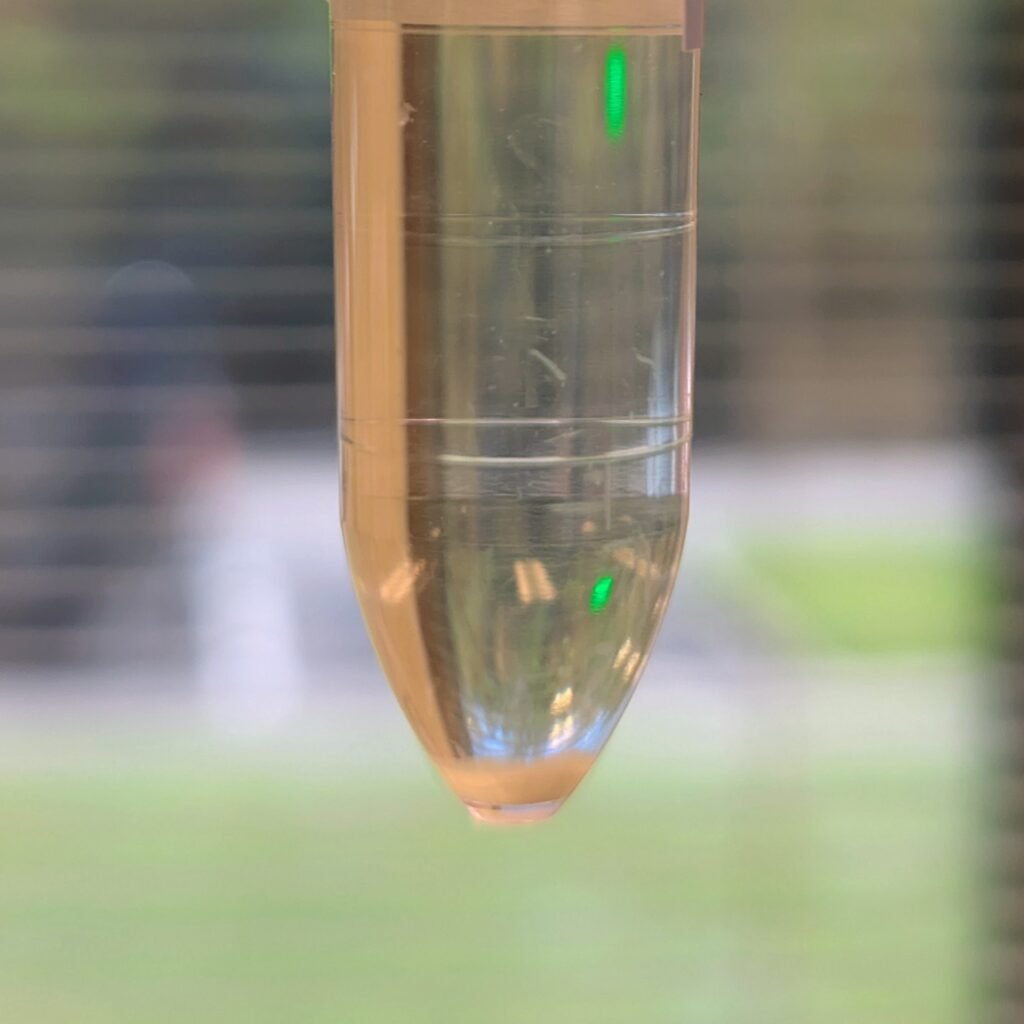
This sediment is filled with small granules. The brownian movement of these granules can be easily confused for bacteria or hide the presence of it.
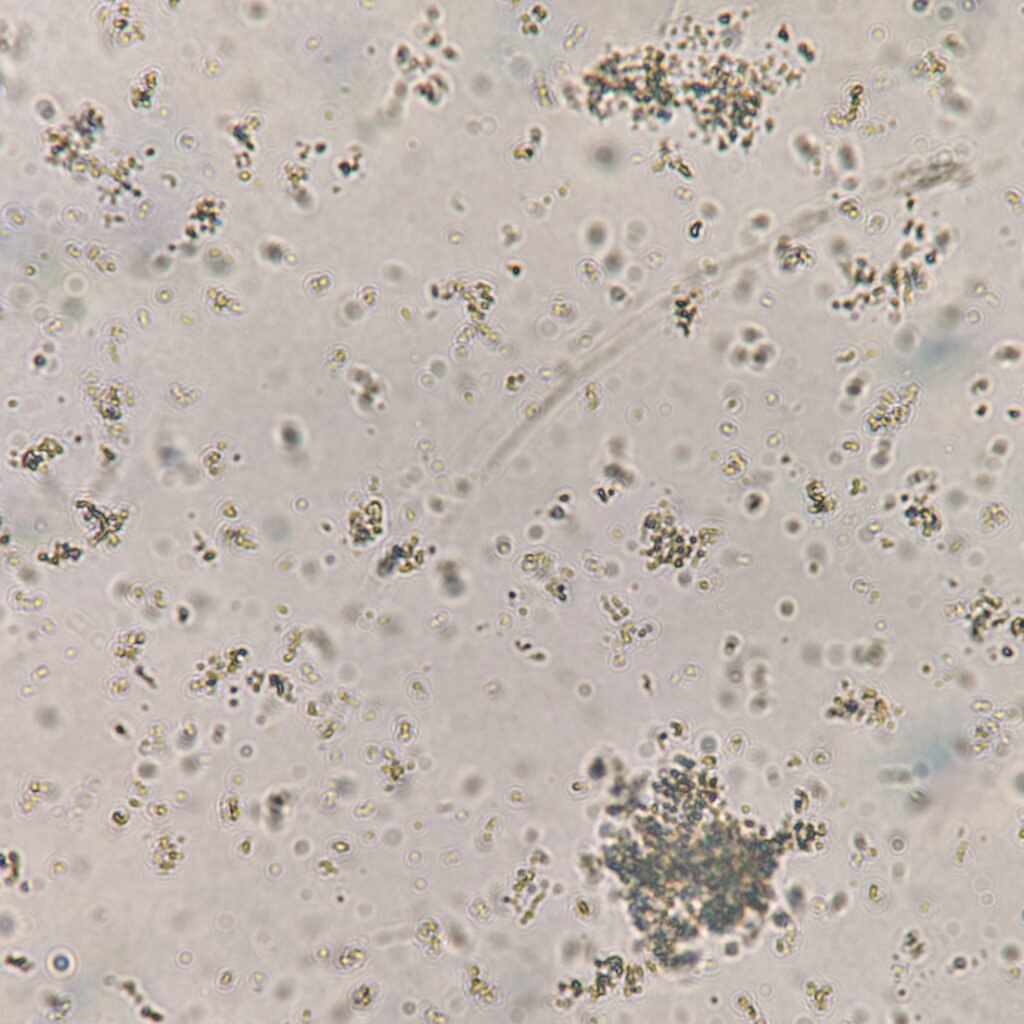
With the alkaline pH, these small granules are most likely amorphous phosphates. These crystals dissolve in dilute acetic acid.
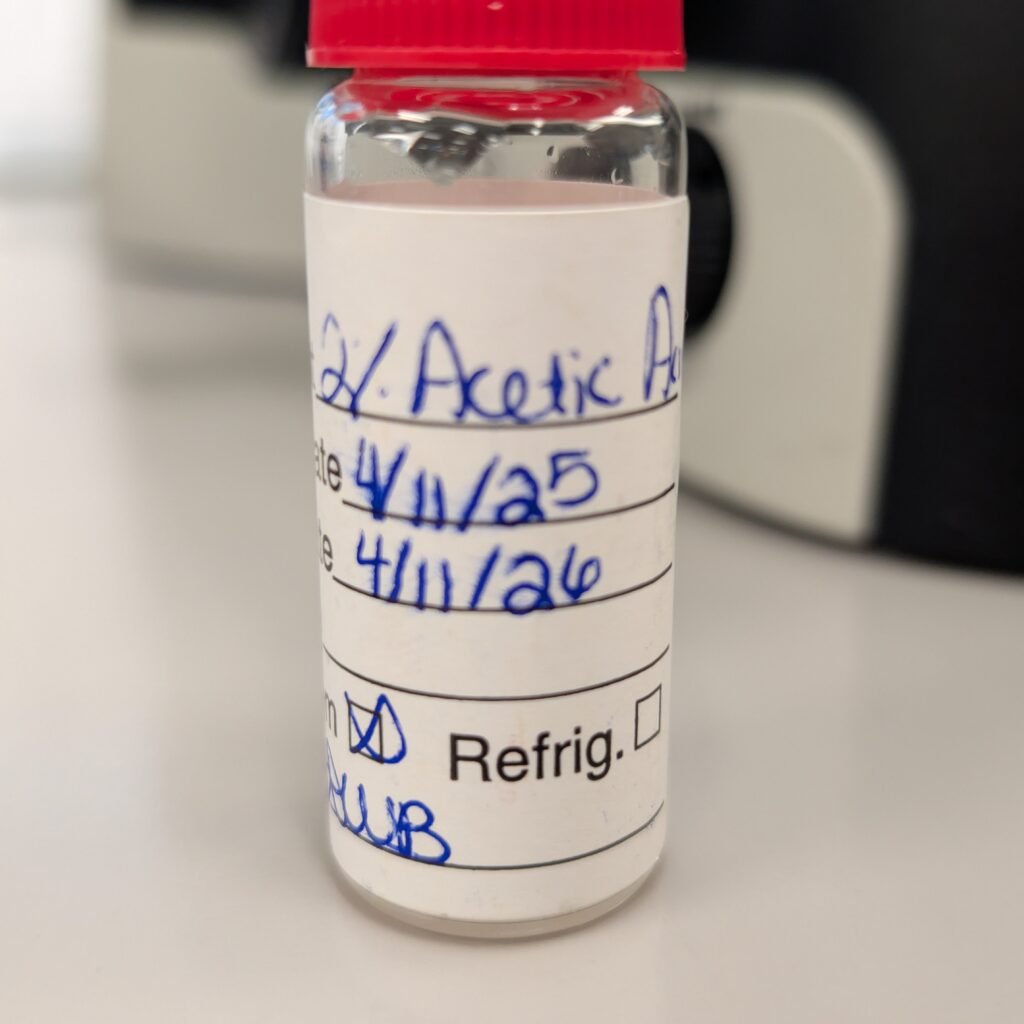
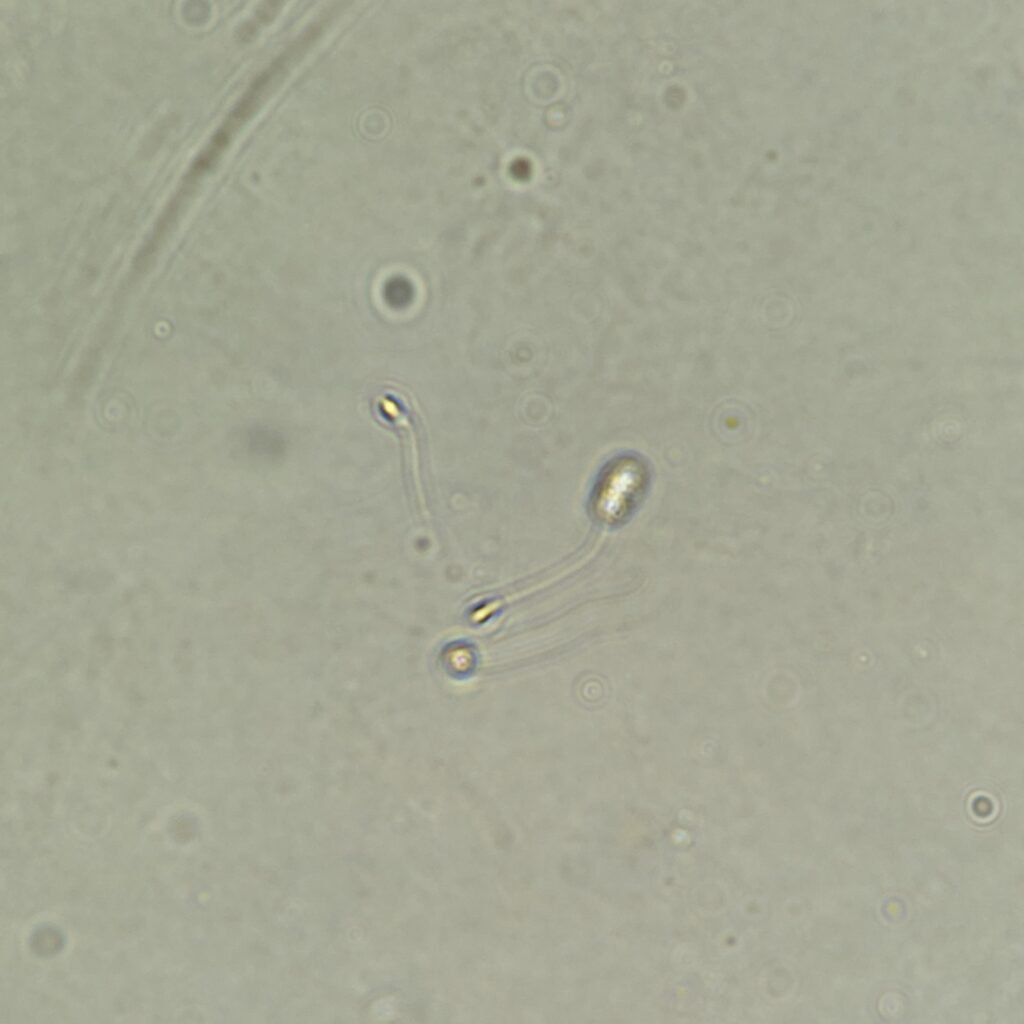
With the addition of dilute acetic acid to an aliquot of urine, the amorphous phosphate dissolve. Occasional bacteria can be noted as well as spermatozoa that was previously occluded by the crystals.