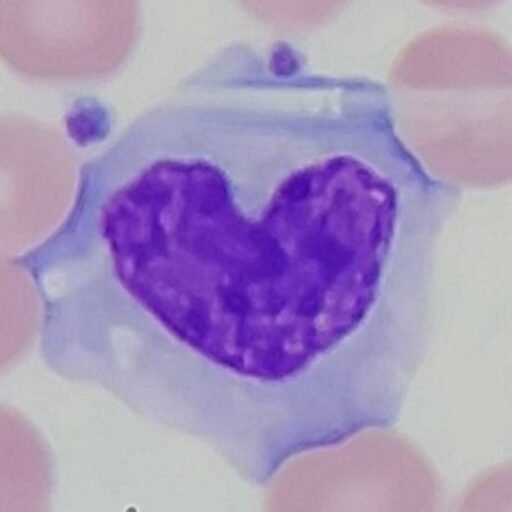
Malaria is a mosquito-borne disease caused by the Plasmodium parasite. There are five different species of plasmodium that can cause malaria in humans: P. falciparum, P. malariae, P. ovale, P. vivax, and P. knowlesi. Most cases of malaria in the United States are caused by recent travel to endemic locations.
For more information on the different species of plasmodium and detailed descriptions of appearance for each stage, see this article on Malaria in the National Library of Medicine.
P. falciparum
P. falciparum is endemic to Africa.
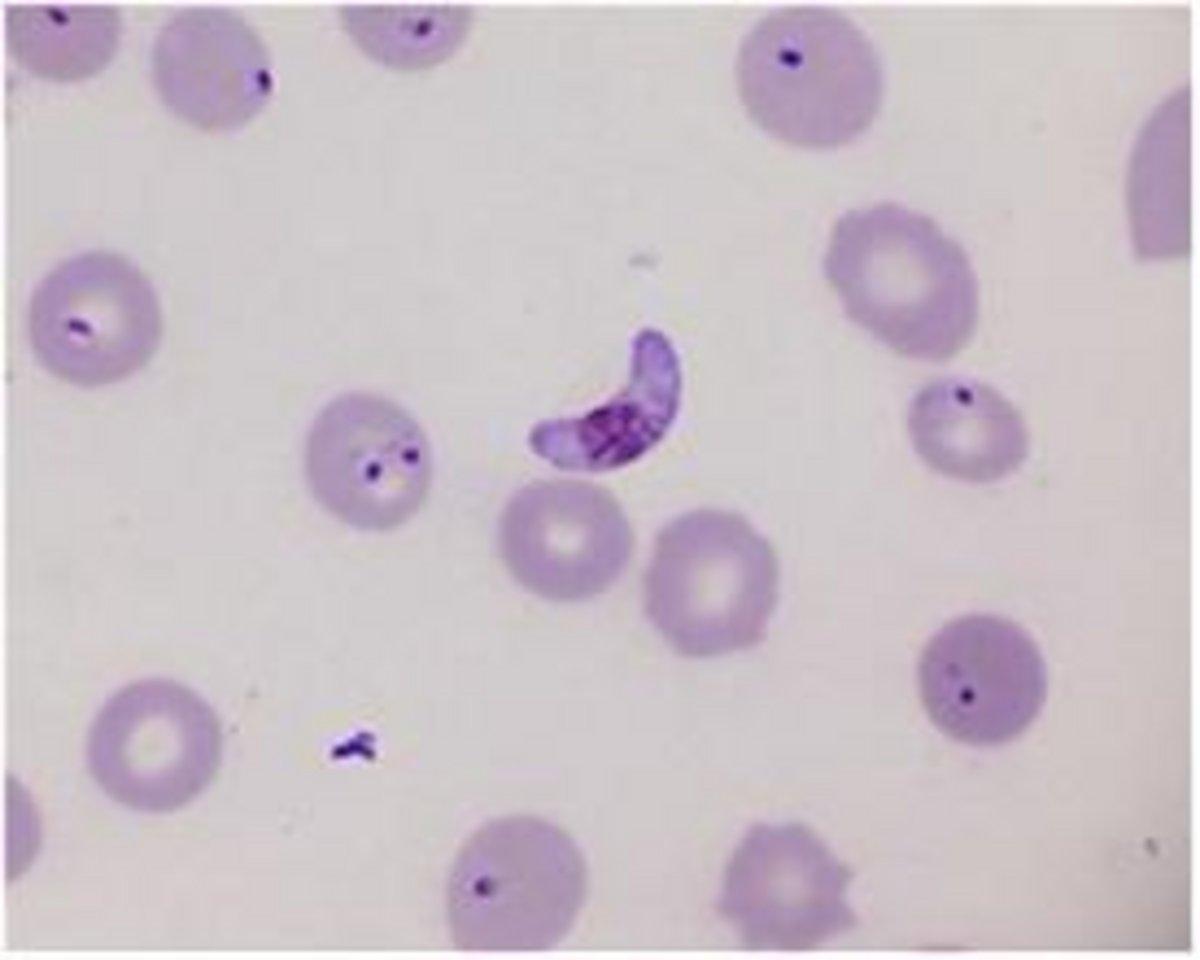
P. falciparum is named after its characteristic banana-shaped gametocytes, coming from the Latin word for sickle: “falci”.
Out of the Plasmodium species, P. falciparum causes the most severe and deadly form of malaria.
P. malariae
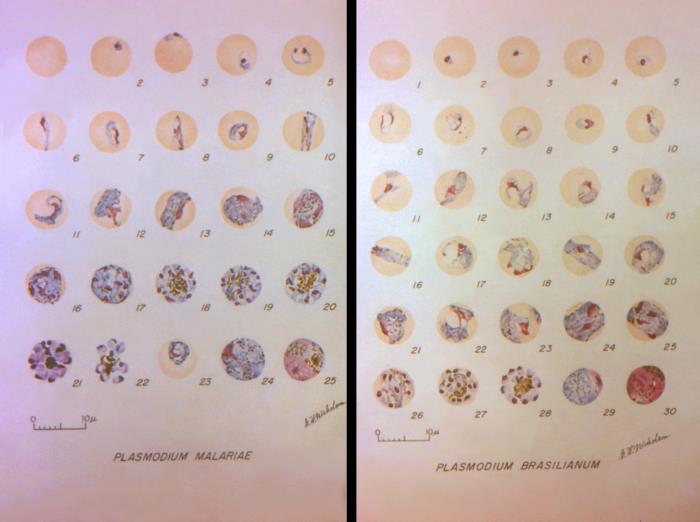
P. malariae is endemic to Africa.
Since P. malariae primarily infects senescent red blood cells, the infected cell should be smaller than the surrounding cells.
P. ovale
P. ovale is endemic to West Africa.
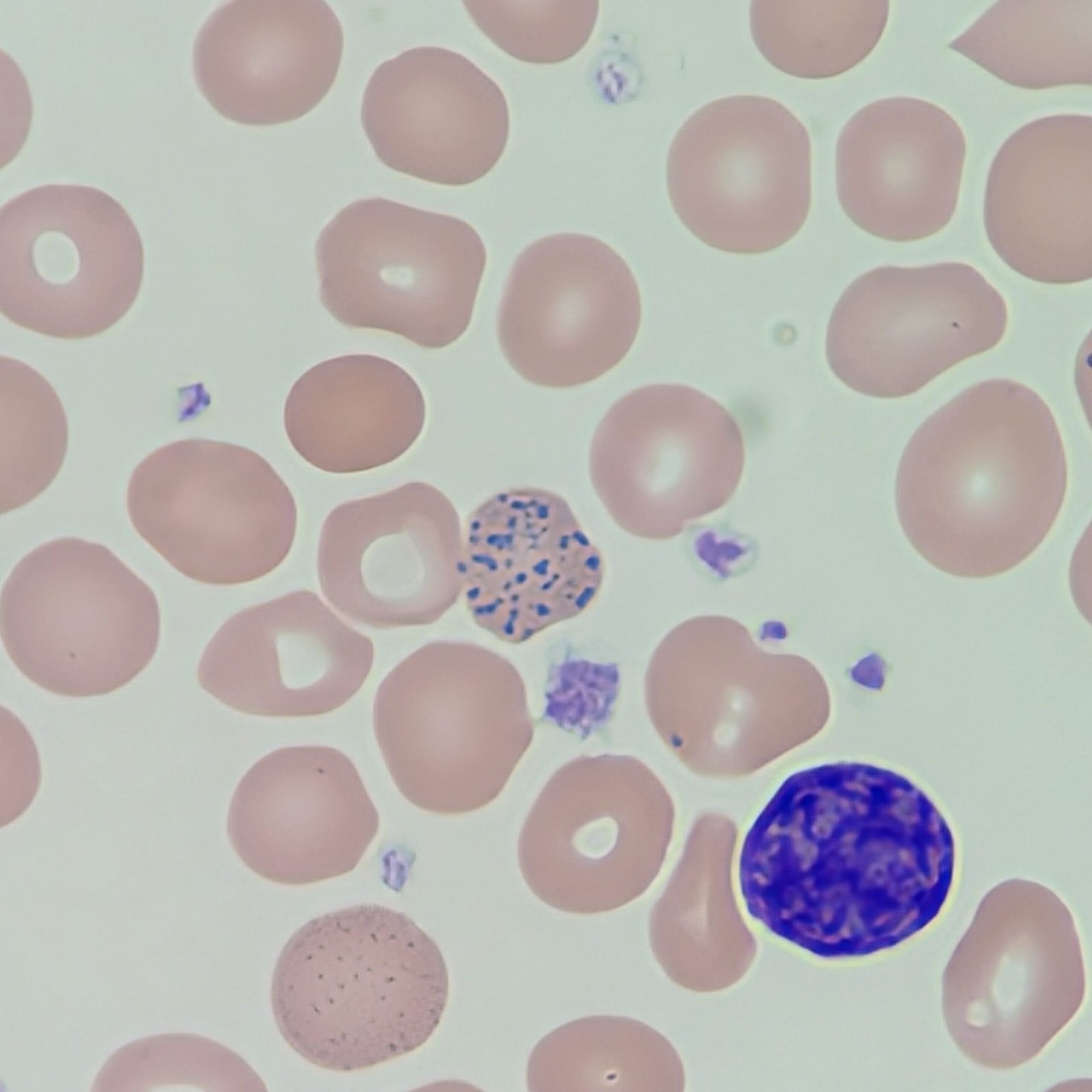
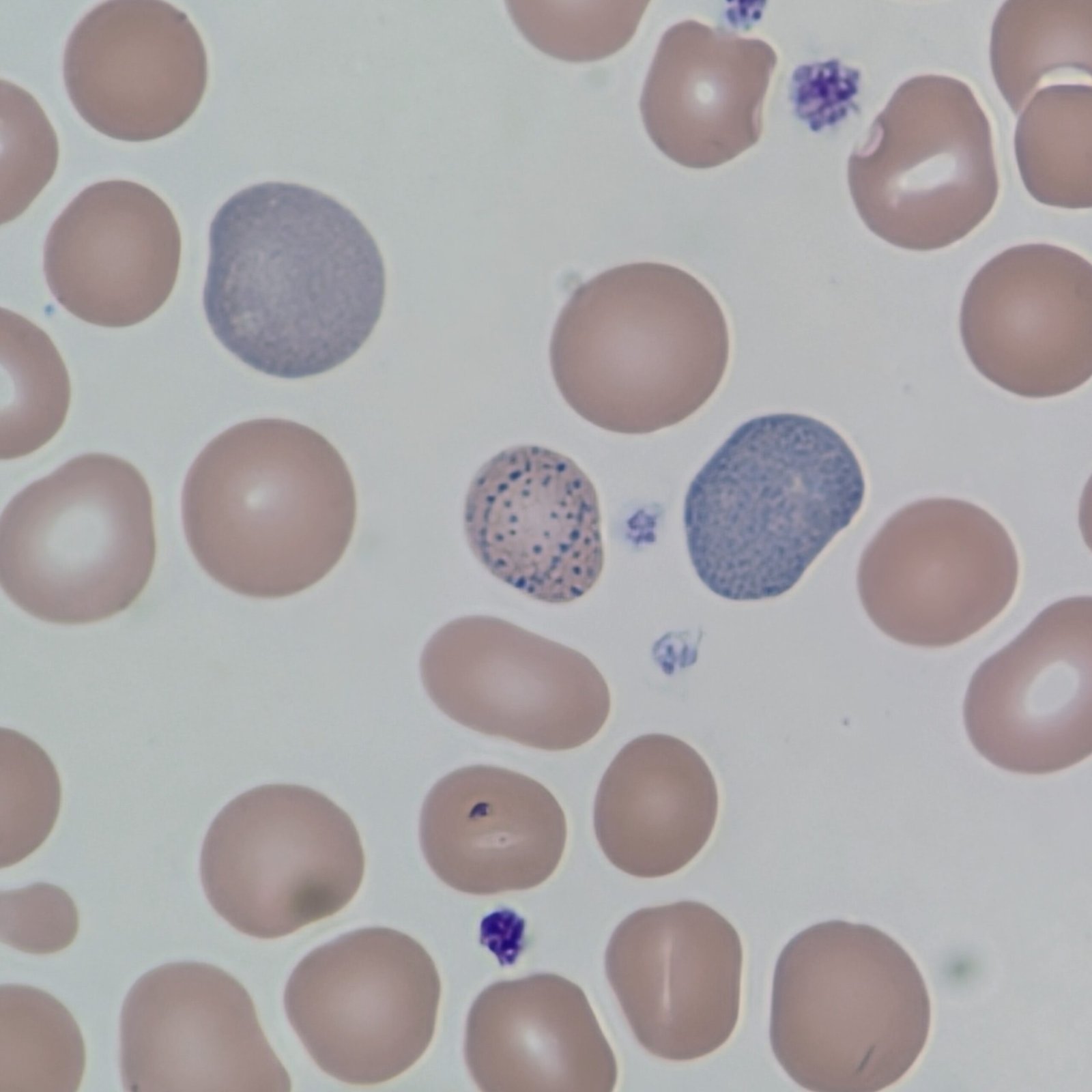
P. ovale is named due to the oval shape of infected red blood cells. It primarily infects reticulocytes, so infected cells should be larger than the surrounding cells. Infected cells commonly also contain eosinophilic Schuffner’s dots.
P. vivax
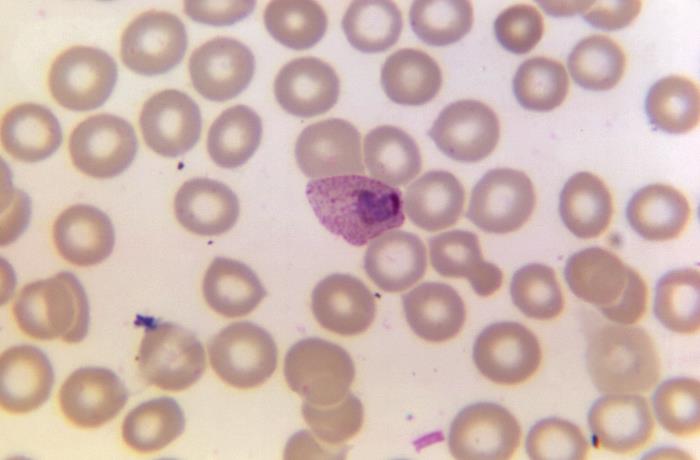
P. vivax is endemic to Asia and South America.
P. vivax primarily infects reticulocytes. Schuffner’s dots may also be present.
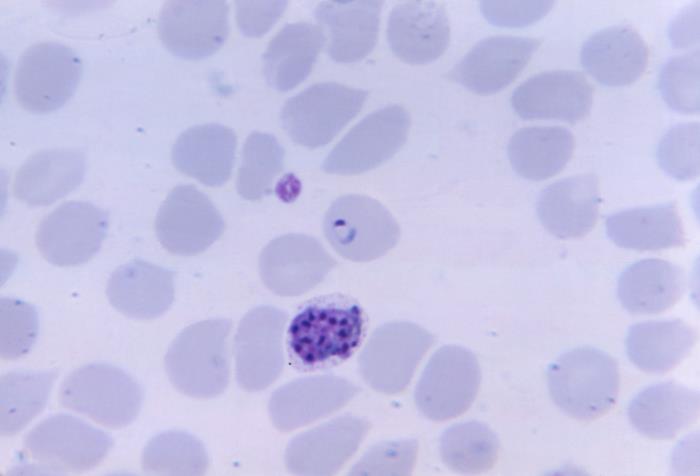
P. knowlesi
P. knowlesi is endemic to Southeast Asia.
P. knowlesi is the rarest of the malarial Plasmodium species.
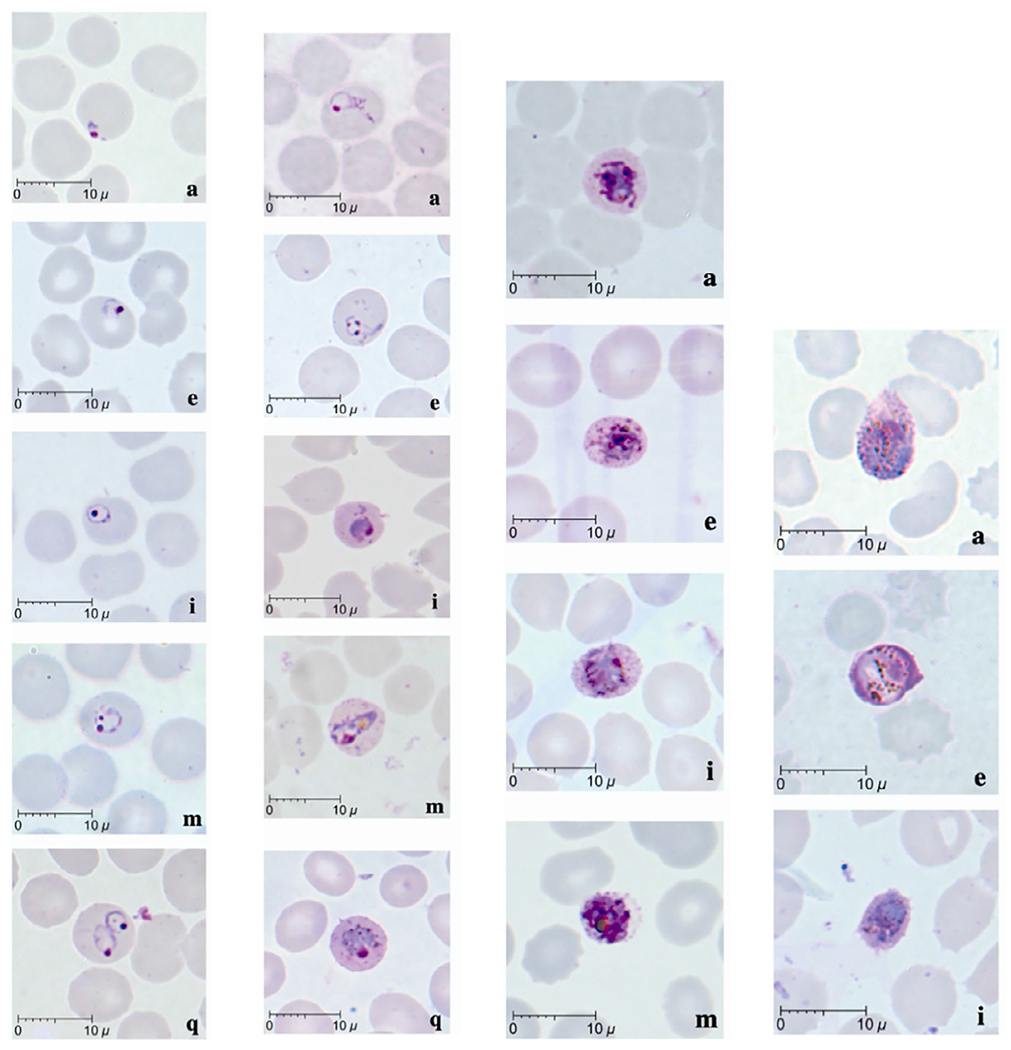
Lookalikes
Water artifacts can appear as rings in a red blood cell. However, they are highly refractile. If morphology cannot be distinguished, make a new slide.
Water Artifact
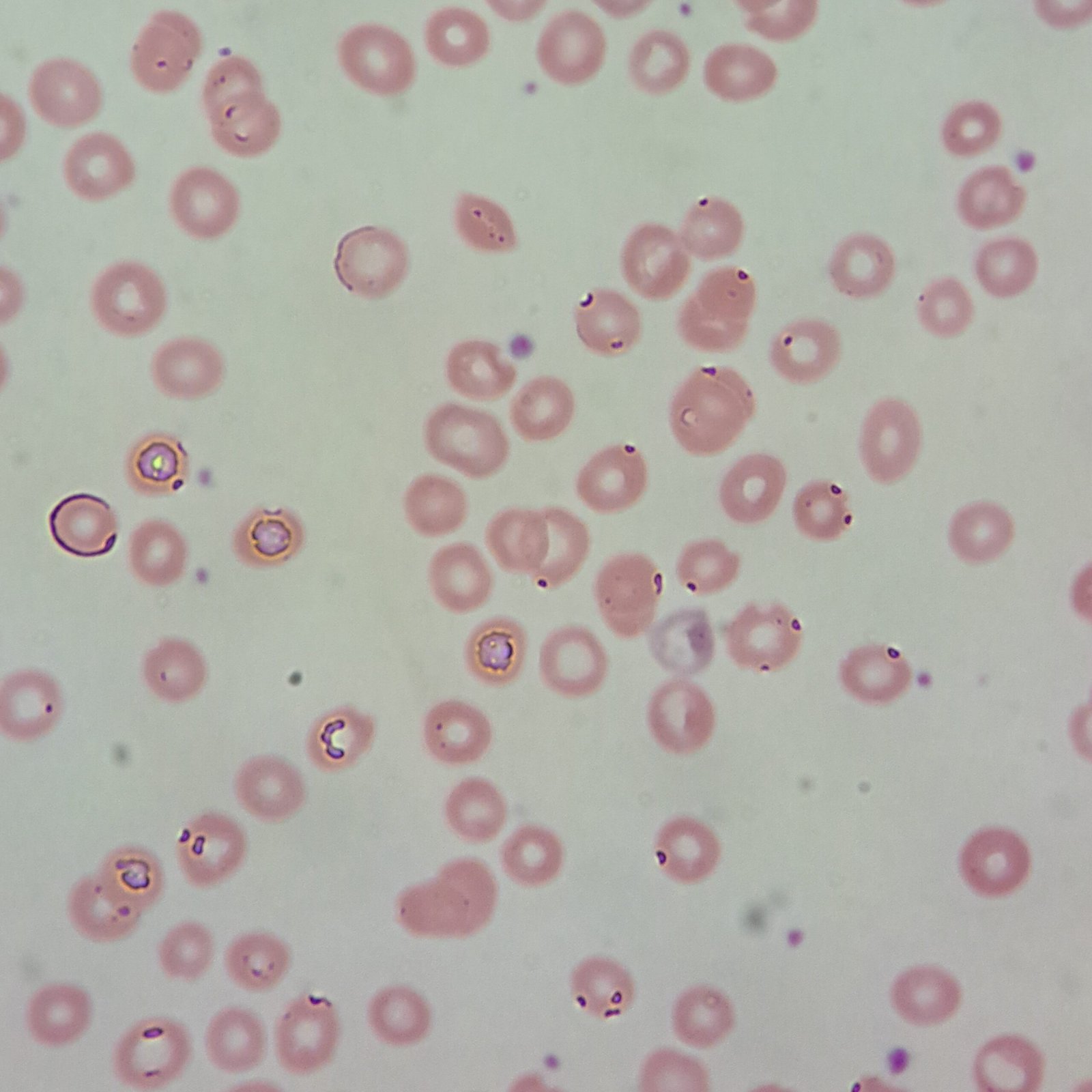
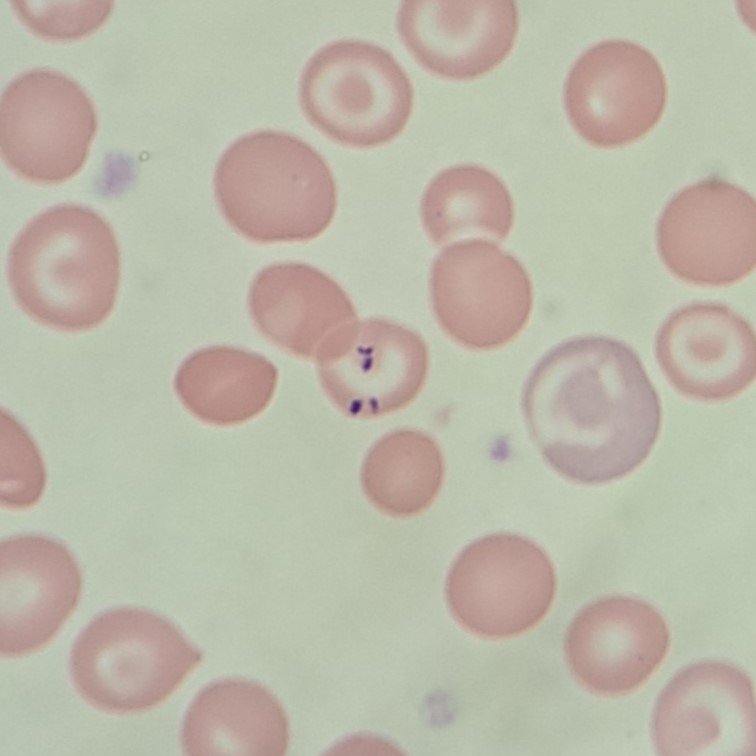
Babesia can look similar to Plasmodium species. However, babesia can appear extracellularly. The presence of the tetrad form is also specific to babesia. Patient history can be used to help in identification.

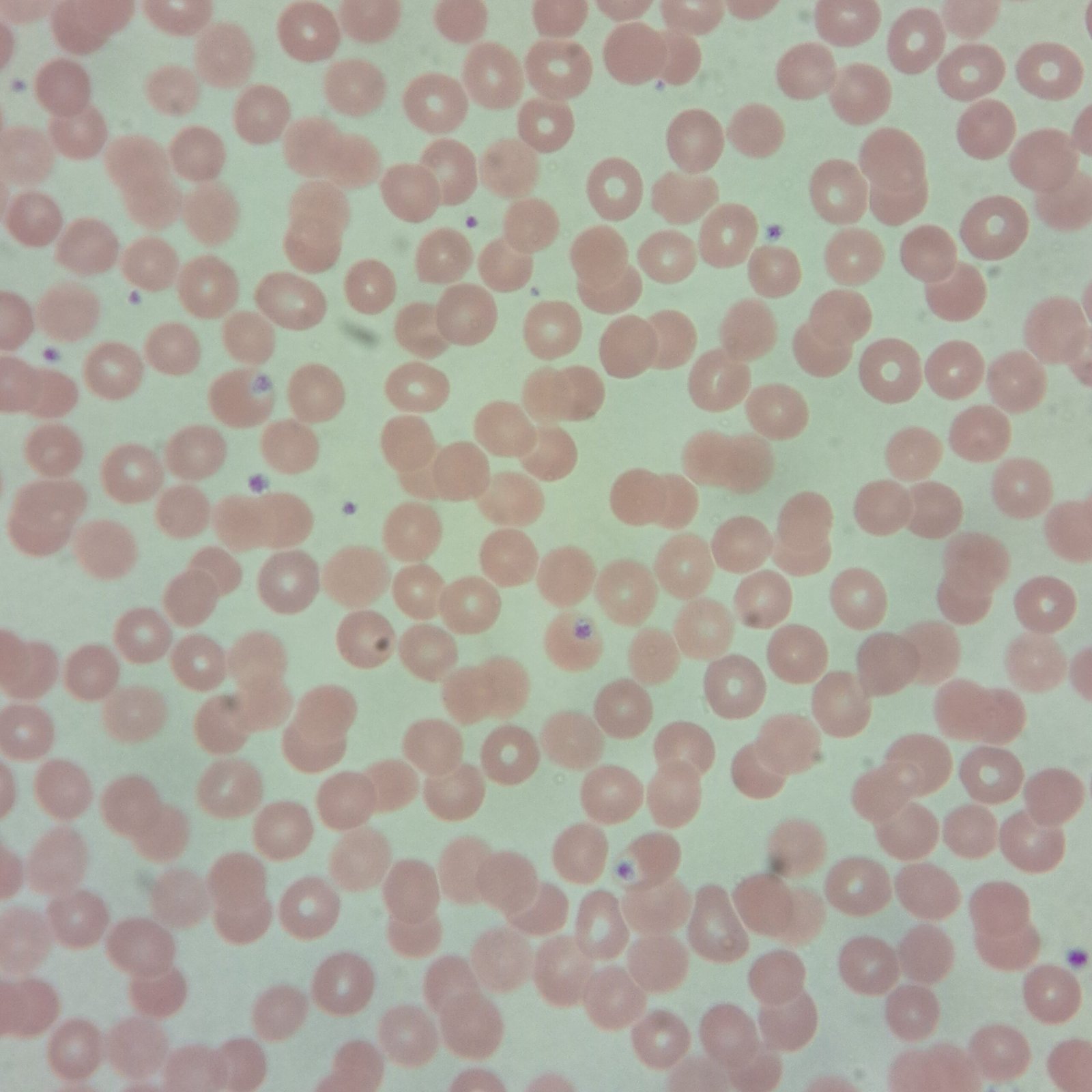
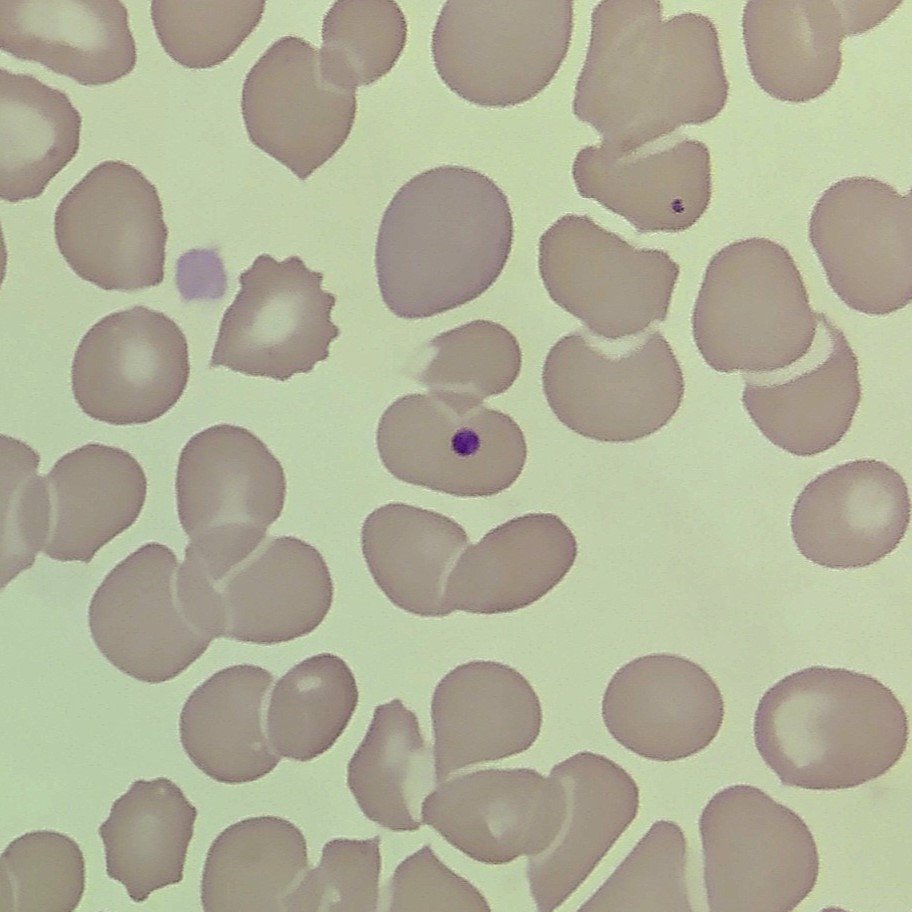
Platelets can sometimes sit on top of a red blood cell, appearing as though they are an inclusion. However, these overlying platelets have a sort of “halo” around them. They can be easily compared to the other platelets in the smear for identification.
Other Inclusions

Additional Resources
- How to identify the type of malaria on a blood smear | Medmastery
- A Laboratory Guide to Clinical Hematology
- Detection and Identification
- Home – Public Health Image Library(PHIL)
- Plasmodium knowlesi detection methods for human infections—Diagnosis and surveillance – PMC
- Plasmodium falciparum – StatPearls – NCBI Bookshelf
- Pmalariae_benchaidV2.pub
- P. falciparum Invasion and Erythrocyte Aging
- Microbiology Case Studies: Babesia vs. Malaria – Lablogatory