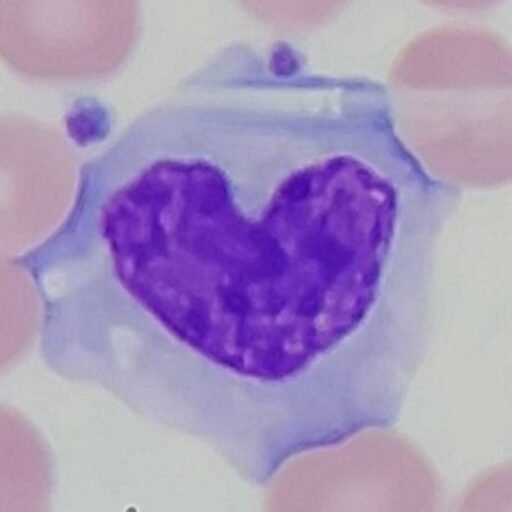
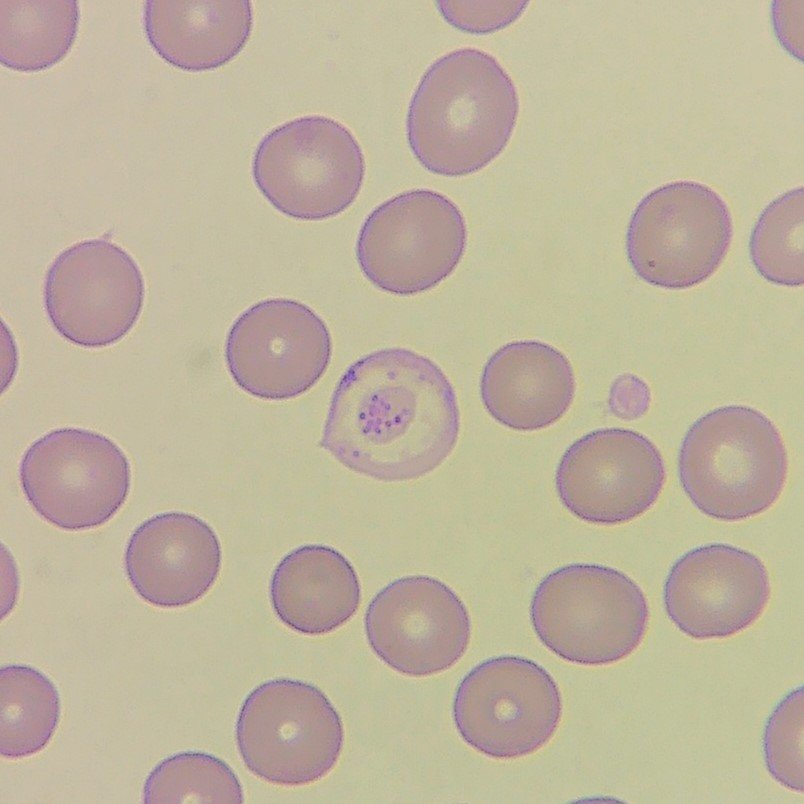
Pappenheimer Bodies are also known as siderotic granules, as they are composed of iron. Thus, they are seen when iron incorporation to heme is affected or with iron overload. Associated conditions include sideroblastic anemia, hemolytic anemia, sickle cell anemia, thalassemia, and myelodysplastic syndrome.
Appearance & Identification
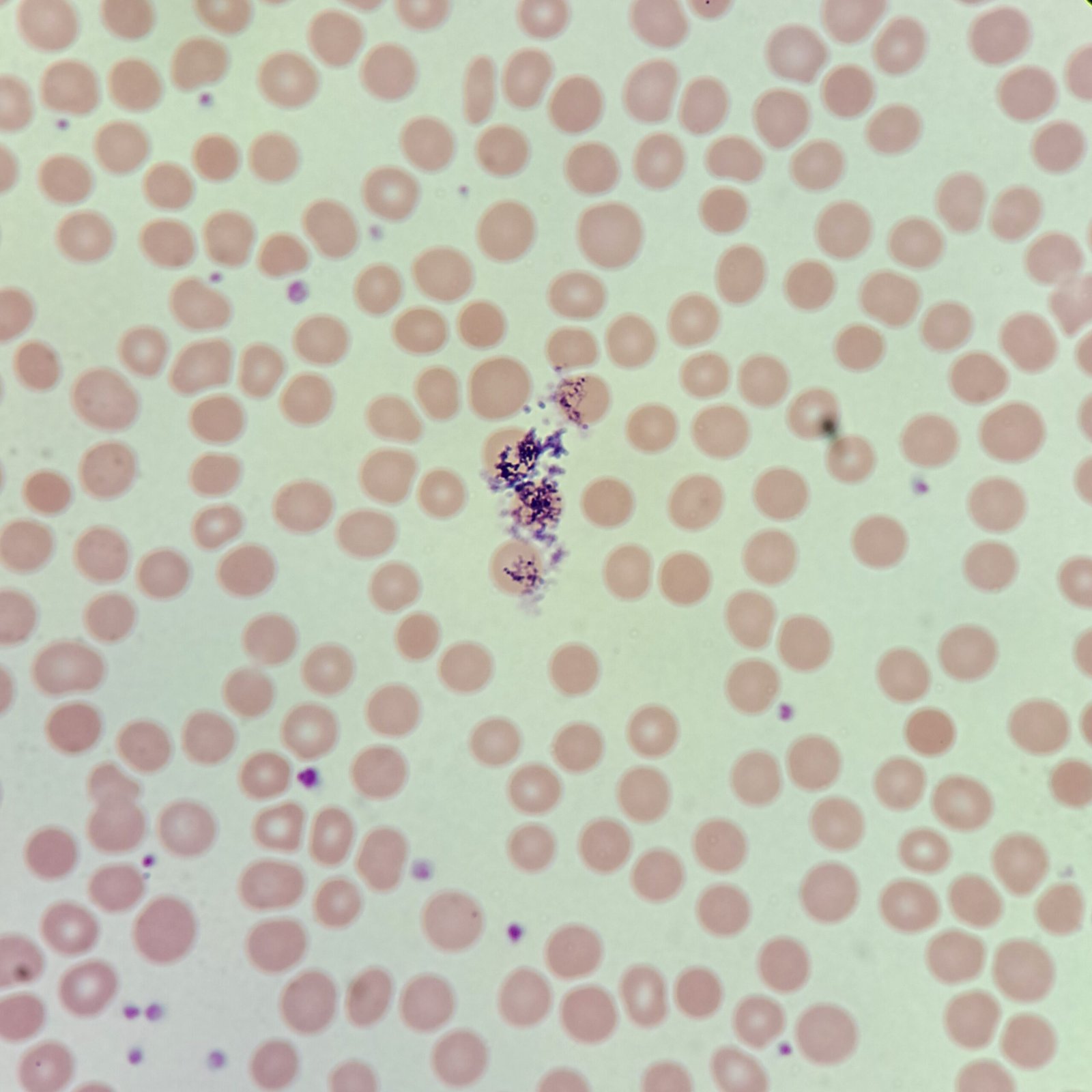
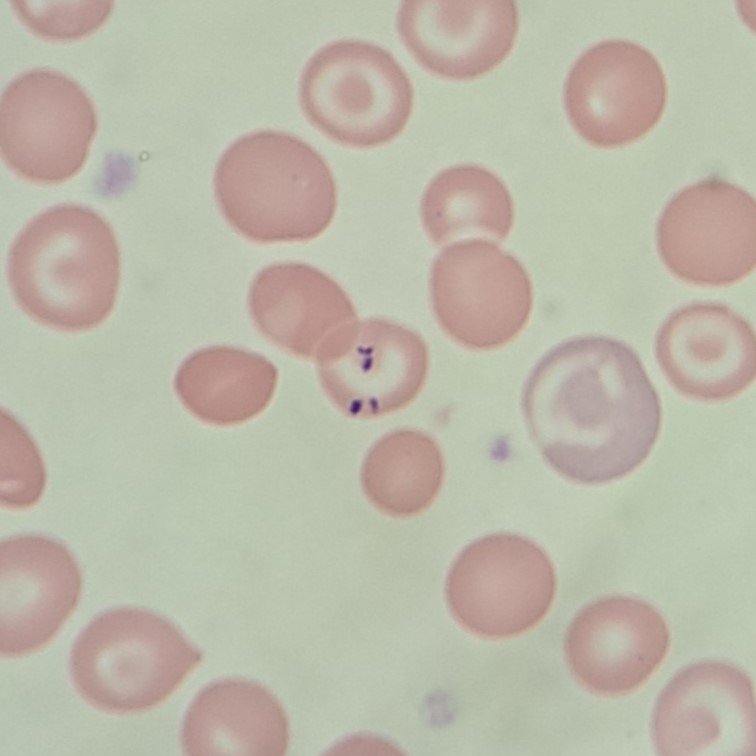
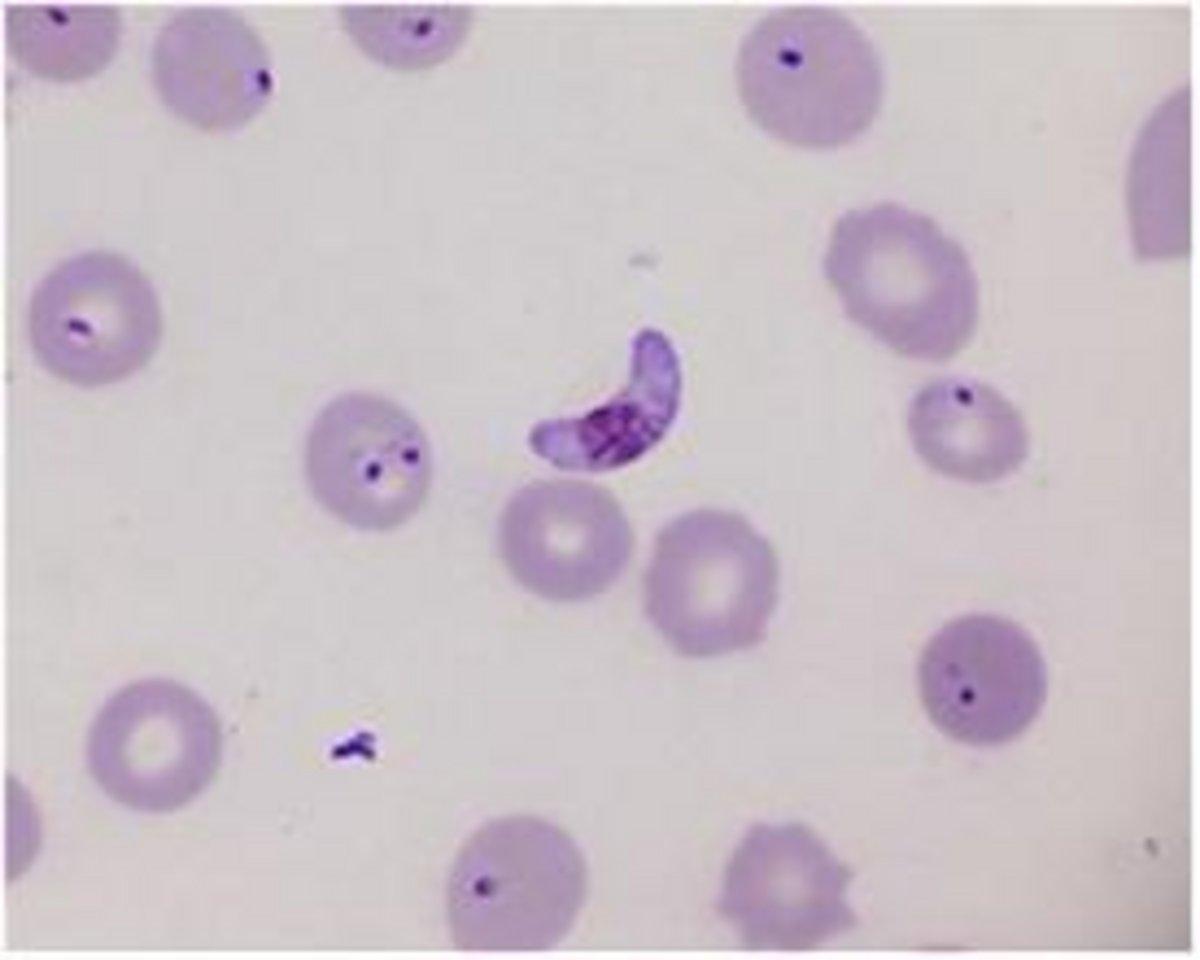
Pappenheimer Bodies appear as small dark purple granules found in clusters, usually on the periphery of the cell. These granules are usually irregularly shaped. With a Prussian blue stain, they stain positive as siderotic granules.
Study Tip: Pappenheimer Bodies stain Positive with Prussian Blue.

Lookalikes
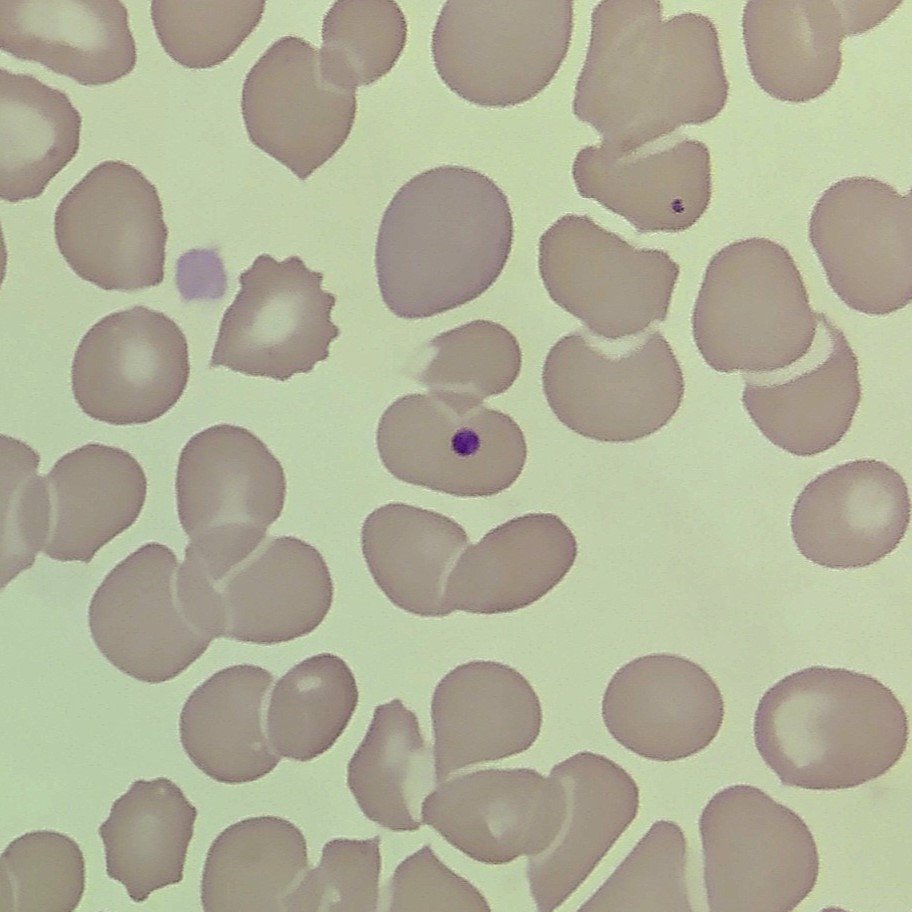
Howell-Jolly (HJ) bodies may look like pappenheimer bodies, but they usually appear singularly instead of in clusters. Additionally, HJ bodies are more regular in shape and slightly larger.

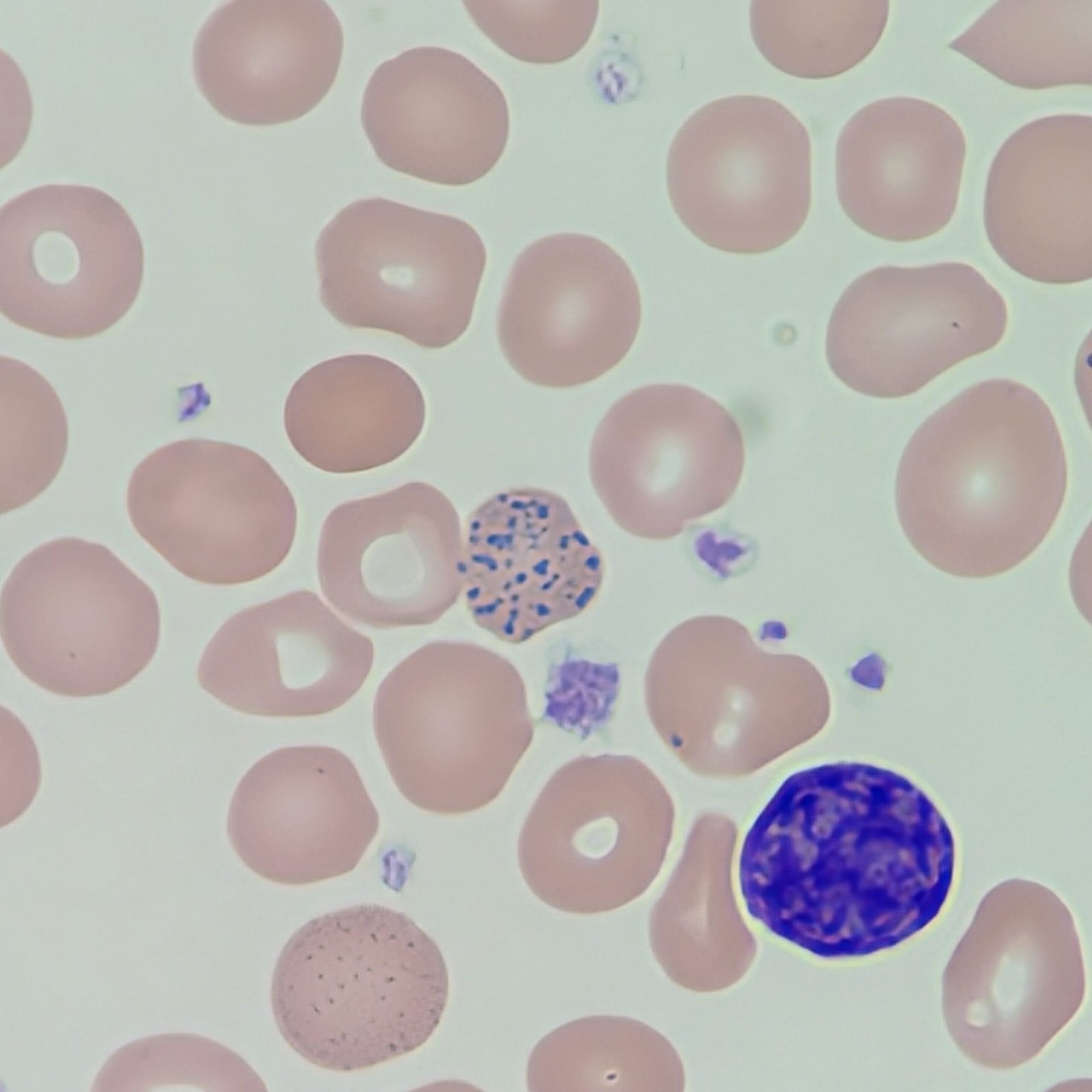
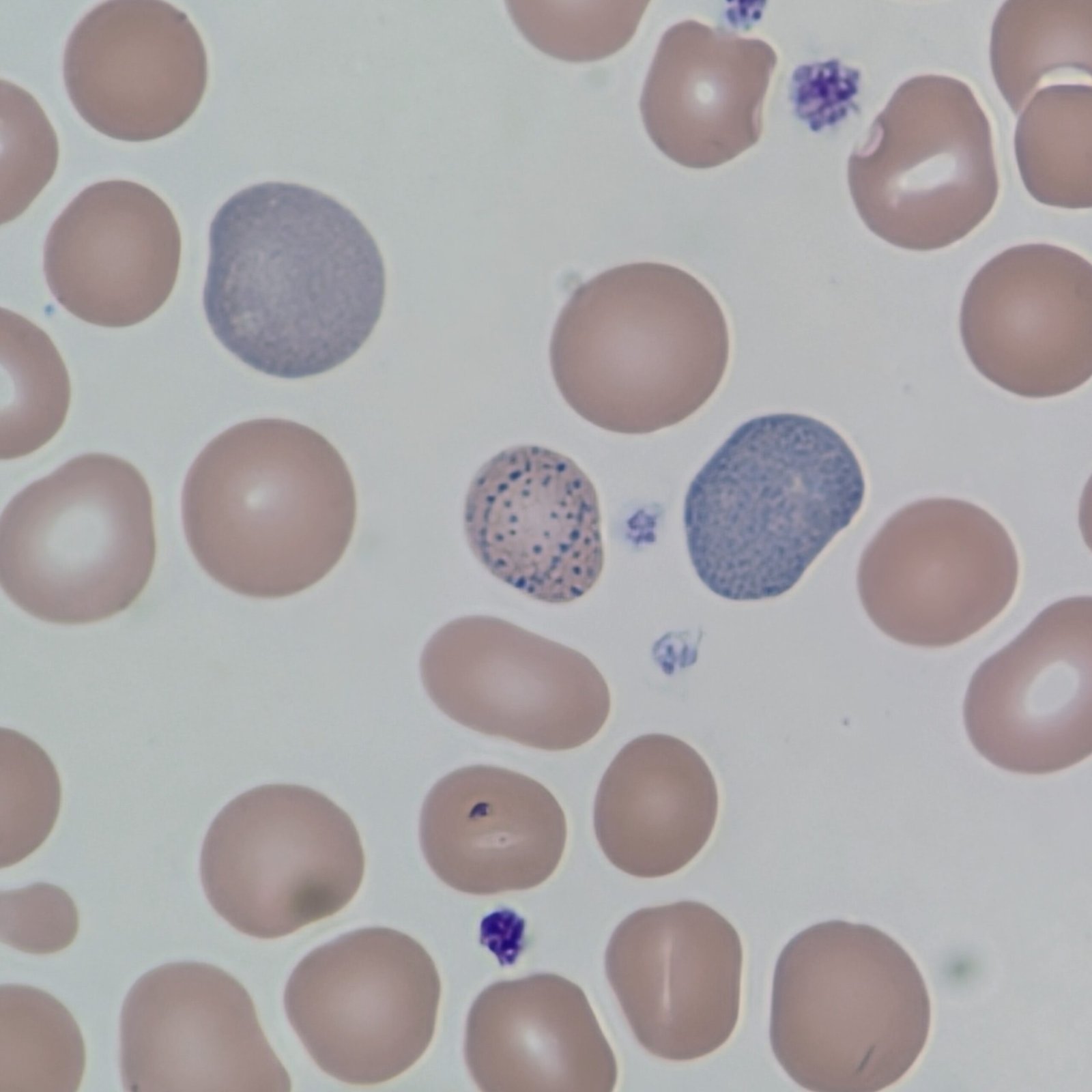
Basophilic stippling is another type of basophilic inclusion, but it is dispersed evenly throughout the cell instead of appearing in clusters at the periphery.
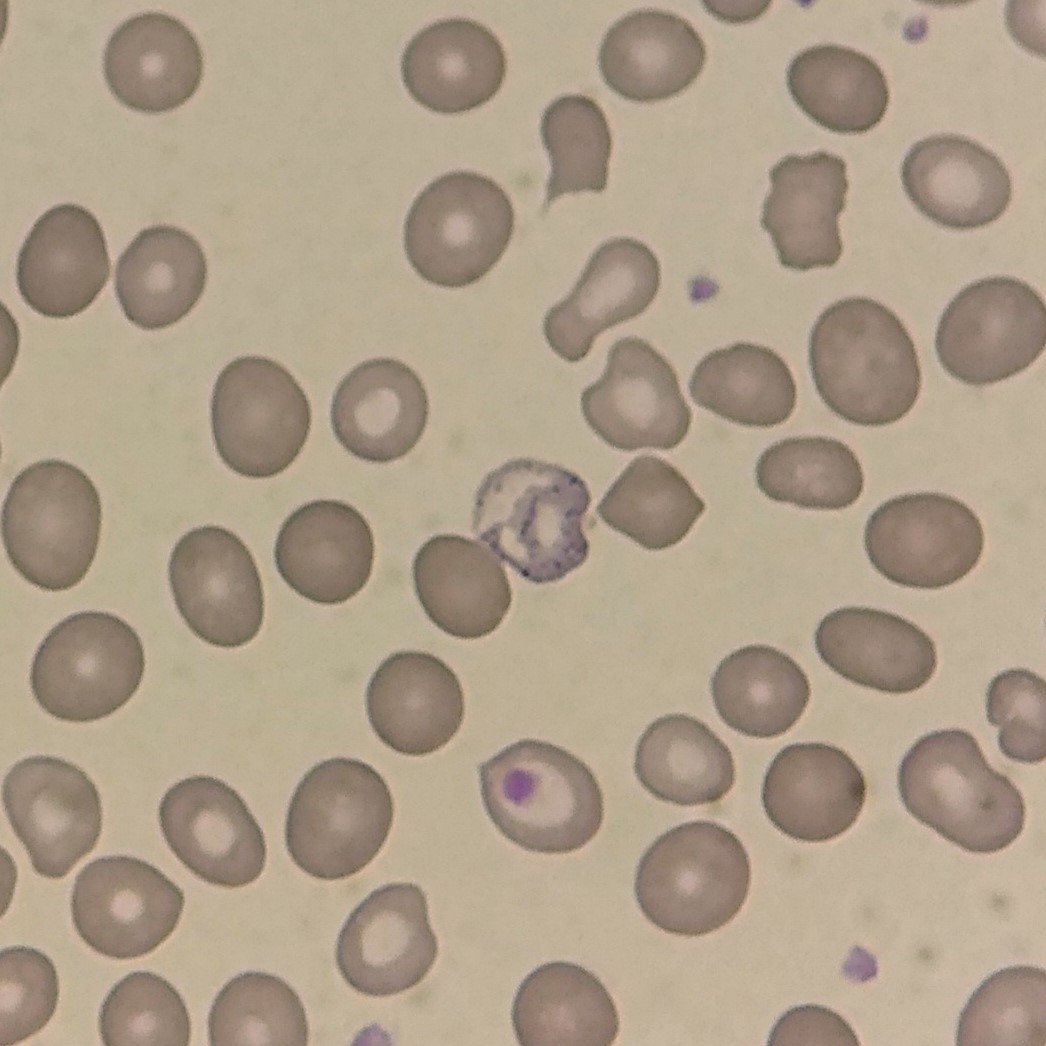
Stain precipitate can look like inclusions when it appears on top of a red blood cell. However, it can be seen outside of the cells as well and will usually be noted elsewhere on the slide.
Quick Summary
- Also Known As:
- Siderotic Granules
- Morphology/Appearance:
- Small, Dark Purple Granules
- Usually found in Clusters
- Usually on Periphery of the Cell
- Irregularly Shaped
- Clinical Significance:
- Sideroblastic Anemia
- Hemolytic Anemia
- Sickle Cell Anemia
- Thalassemia
- Myelodysplastic Syndrome.
- Common Lookalikes
- Howell Jolly Bodies: usually one densely staining granule
- Basophilic Stippling: evenly distributed granules
- Stain Precipitate: Irregularly distributed above and outside cell
Gallery
Other Inclusions


Additional Resources
For educational and reference purposes only, this is not medical advice.
Authored by Rachel Harper, Medical Laboratory Scientist (ASCP)
Last reviewed: February 2026.