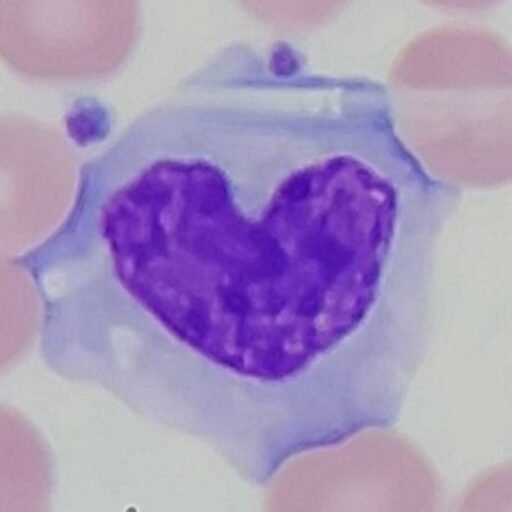
Amorphous urates are found in acidic urine. They are soluble in alkali and heat but insoluble in acetic acid.
These crystals are not clinically significant and typically form when a urine sample is refrigerated.
Macroscopic Appearance
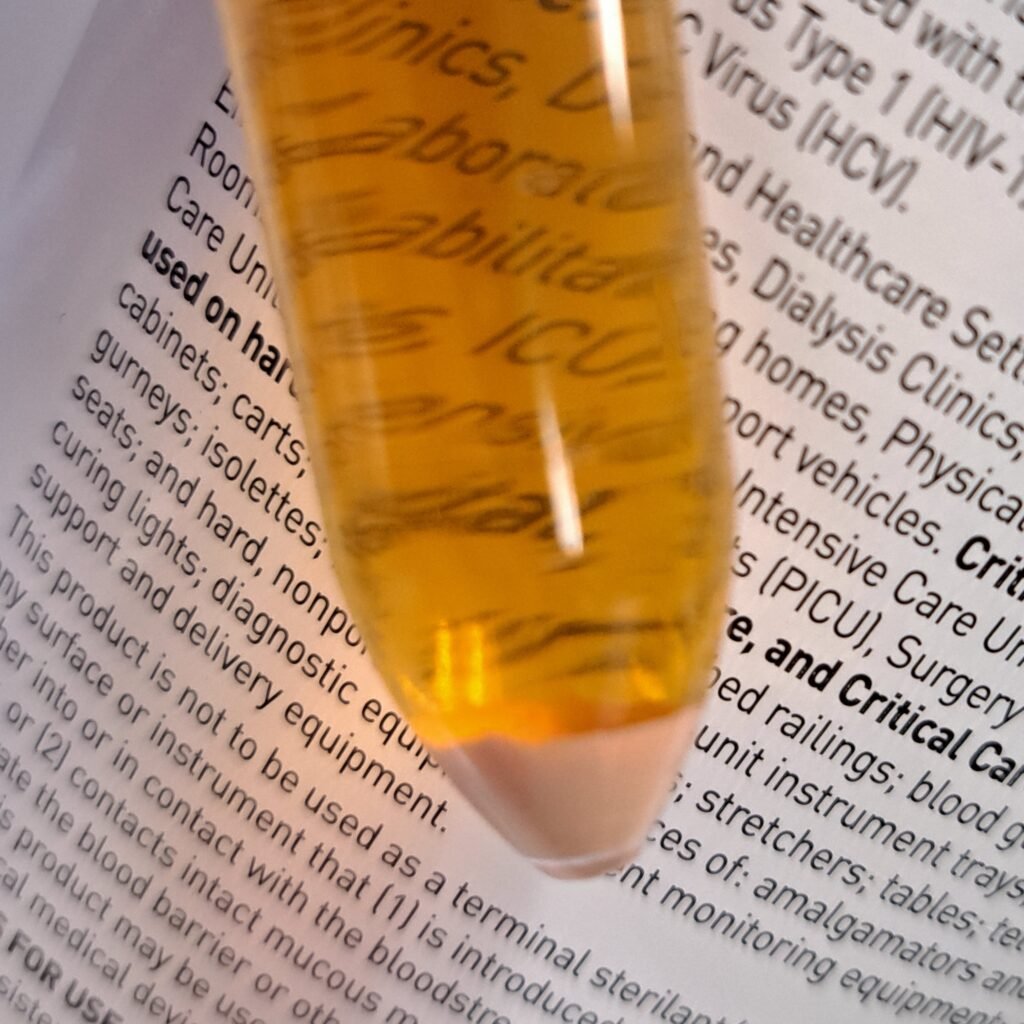
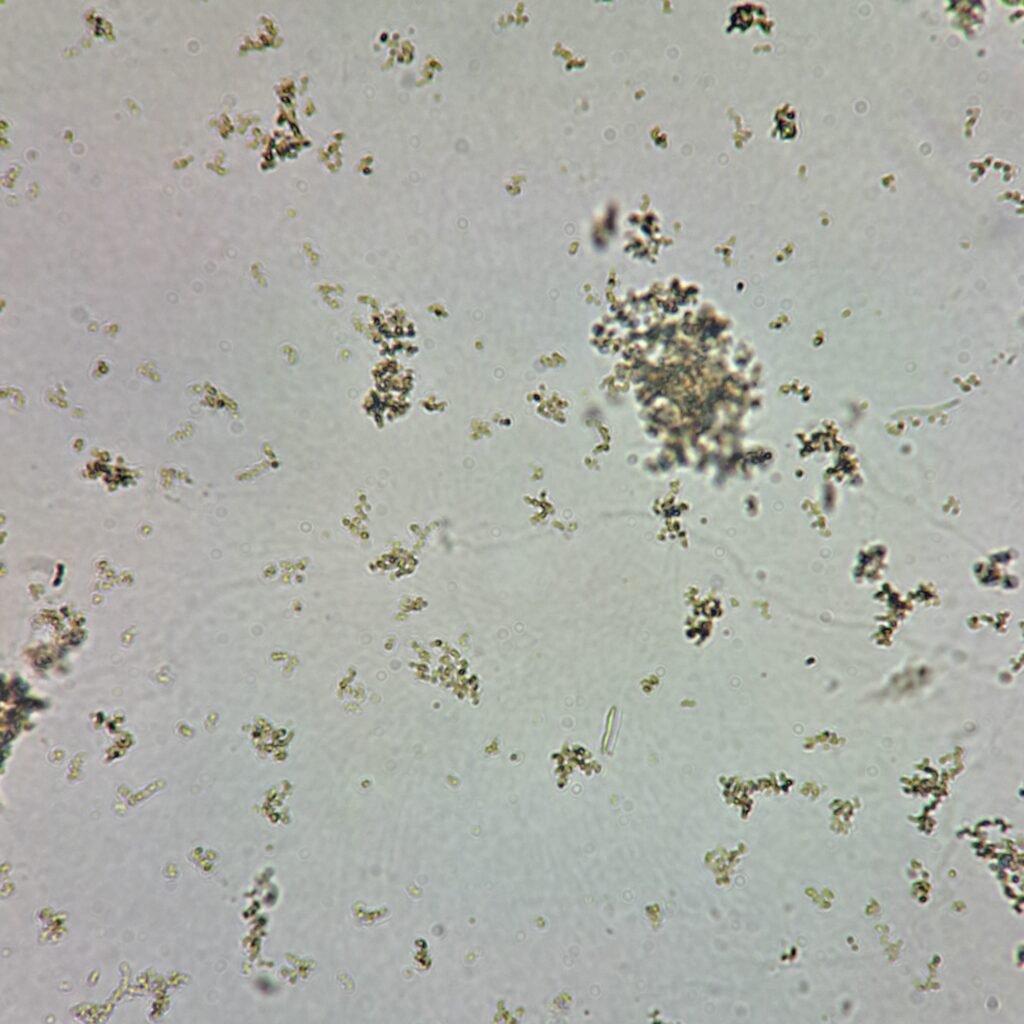
Macroscopically, amorphous urates have a “brick dust” appearance. These crystals can cause the urine to be turbid.
Bench Tip: Warming the specimen can dissolve the crystals and allow for easier analysis but always follow your laboratory’s protocol.
Crystal Appearance
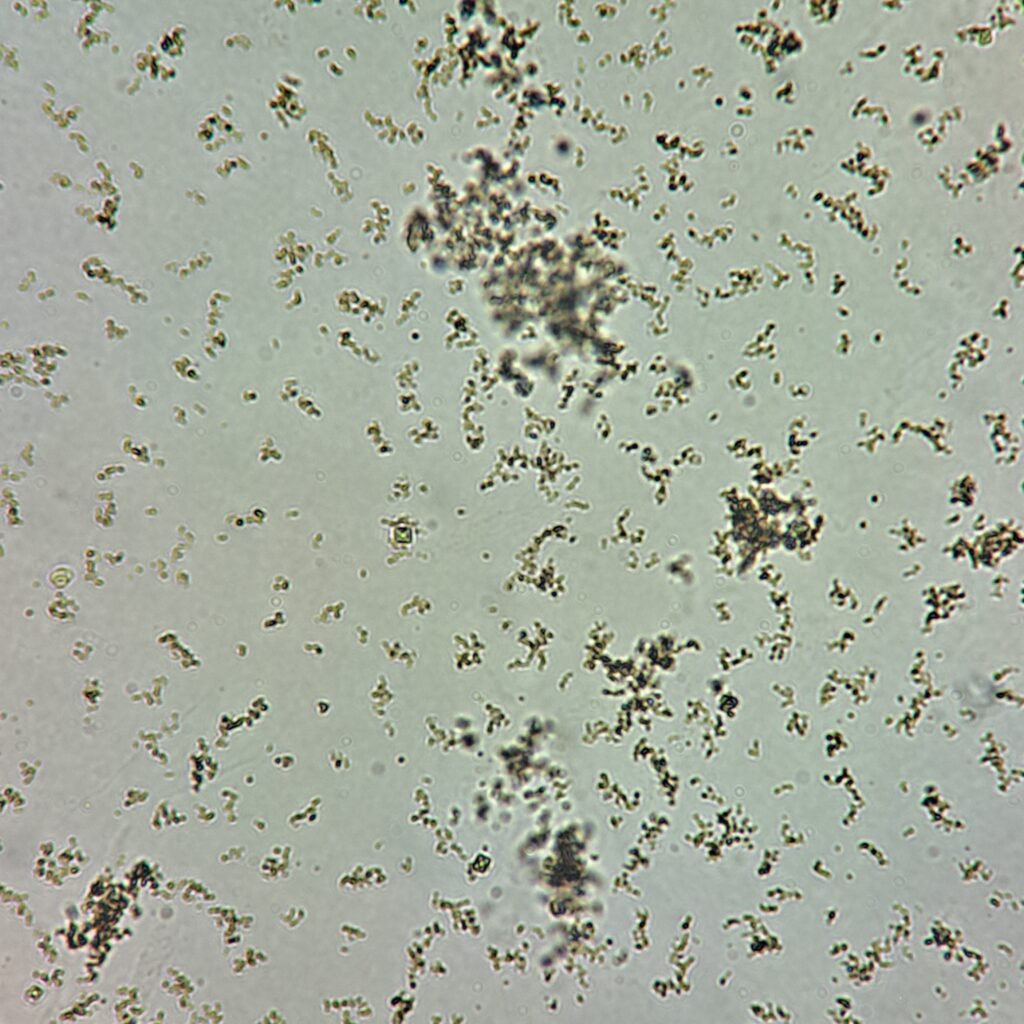
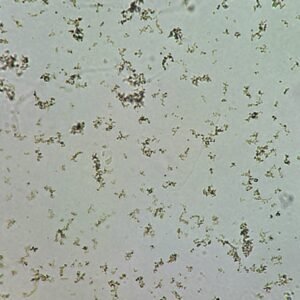
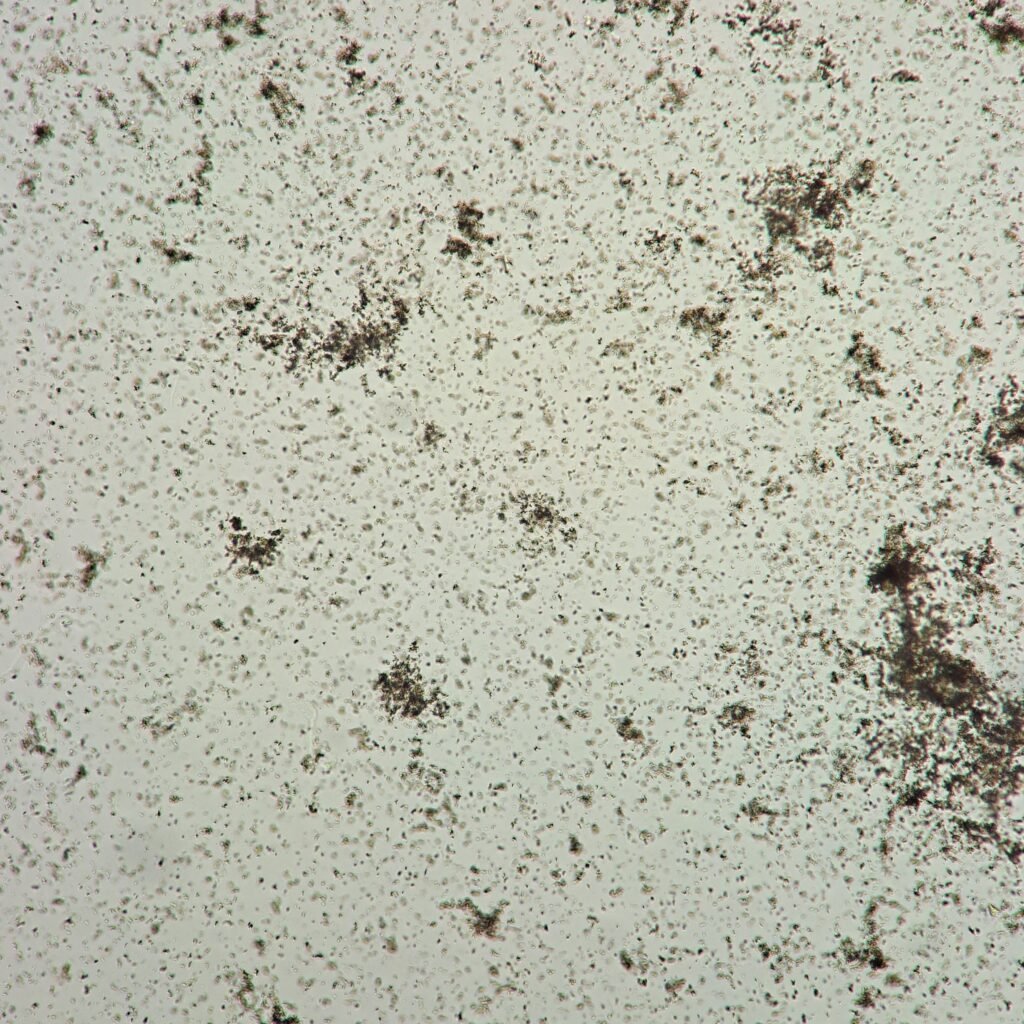
Amorphous Urates appear as granular material in the sediment. Warming the specimen usually dissolves these crystals, allowing for proper identification of elements the sediment that may otherwise be obscured.
Check out more images in the gallery below.
Lookalikes
Brownian motion of these amorphous granules may make them appear as bacteria, so care must be taken with identification. Bacteria will have a uniform appearance while amorphous crystals will vary in shape and size. Additionally, bacteria is usually accompanied by other signs of a urinary tract infection, such as white blood cells.
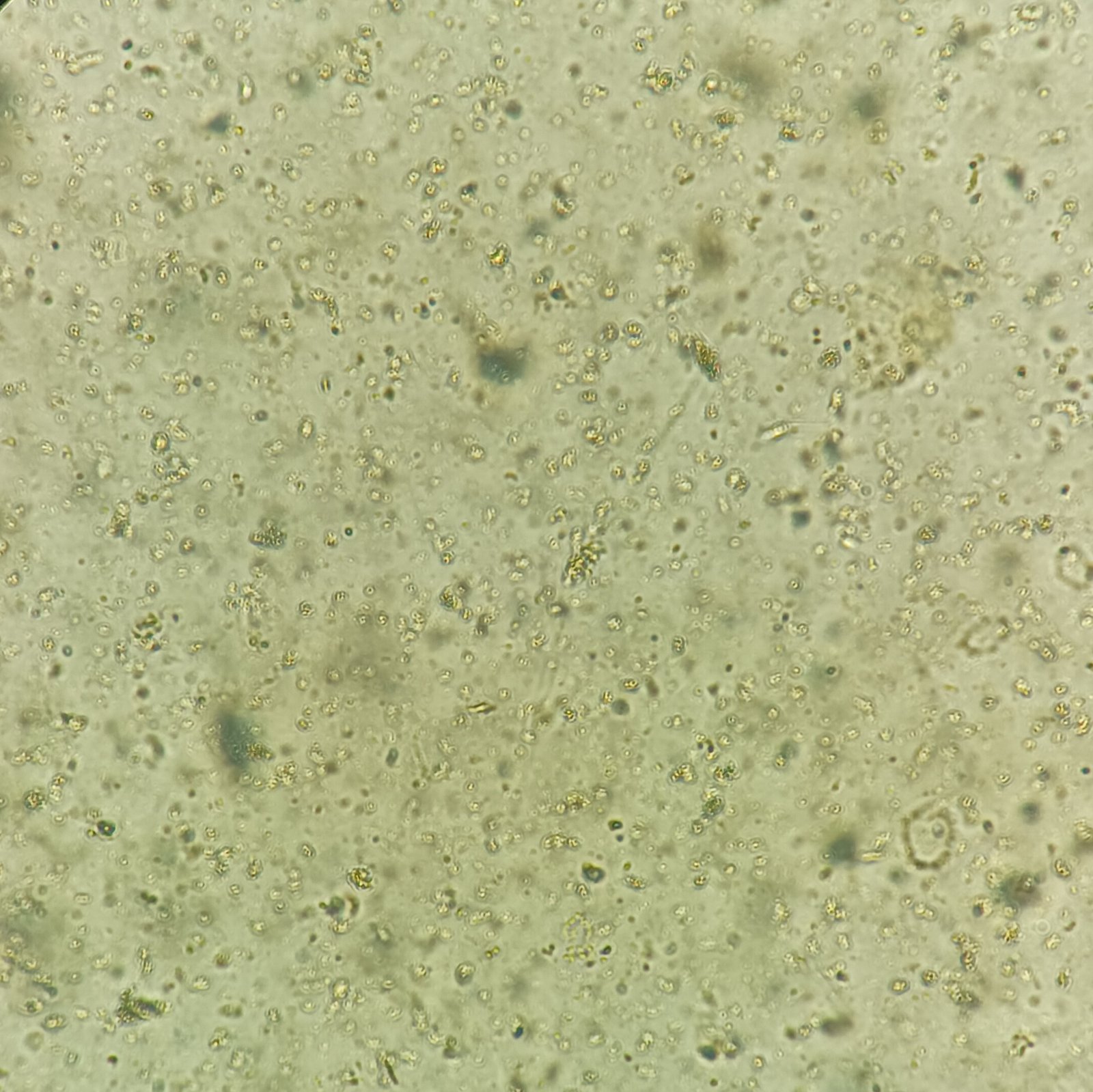
Amorphous urates are microscopically indistinguishable from amorphous phosphates. The pH of the urine is the easiest way to differentiate between the two, as urates are in acidic urine while phosphates are in alkaline urine.
Amorphous Phosphates

Amorphous Urates Gallery


Other Crystals



Hippuric Acid

Tyrosine

Related Posts
Additional Resources
For educational and reference purposes only, this is not medical advice.
Authored by Rachel Harper, Medical Laboratory Scientist (ASCP)
Last reviewed: March 2026