Calcium Oxalate crystals are found in acidic or neutral urine. They are soluble in dilute hydrochloric acid.
These crystals may appear normally in urine after ingestion of food rich in oxalic acid or after a large intake of vitamin C. They may also indicate renal calculi.
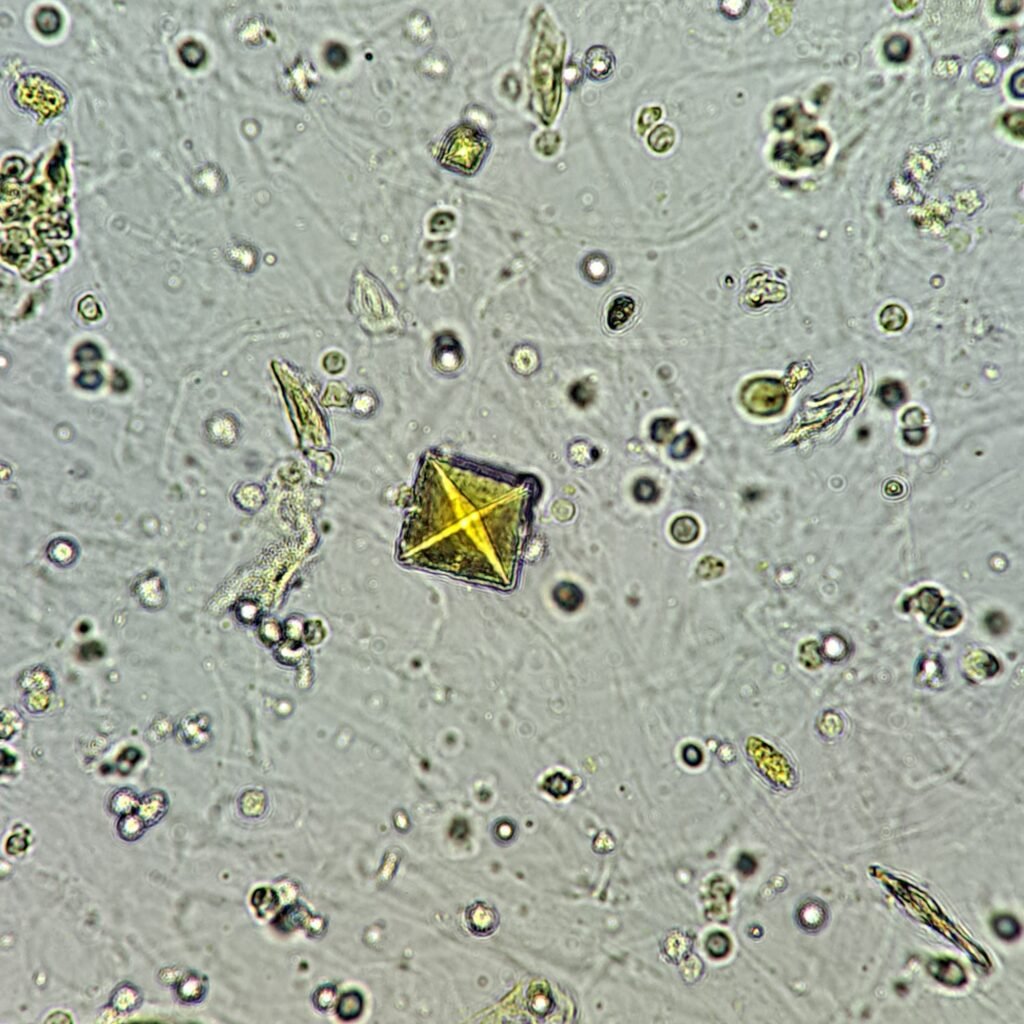
Dihydrate
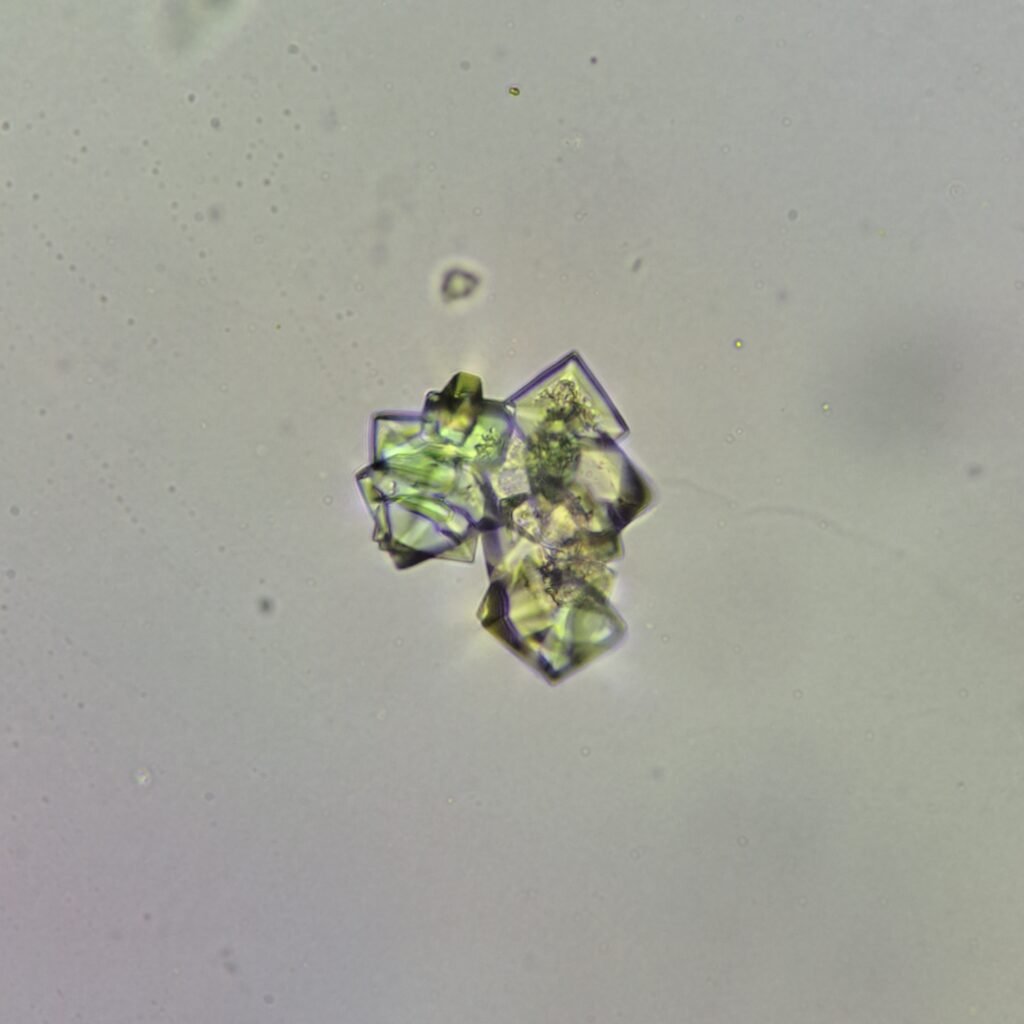
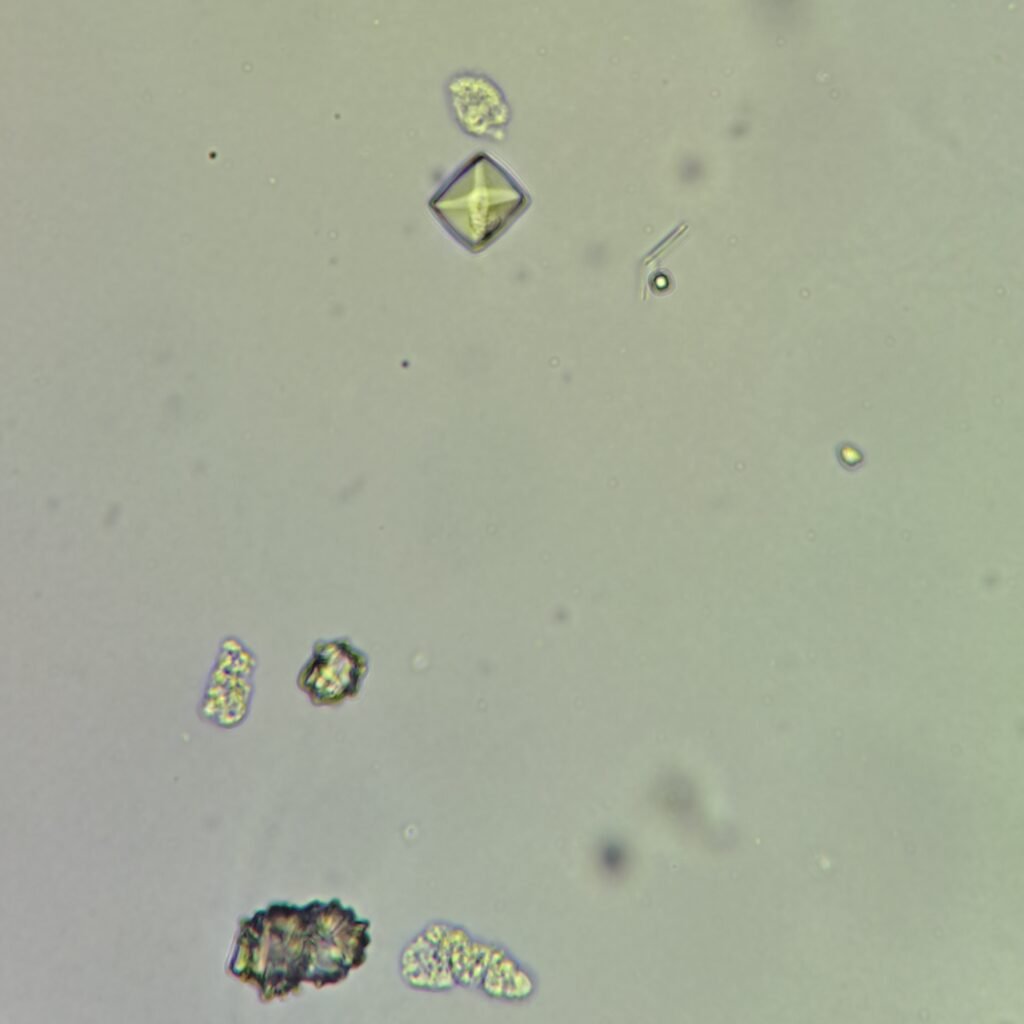
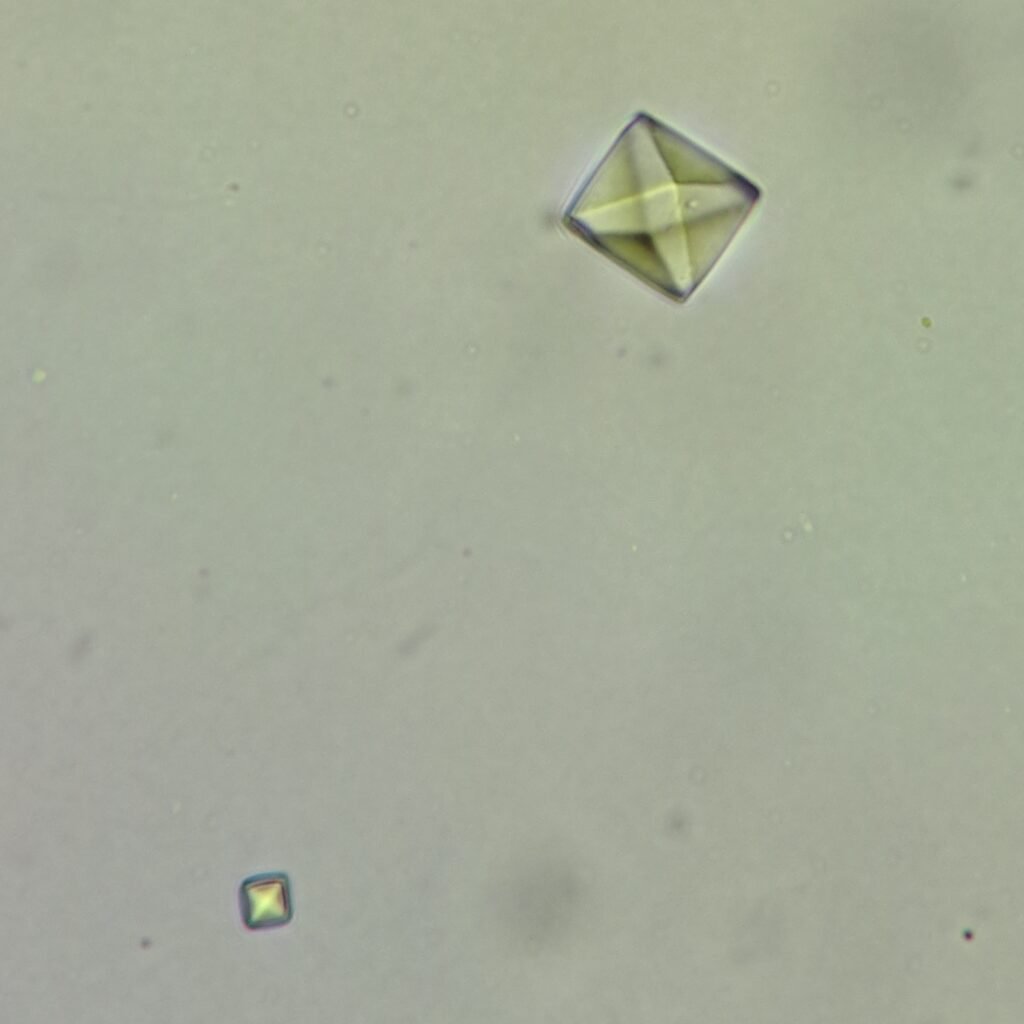
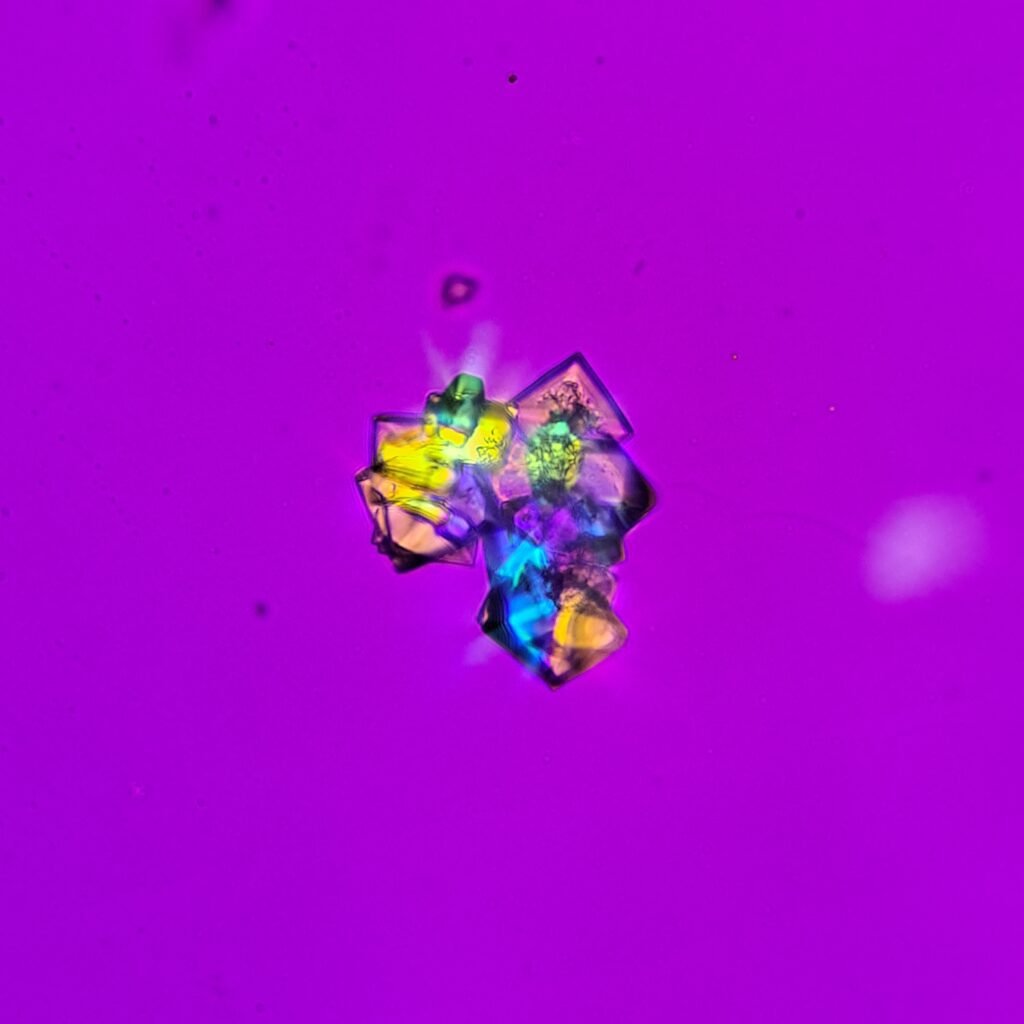
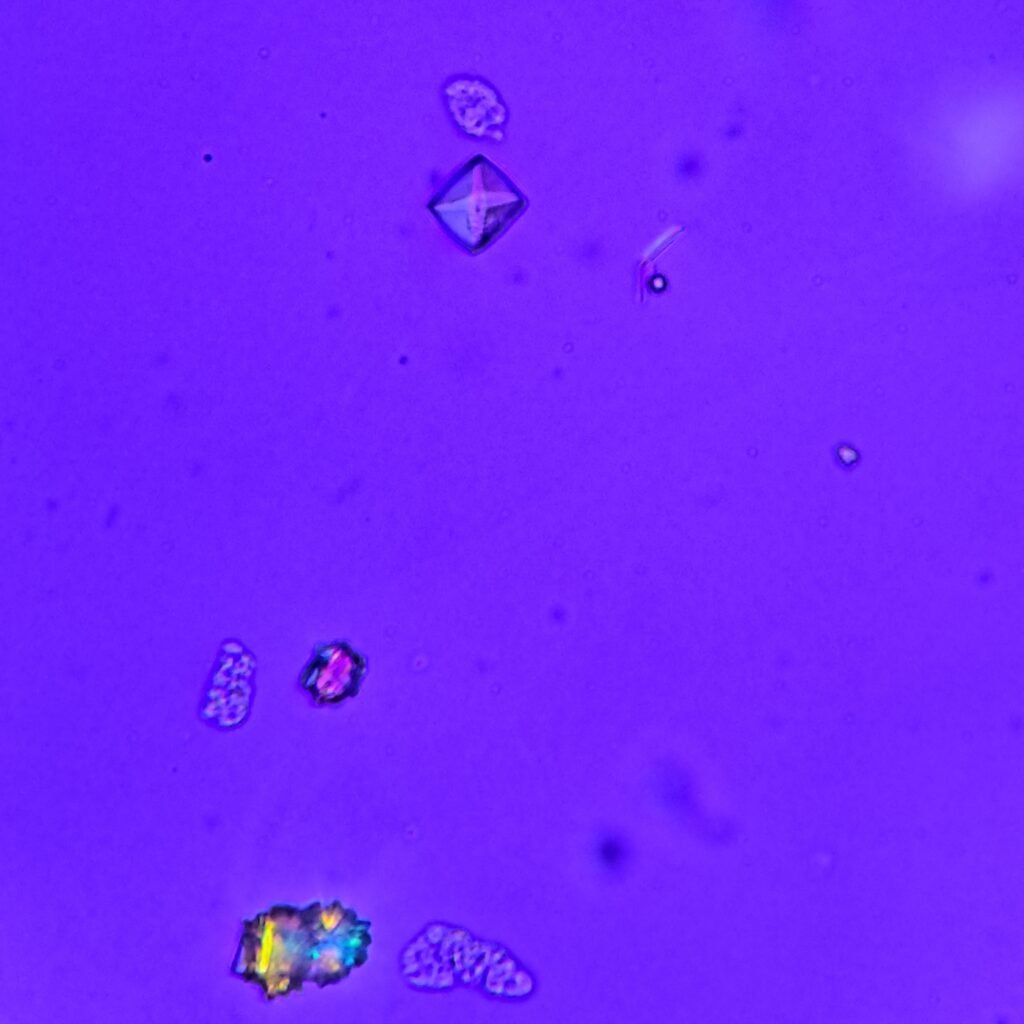
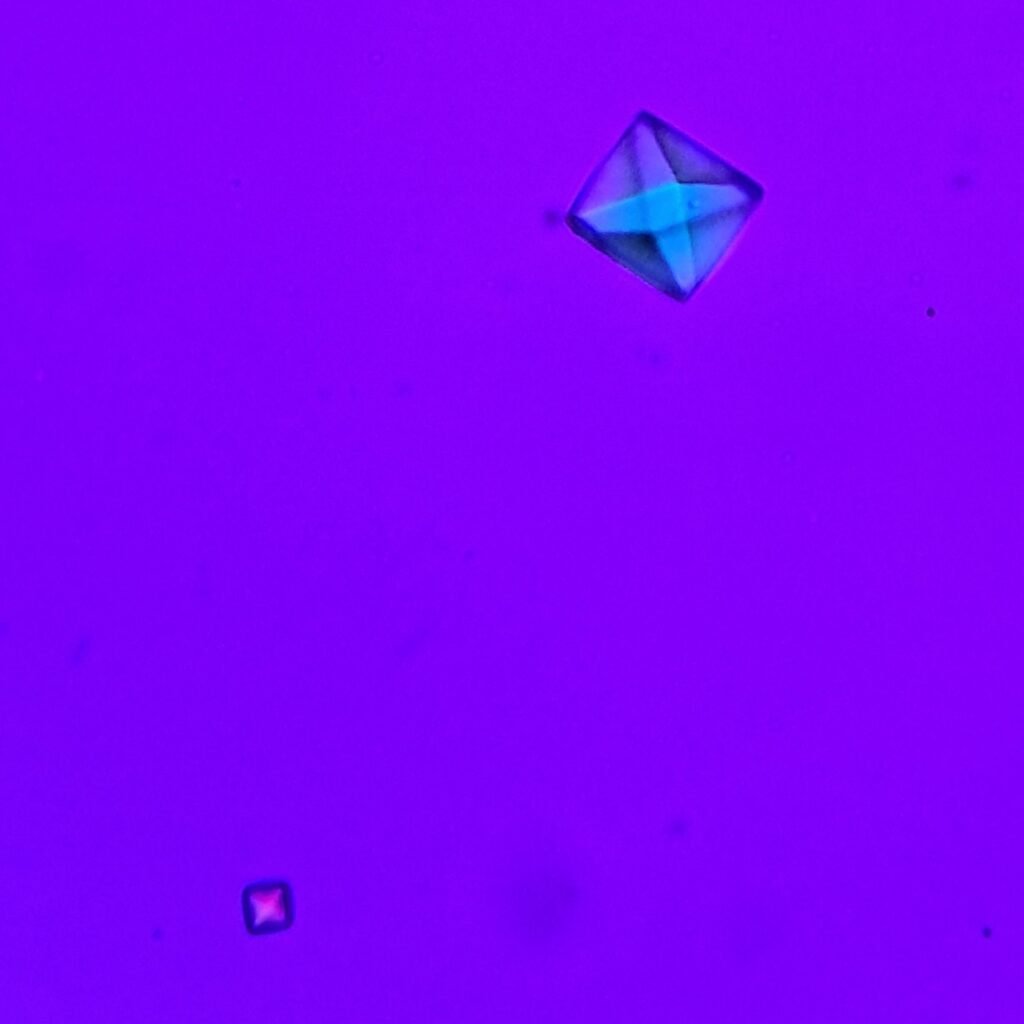
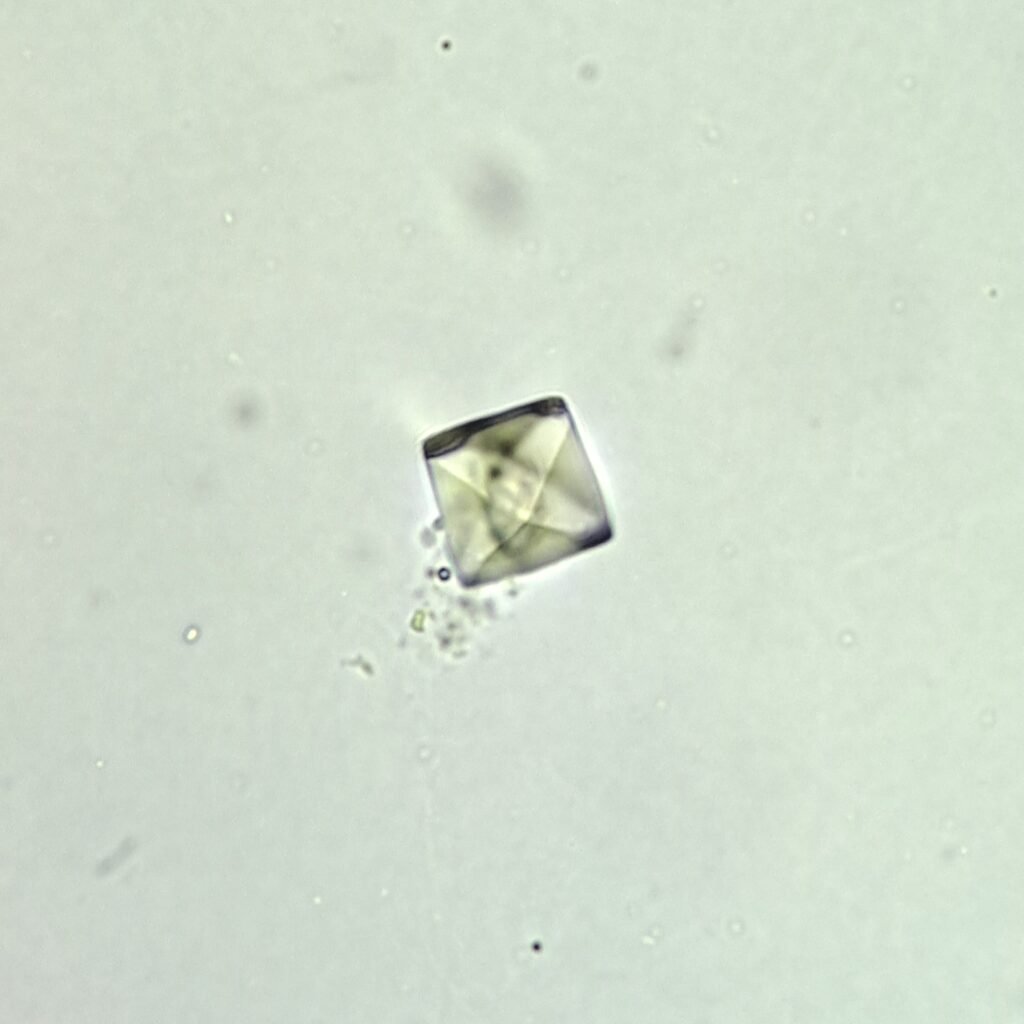
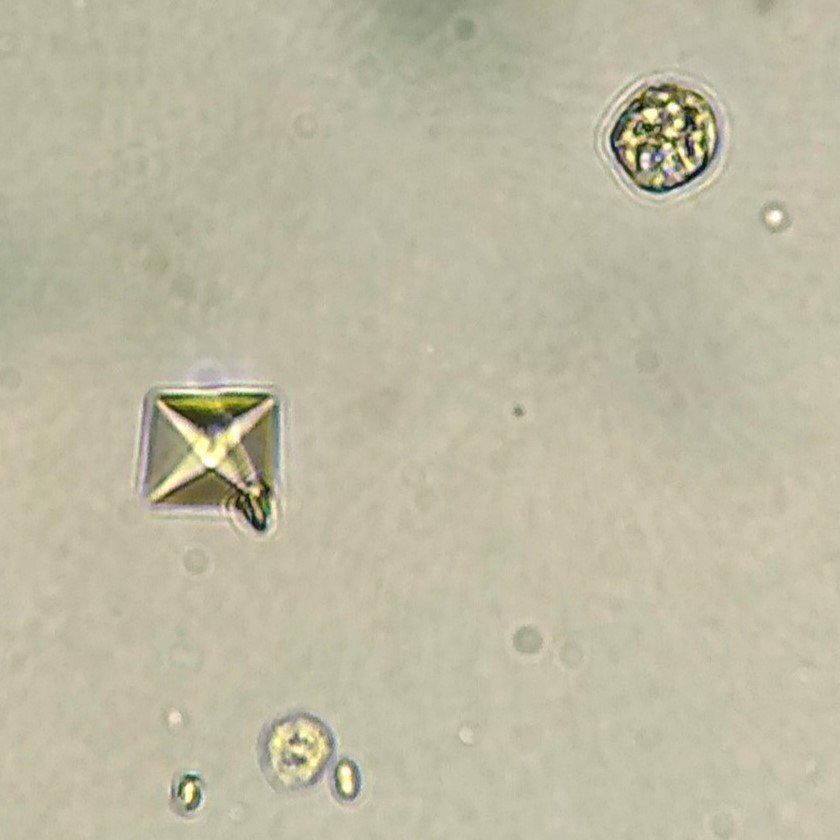
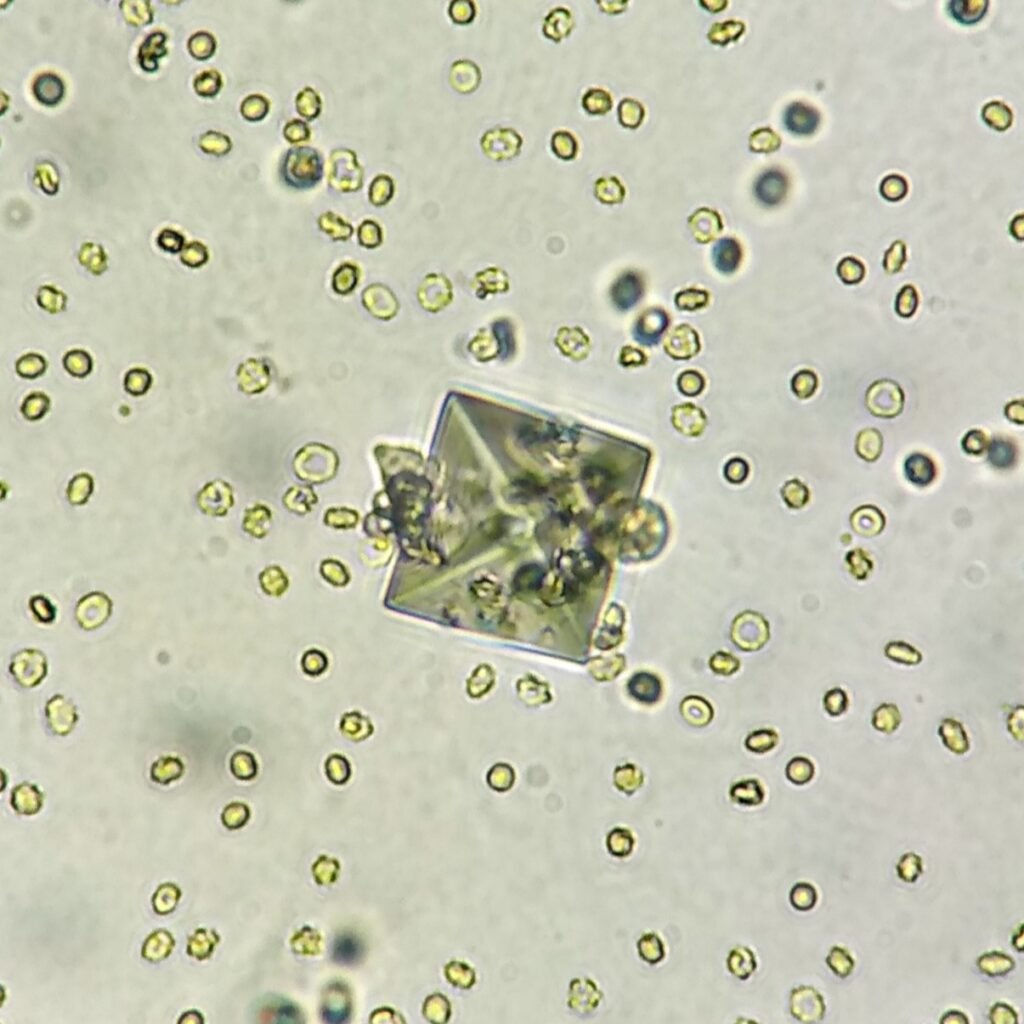
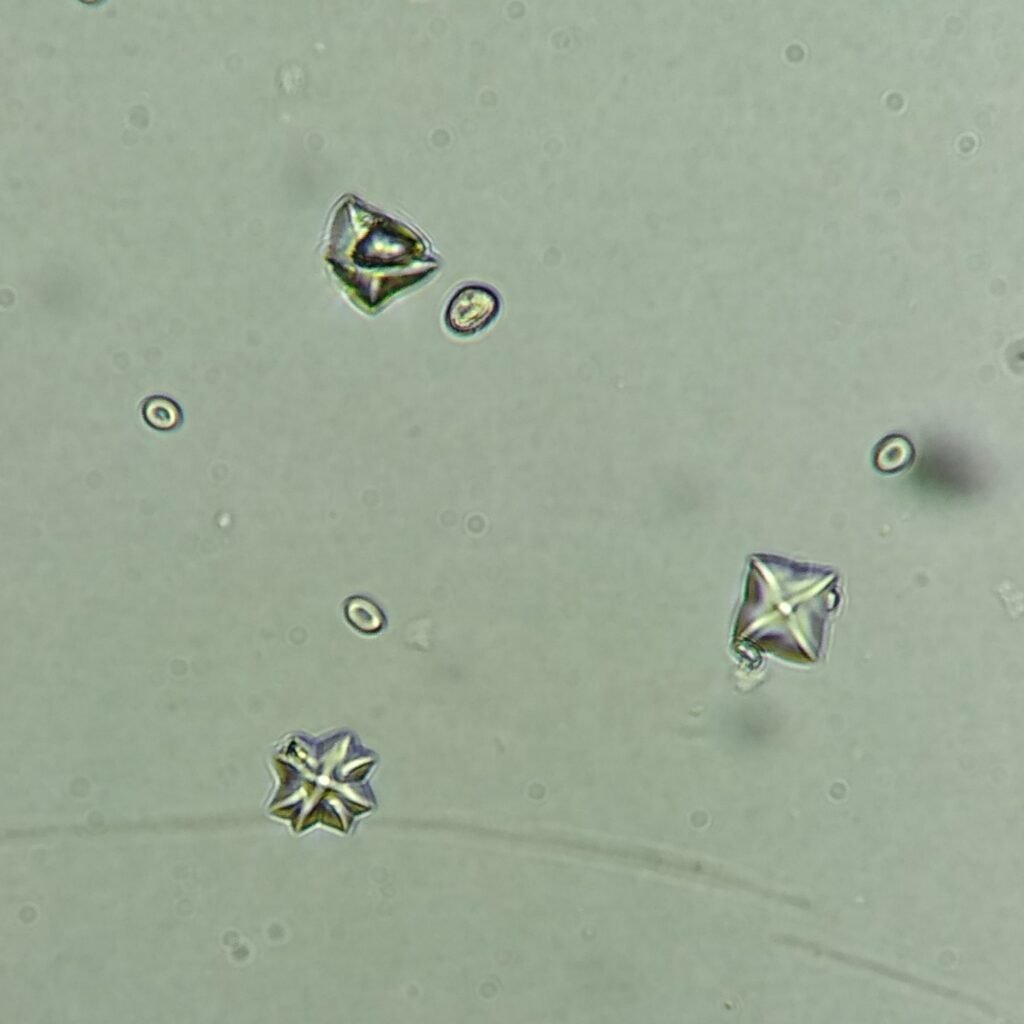
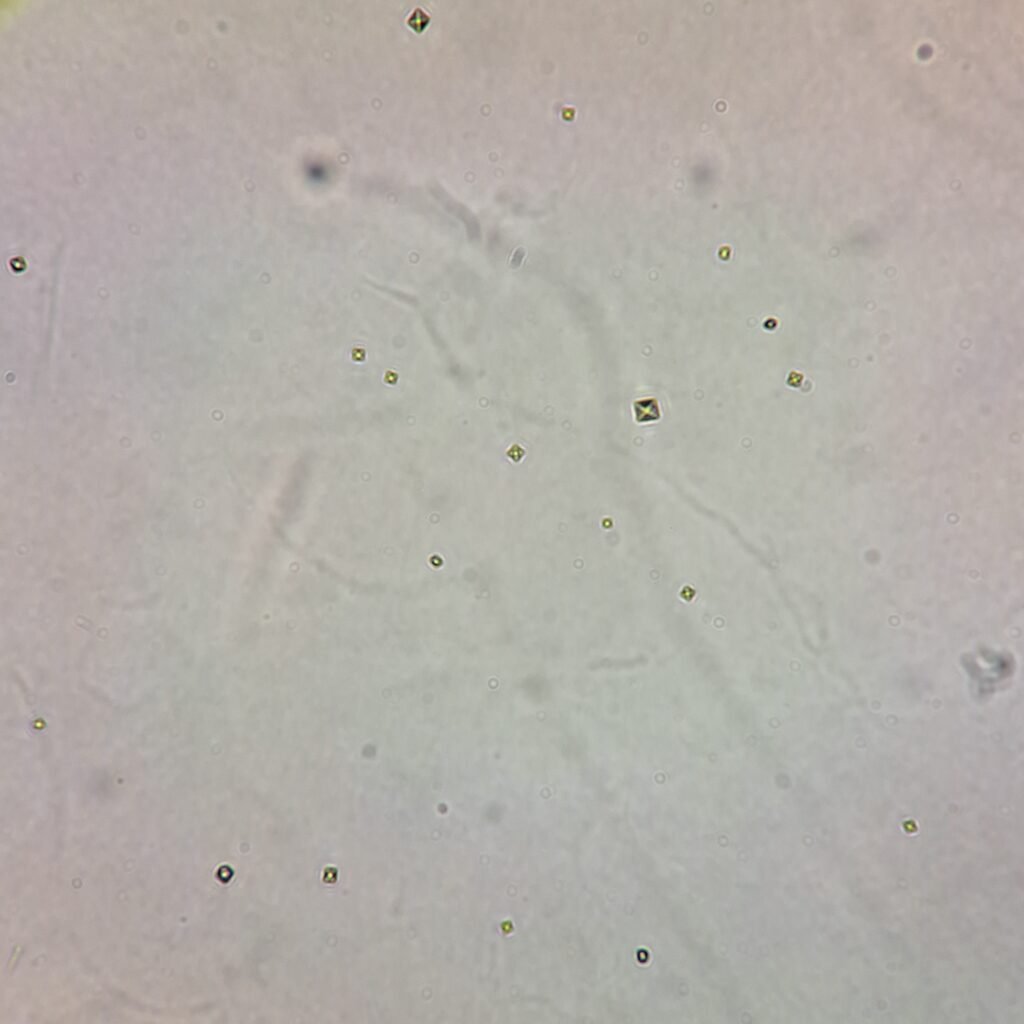
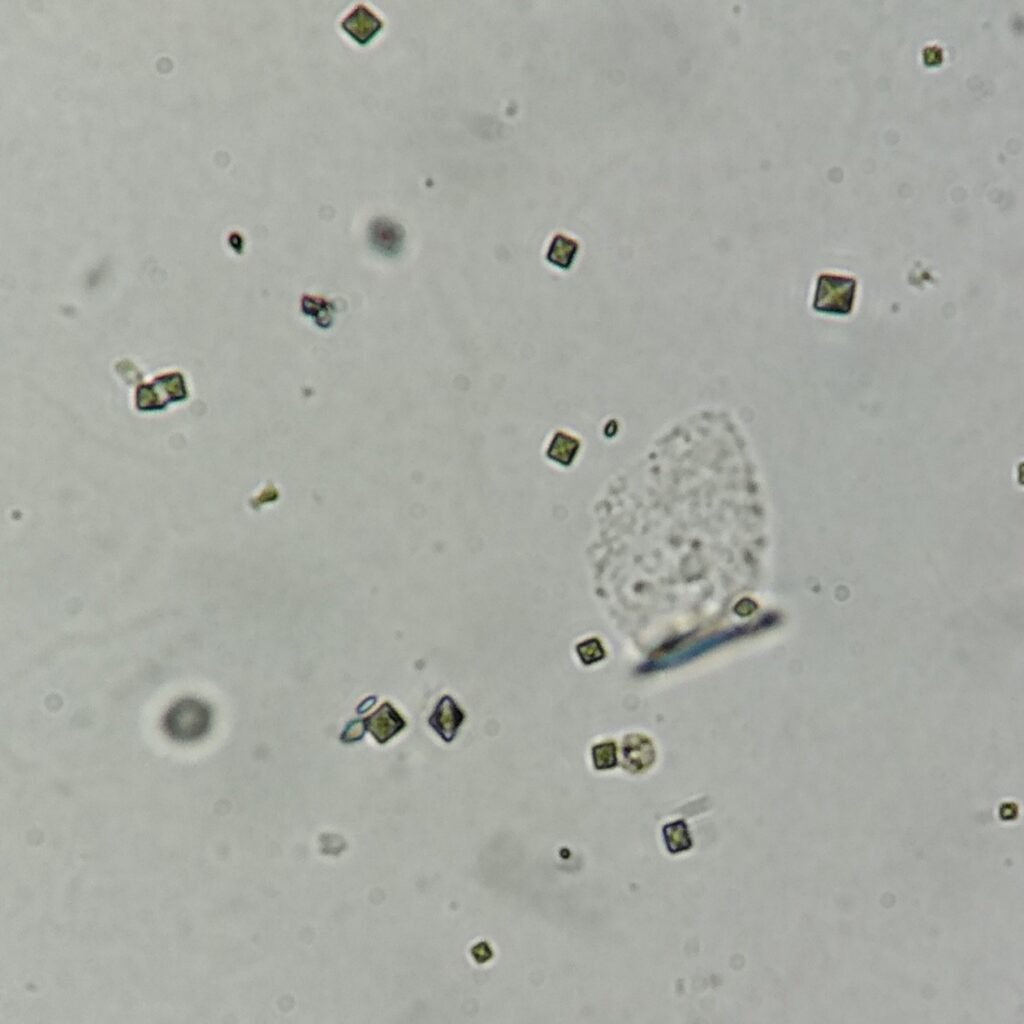
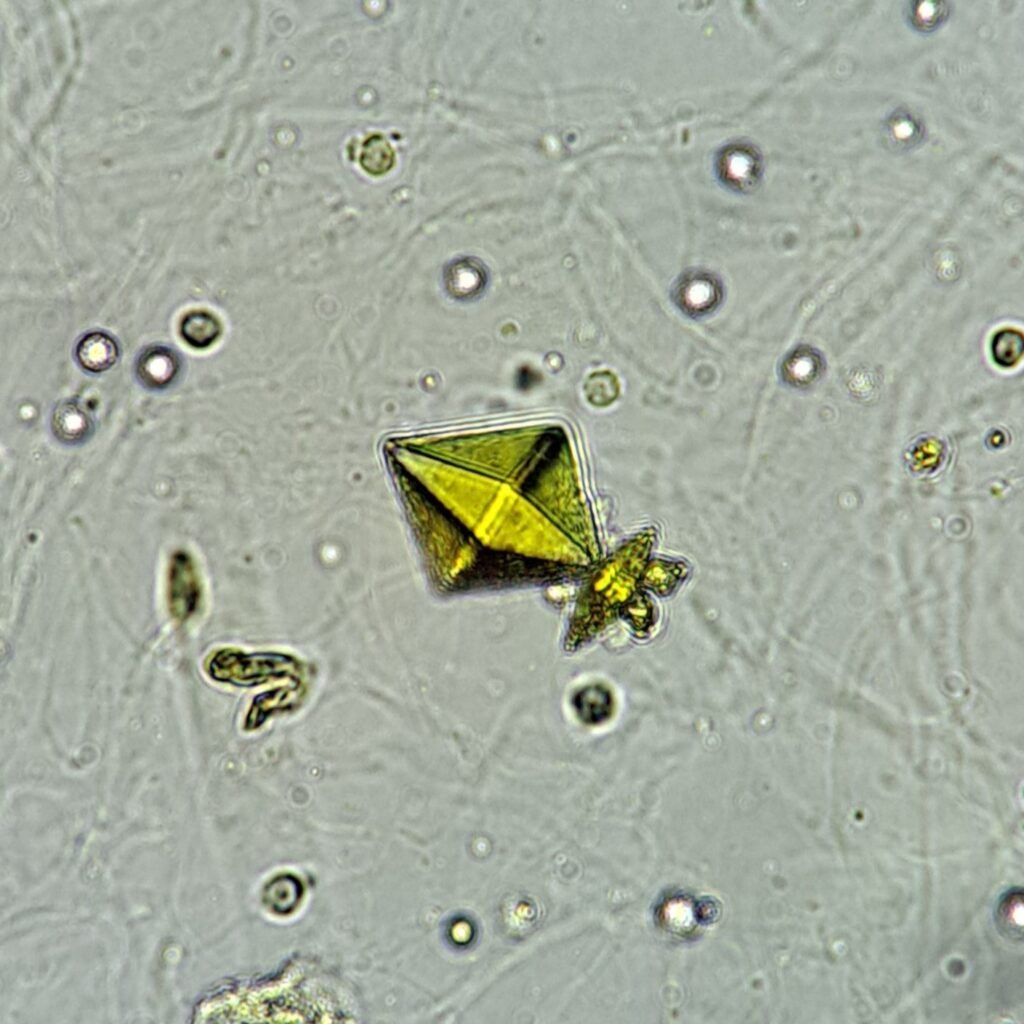
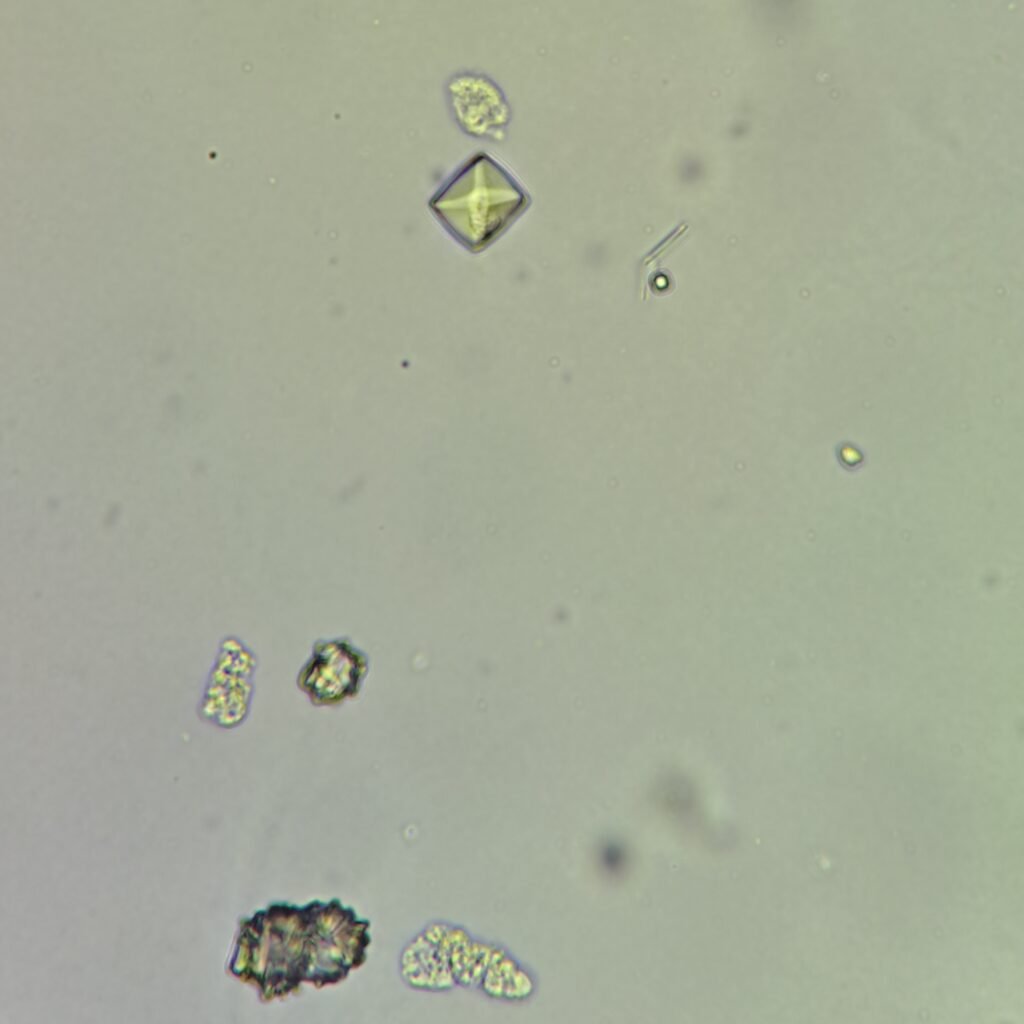
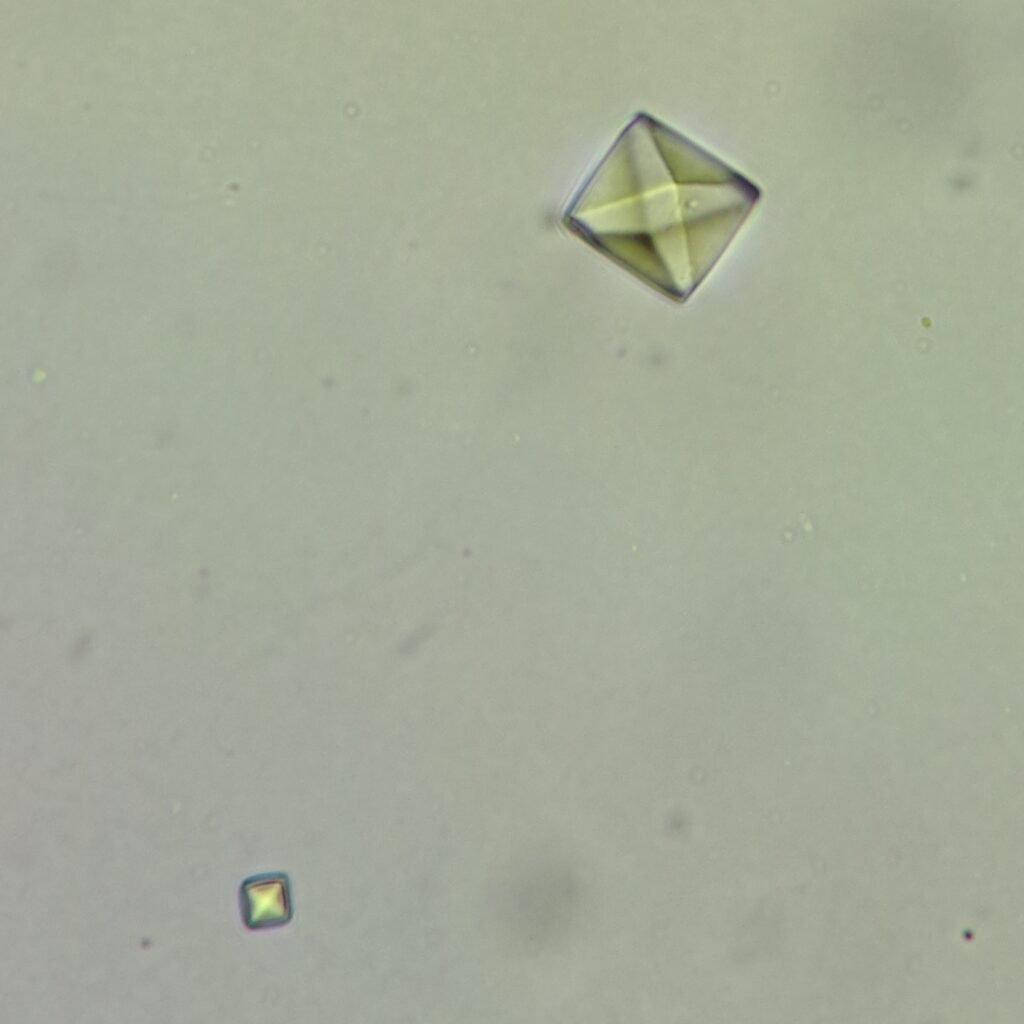
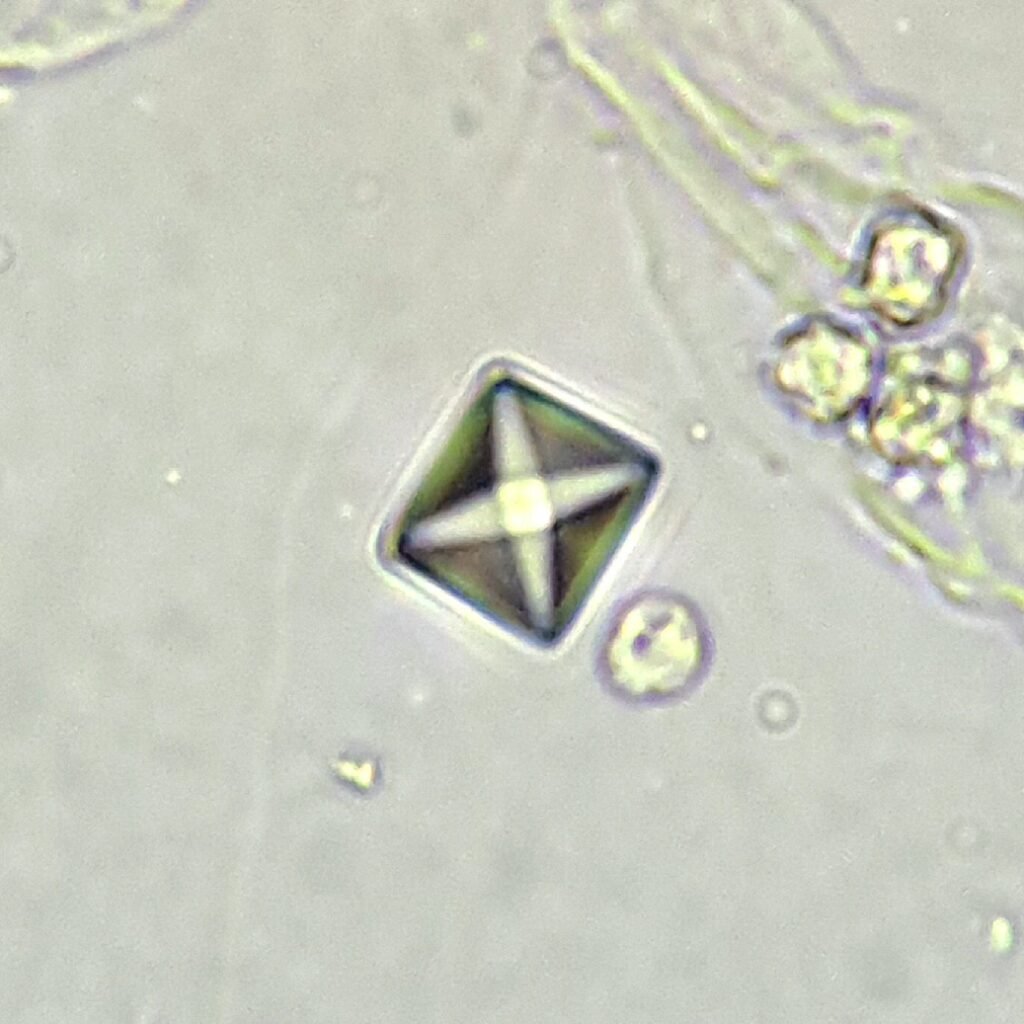
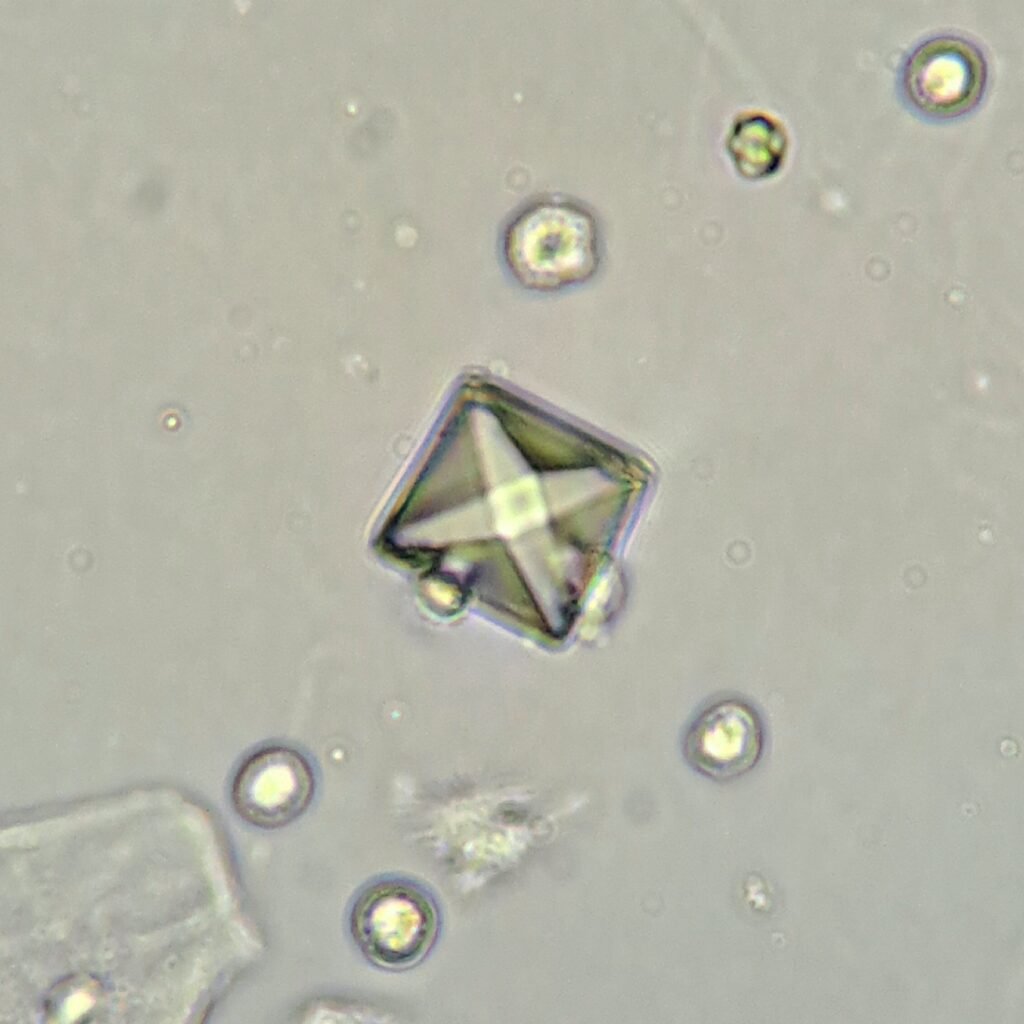
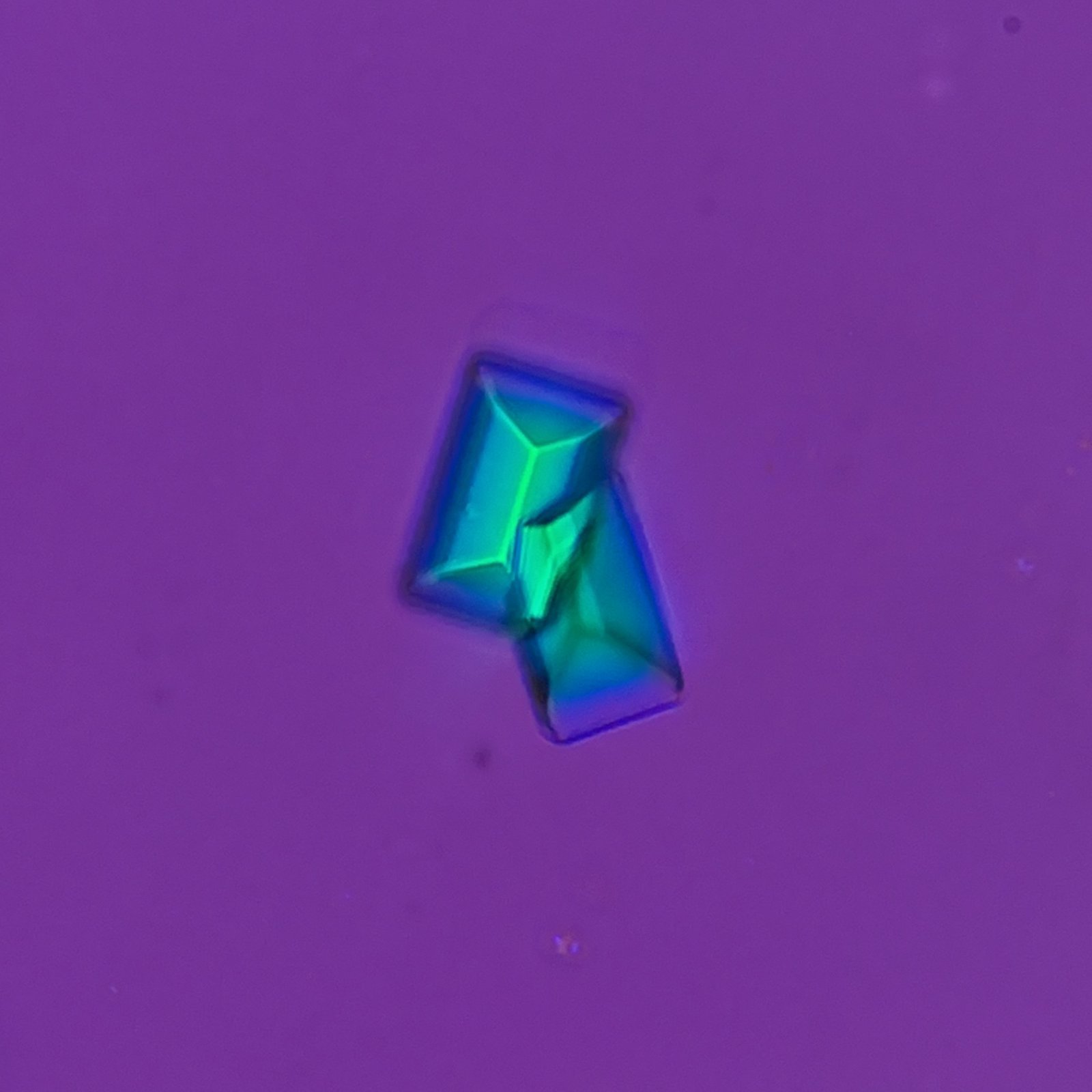
Calcium Oxalate crystals usually take on the dihydrate form, appearing like two pyramids joined at the base. They may be described as “envelope-shaped.” They show birefringence under polarized light.
Check out more images in the gallery below.
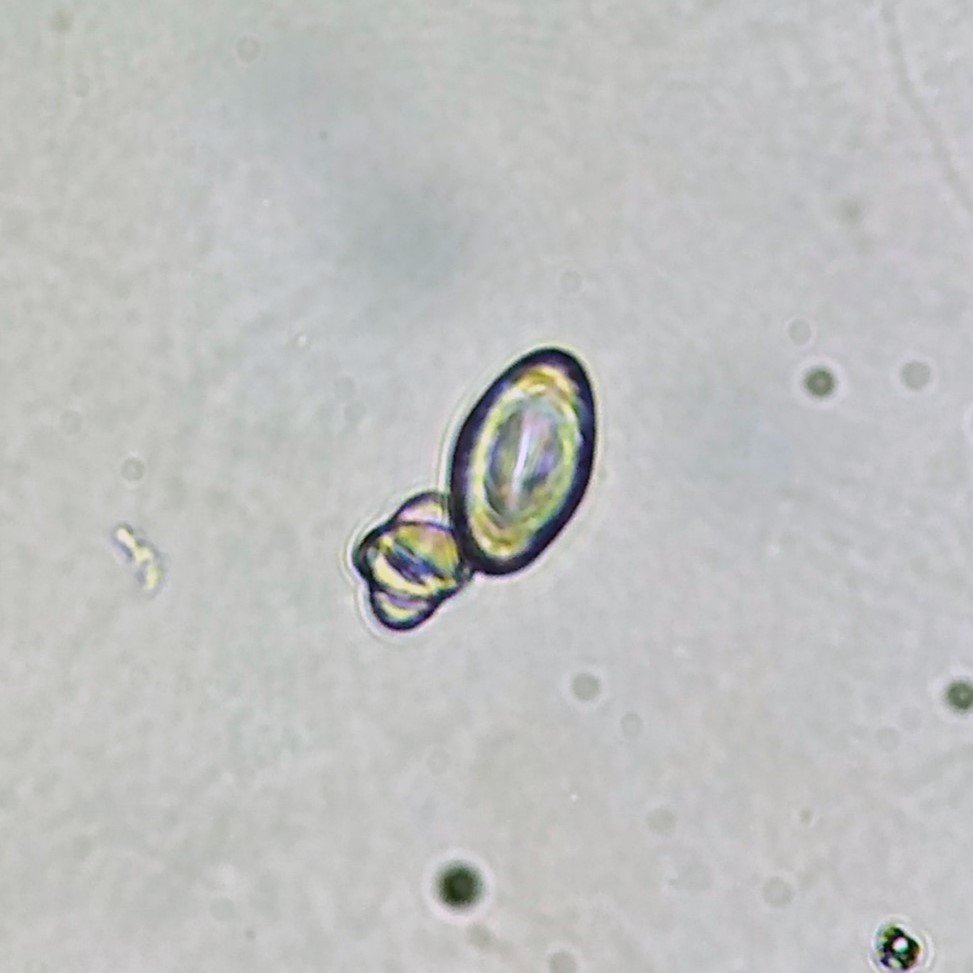
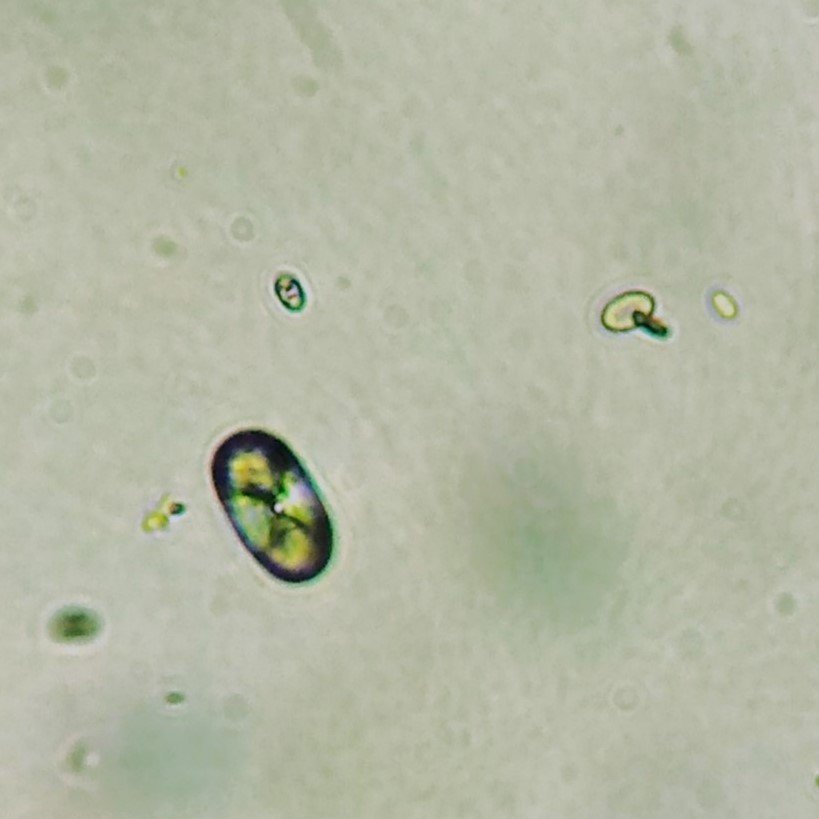
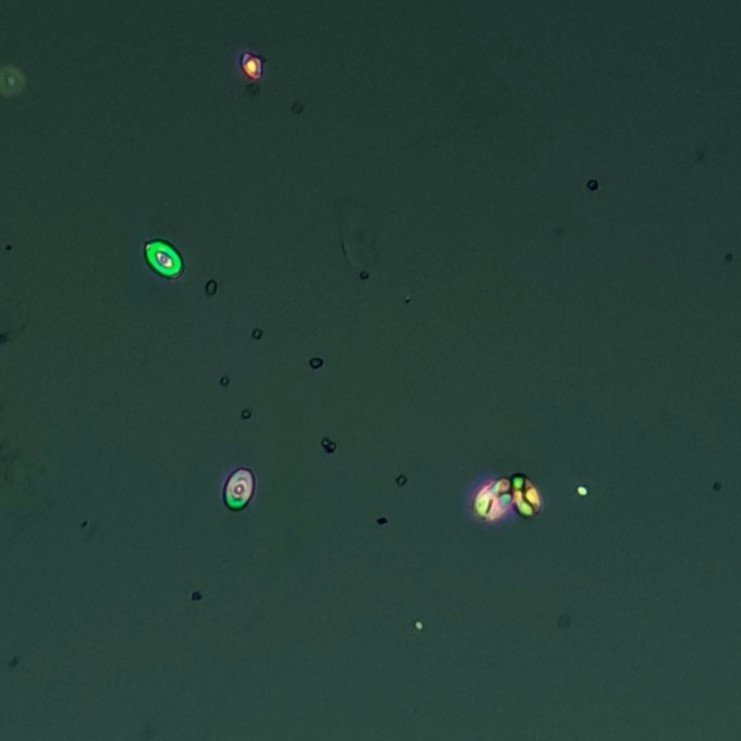
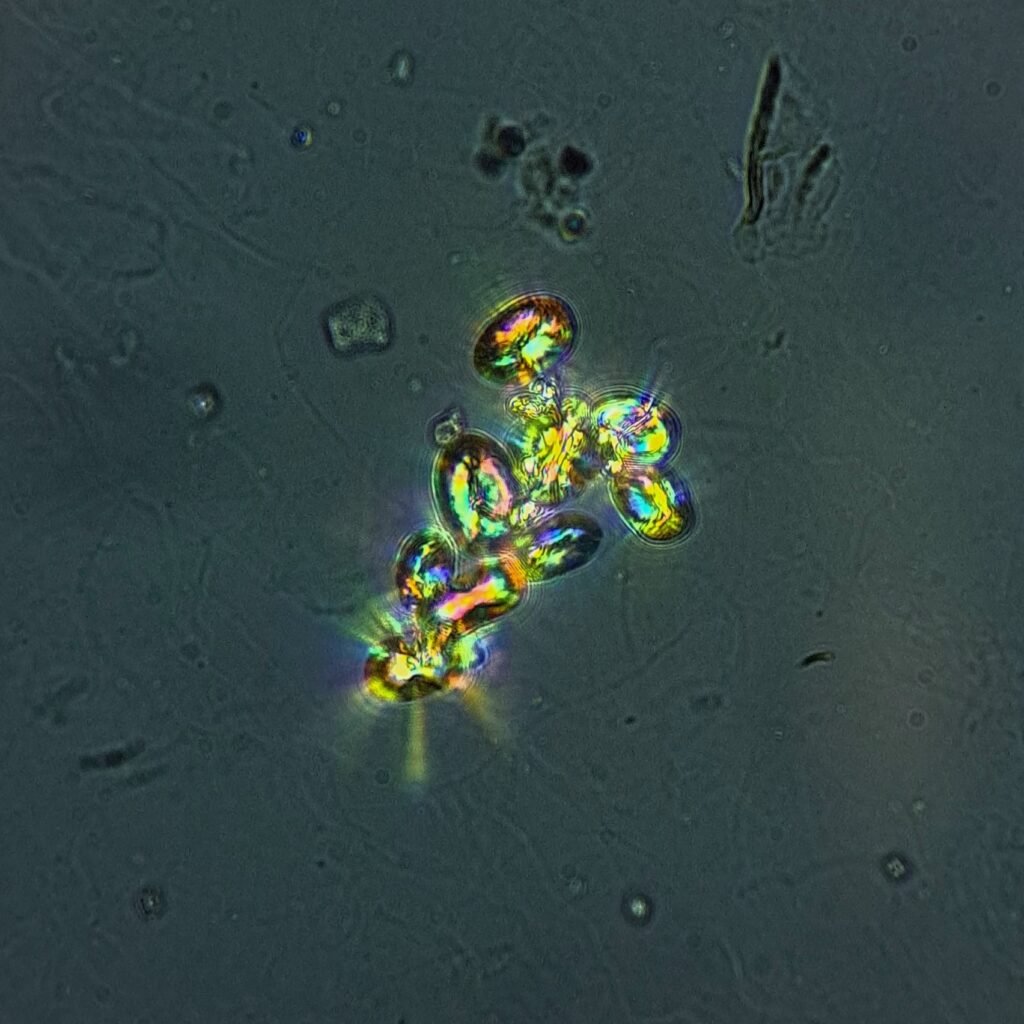
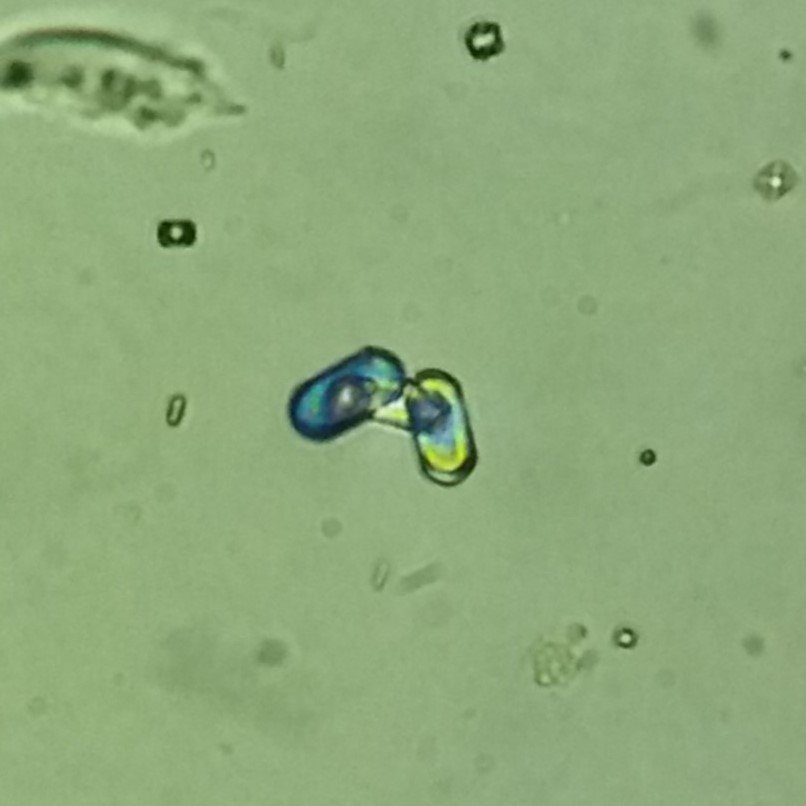
Monohydrate
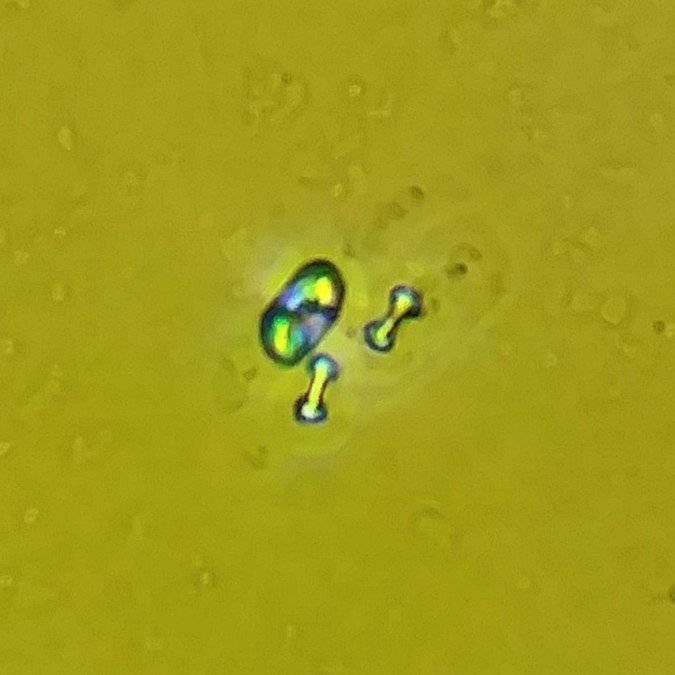
The monohydrate form is less common and has a wider variety of shapes, such as oval, elliptical, or dumbbell-shaped. They show birefringence under polarized light.
Check out more images in the gallery below.
Lookalikes
Monohydrate calcium oxalate crystals can be mistaken for red blood cells. Their positive birefringence can help identify them. Also, correlate with urine chemistries. Erythrocytes in the urine should coincide with positive blood on the urine dipstick.
RBCs

Sometimes, triple phosphate crystals can look like dihydrate calcium oxalate crystals. The pH of the urine can help distinguish the type of crystal, as triple phosphate is usually in alkaline urine, but this may not help if the urine is more on the neutral side. Looking around for a more classic shape of the crystal typically helps.
Triple Phos

Dihydrate Gallery
Monohydrate Gallery
Other Crystals




Hippuric Acid

Tyrosine

