Neutrophils
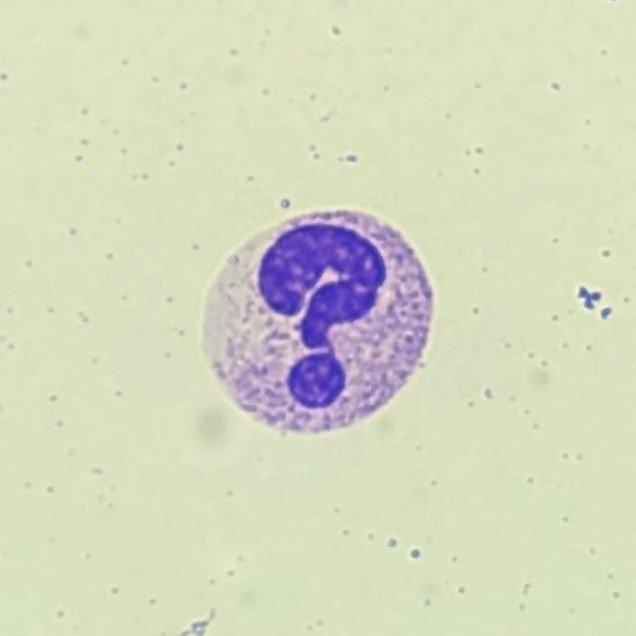
Fine secondary granules stain the cytoplasm pink. Nucleus is separated into lobes, staining dark purple with clumpy chromatin.
Lymphocytes
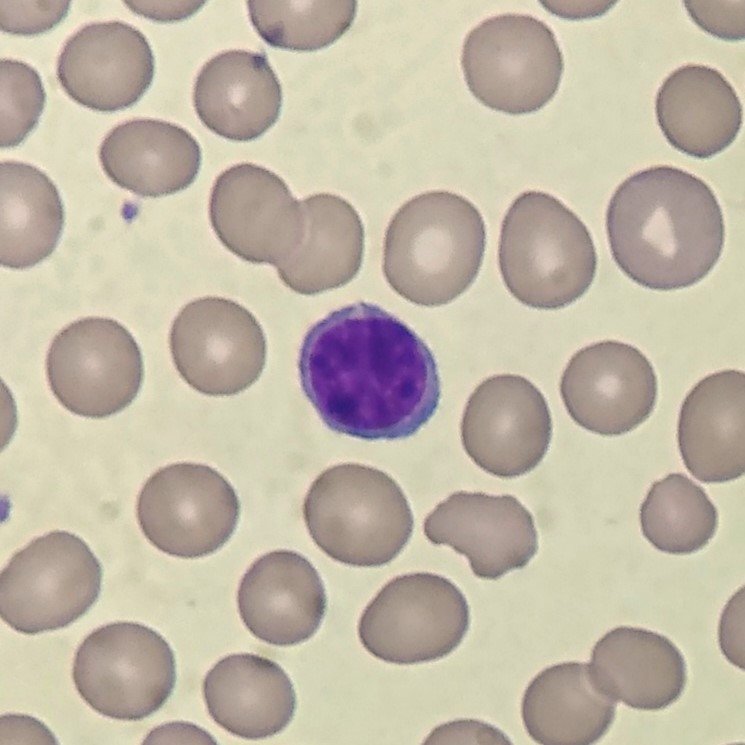
Second most common circulating WBC (roughly 20-40%).
Composed of three types: T Cells, B Cells, NK (natural killer) cells. Circulating lymphocytes are resting and further differentiate when stimulated.
Important in fighting viral infections.
Monocytes
Make up between 2-10% of circulating WBCs.
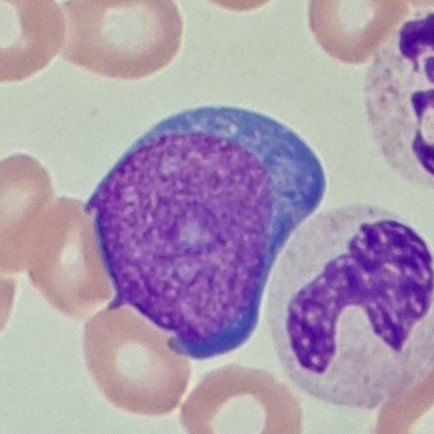
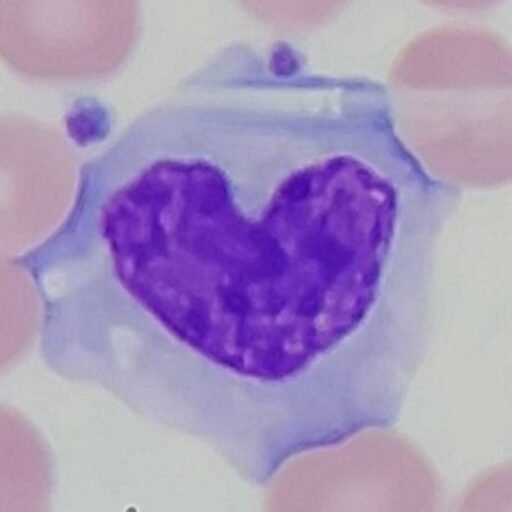
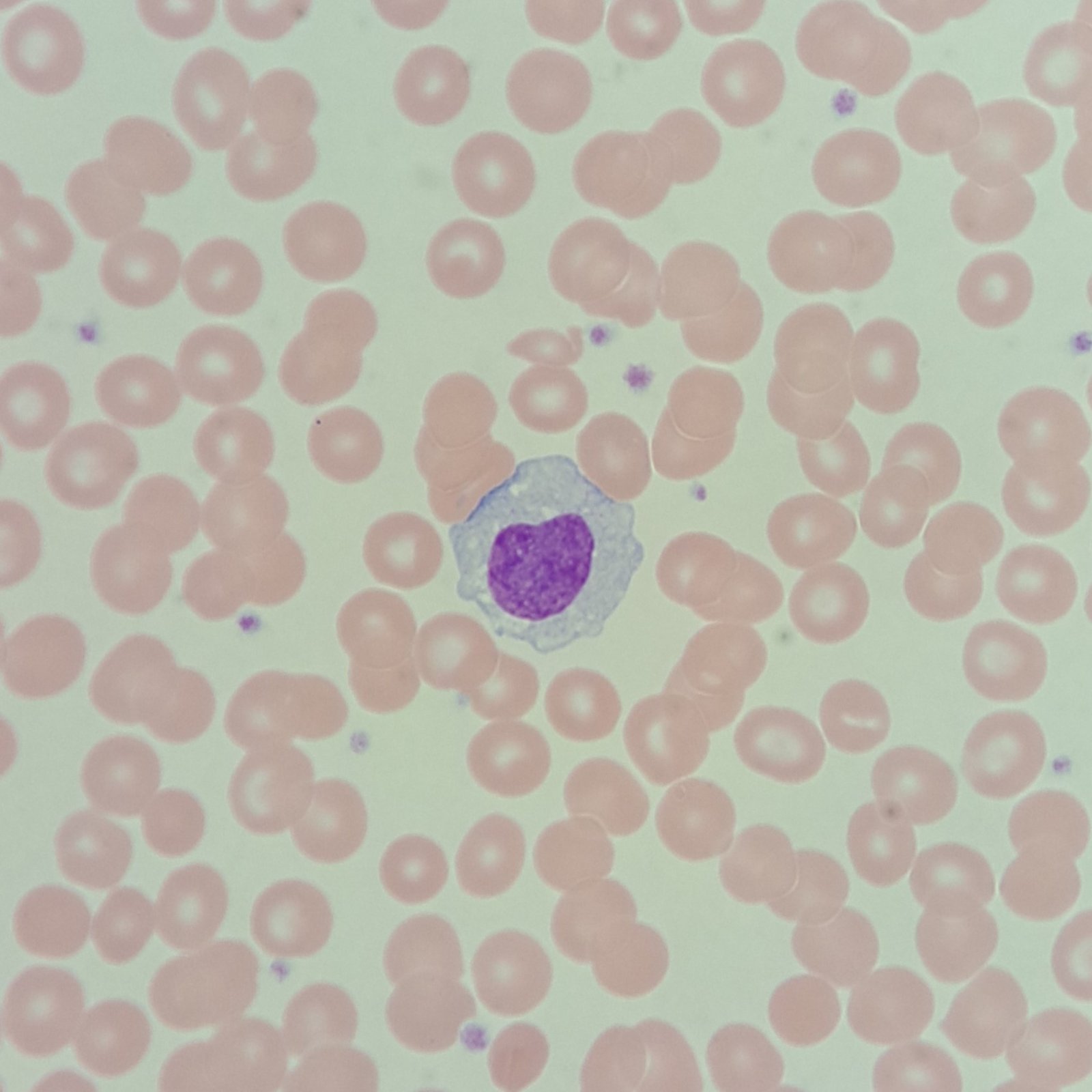
Largest of the circulating WBCs. Cytoplasm stains a grayish blue and has a “ground glass” appearance due to numerous fine purplish granules. Most likely of the WBCs to have vacuoles. Nucleus is often irregularly shaped with folds or indents. Chromatin is lacy.
Phagocytize foreign materials and aid in removal of dead cells and debris.
Eosinophils
Make up <5% of circulating WBCs.
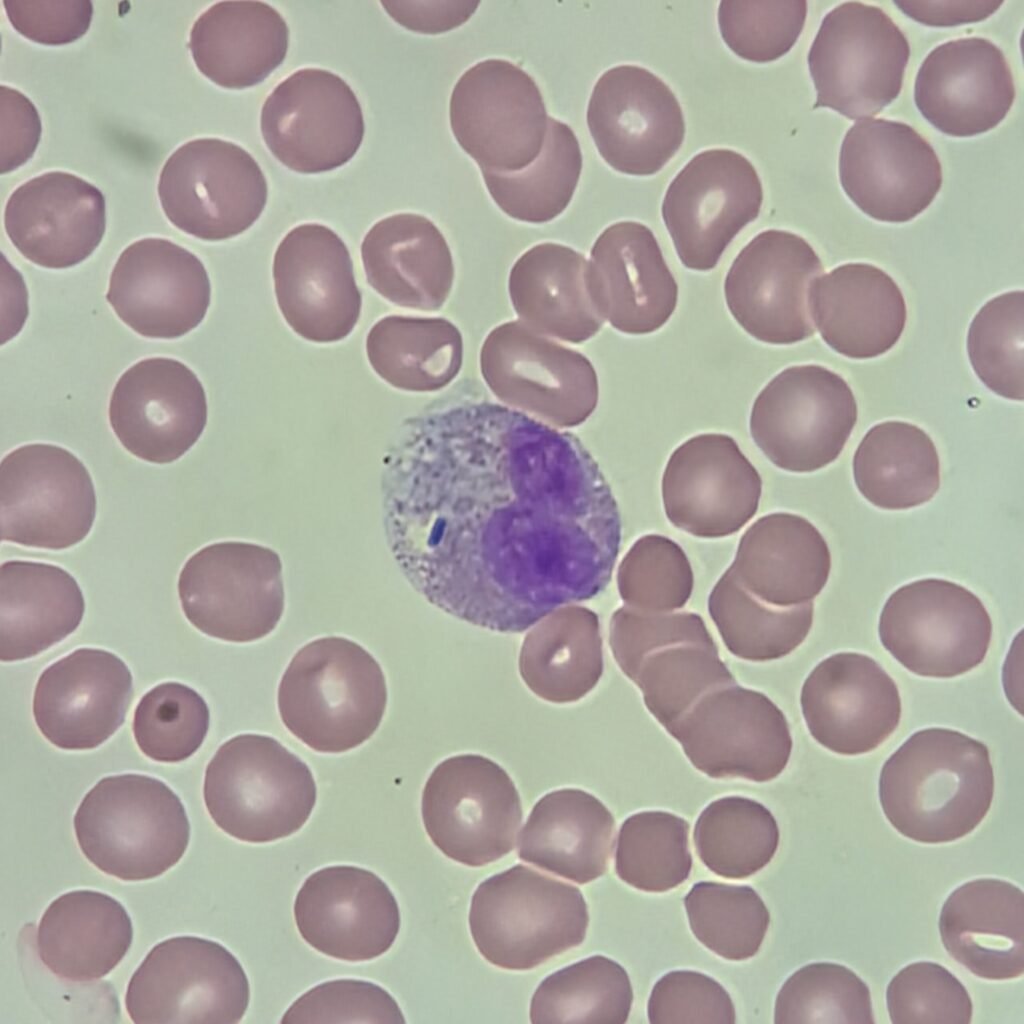
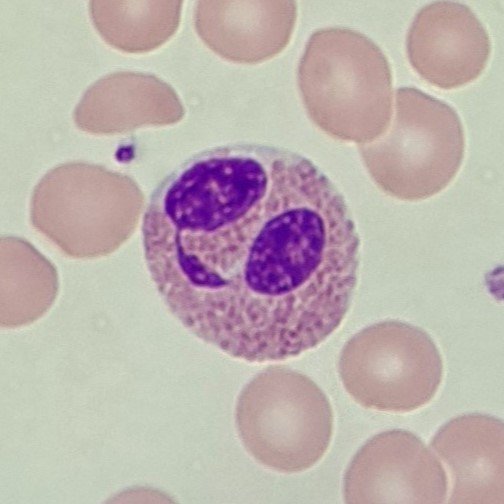
Large reddish-orange granules. Typically have bilobed nucleus with dark purple clumpy chromatin.
Important in fighting parasitic infections. Involved in allergic reactions.
Basophils
Least common circulating WBC (<2%).
Large dark purple granules fill the cell and often overlap the nucleus.
Function similar to eosinophils with roles in allergic reactions and in fighting parasitic infections.
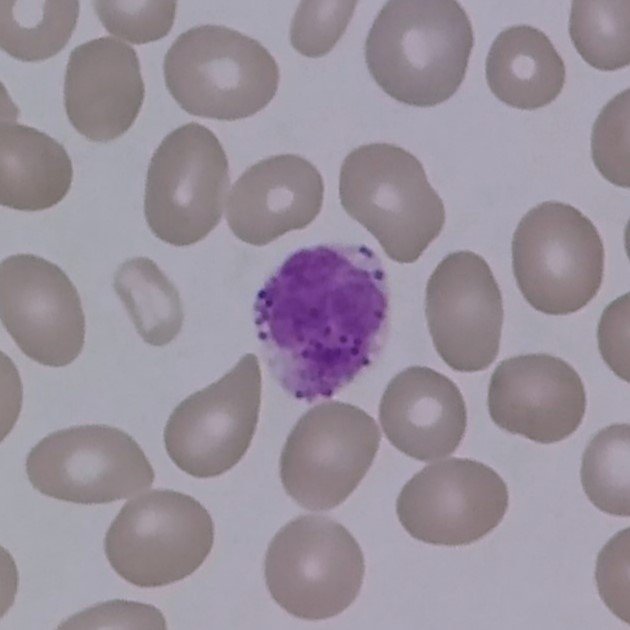
Blasts
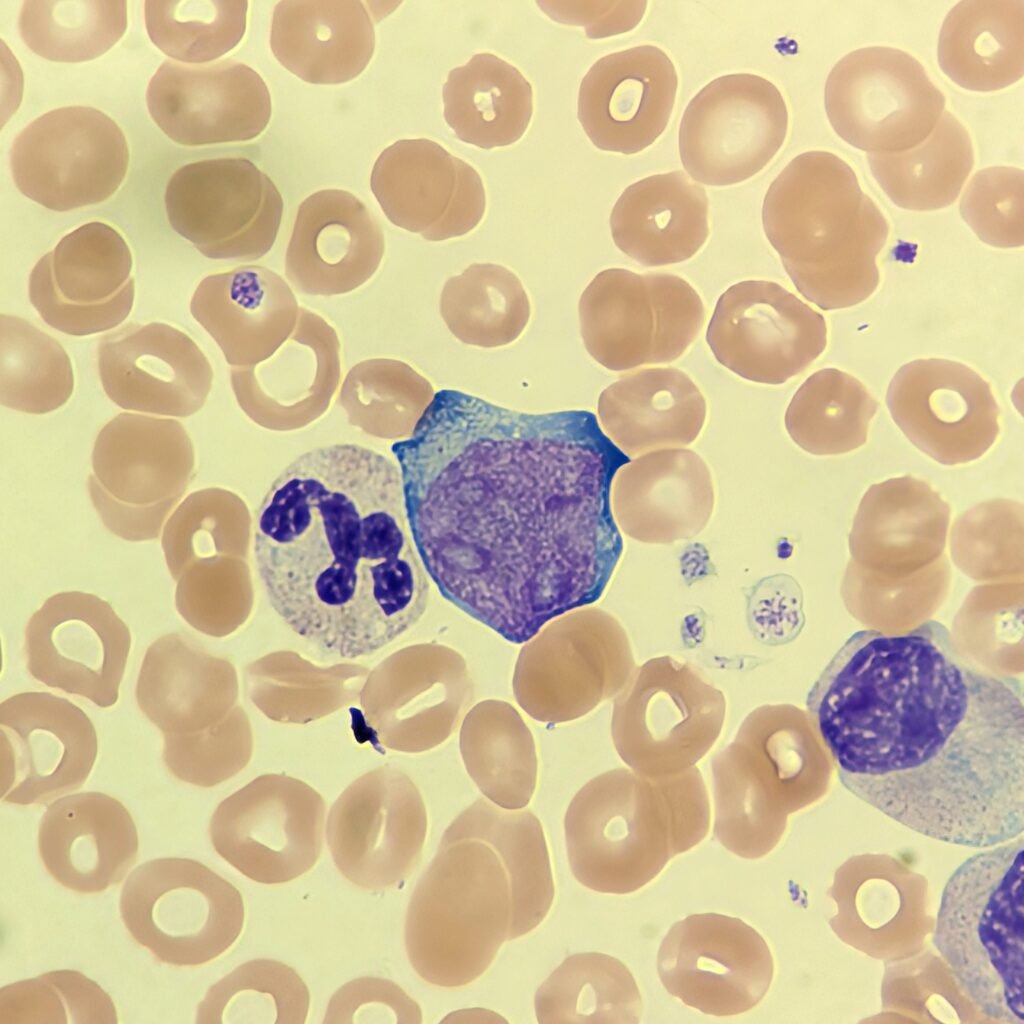
Cytoplasm is scant and basophilic. Usually agranular. Nucleus contains visible nucleoli with fine chromatin.
Presence in peripheral blood usually indicates a type of leukemia.