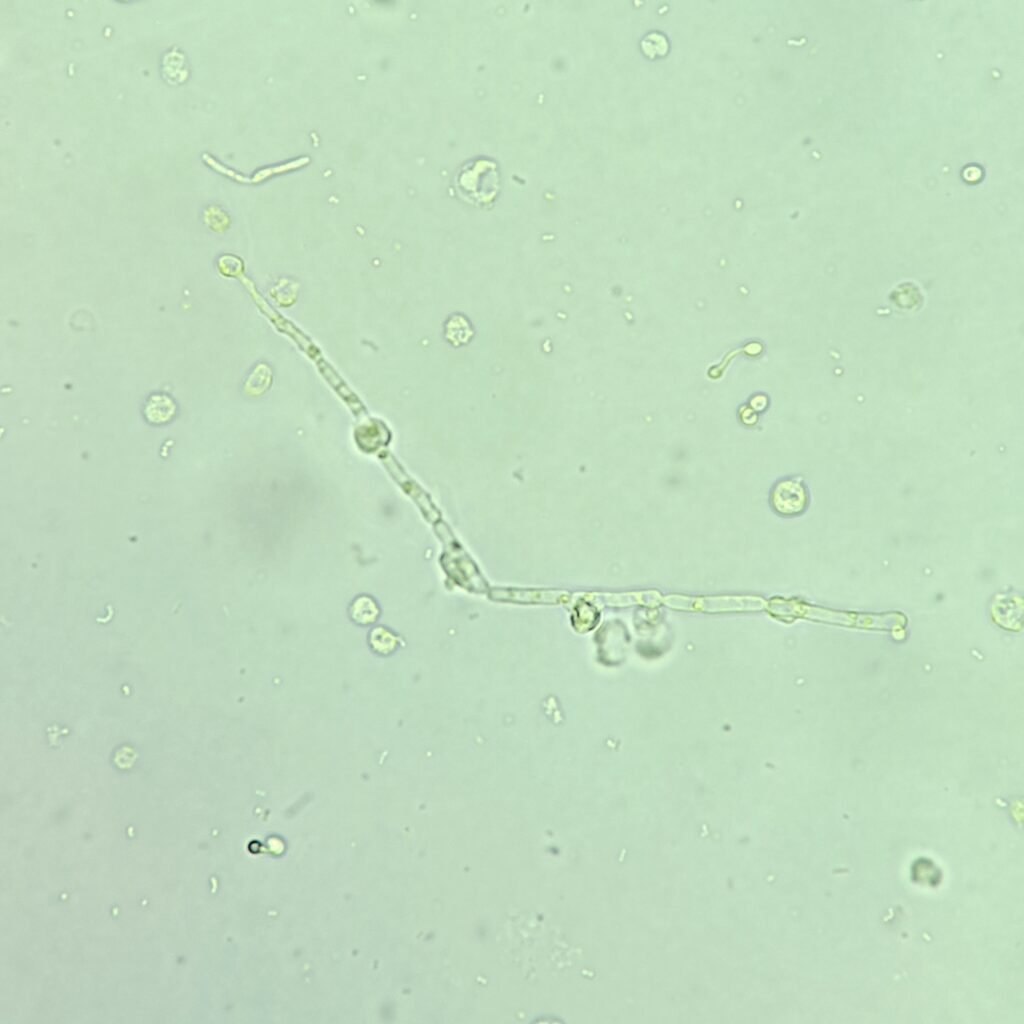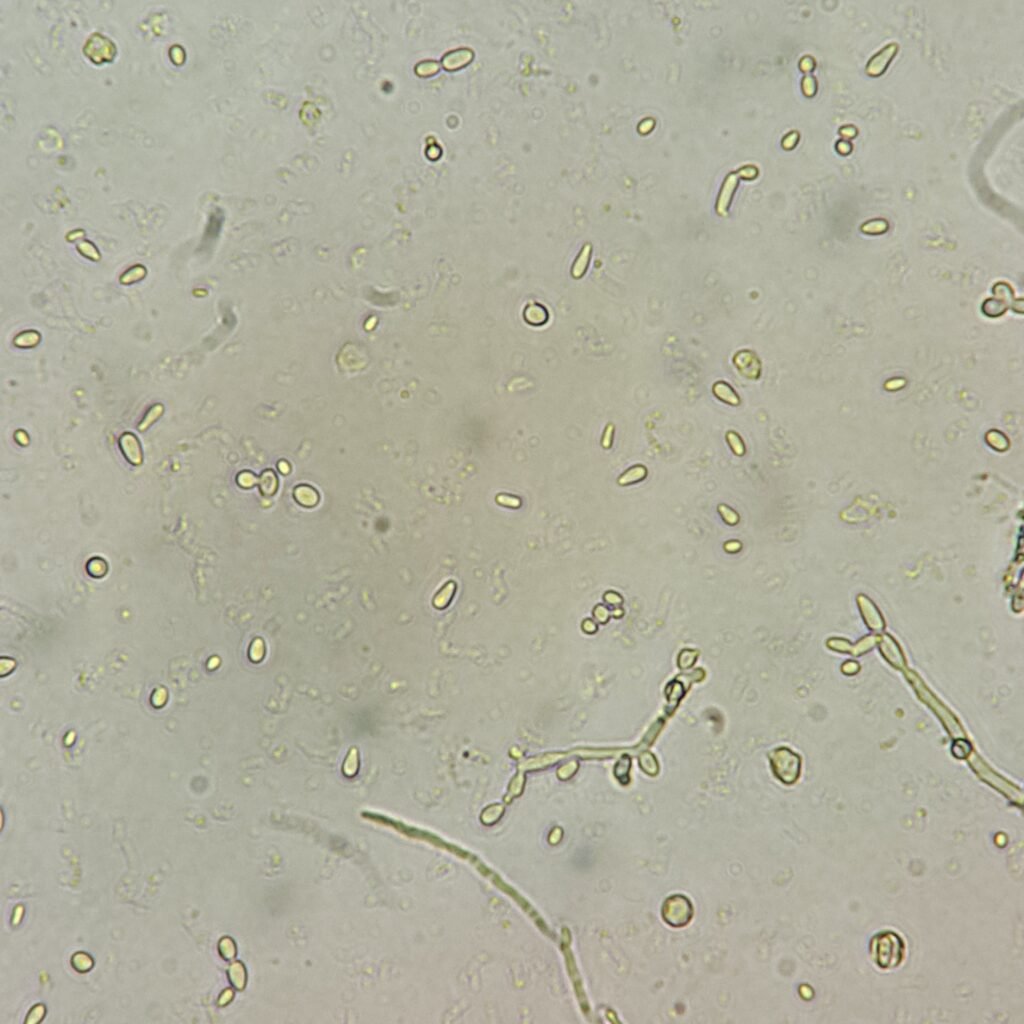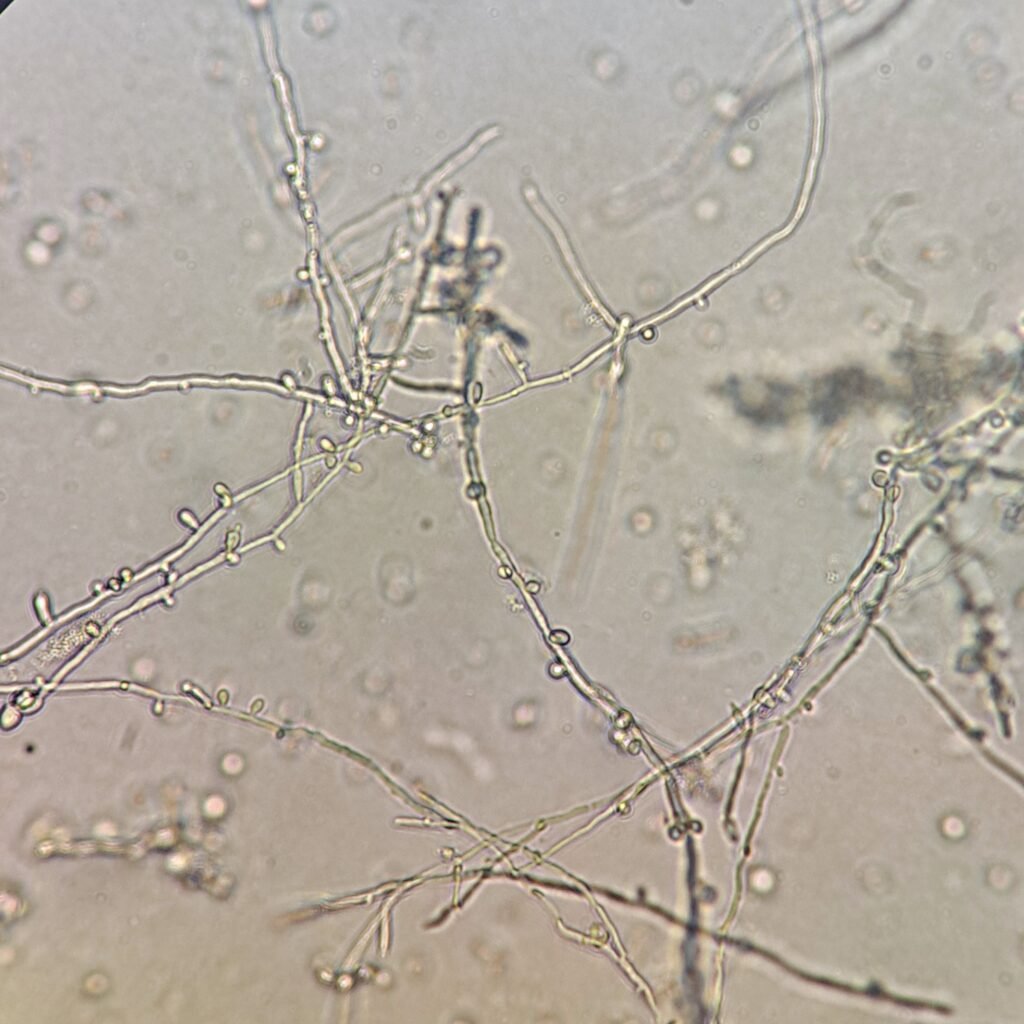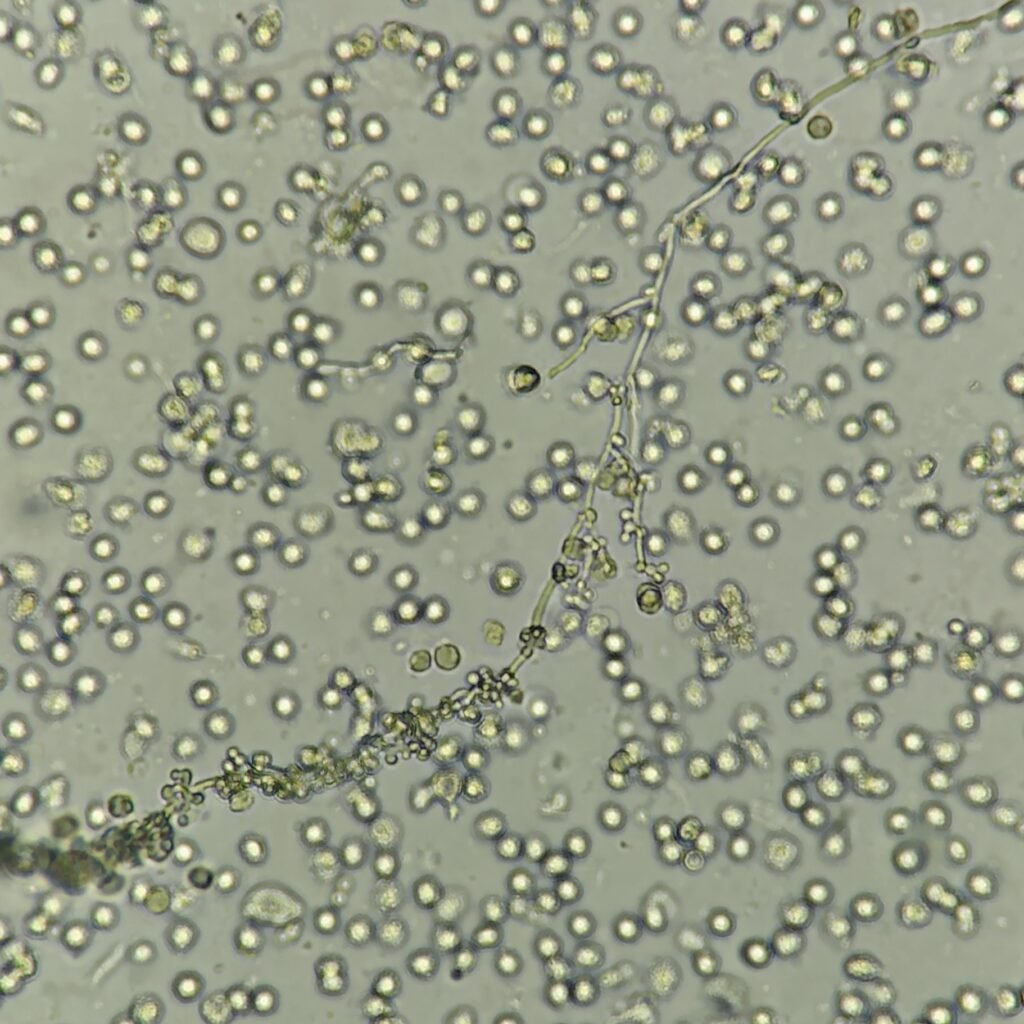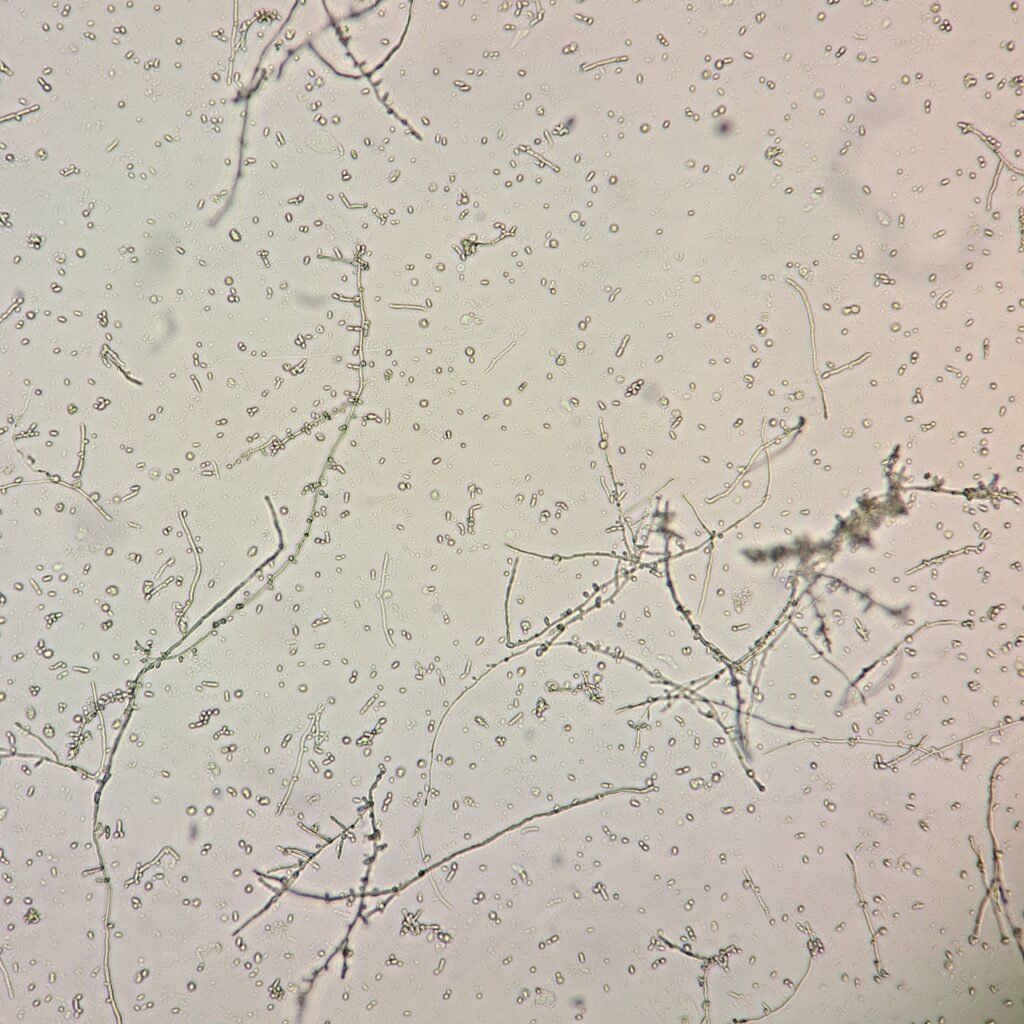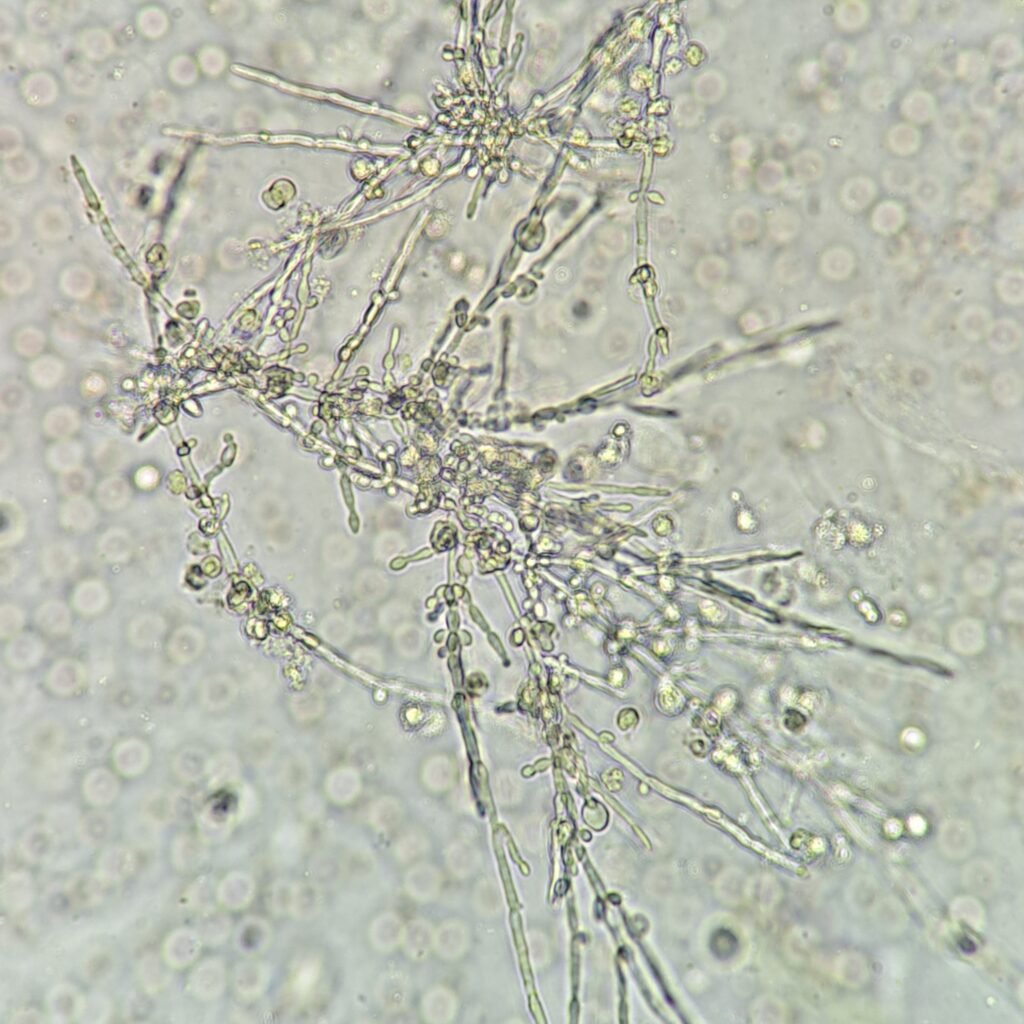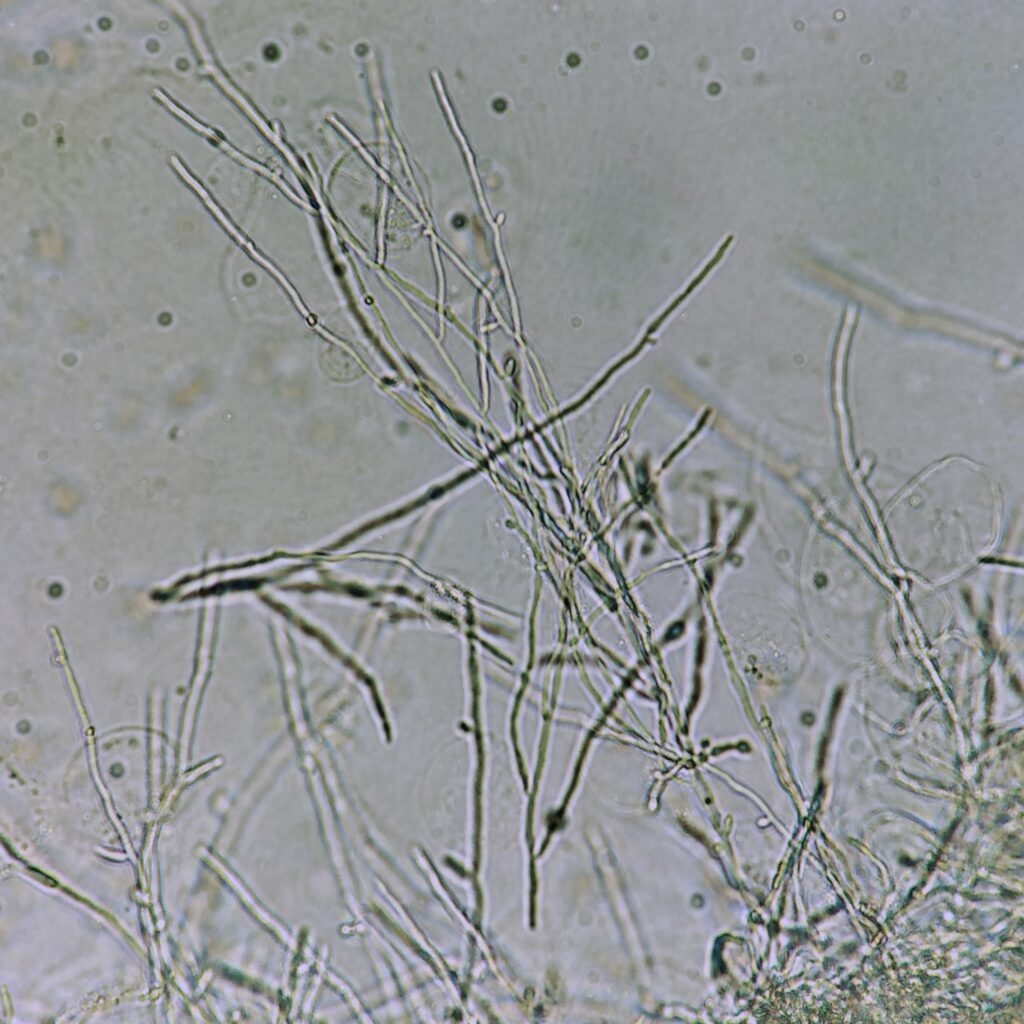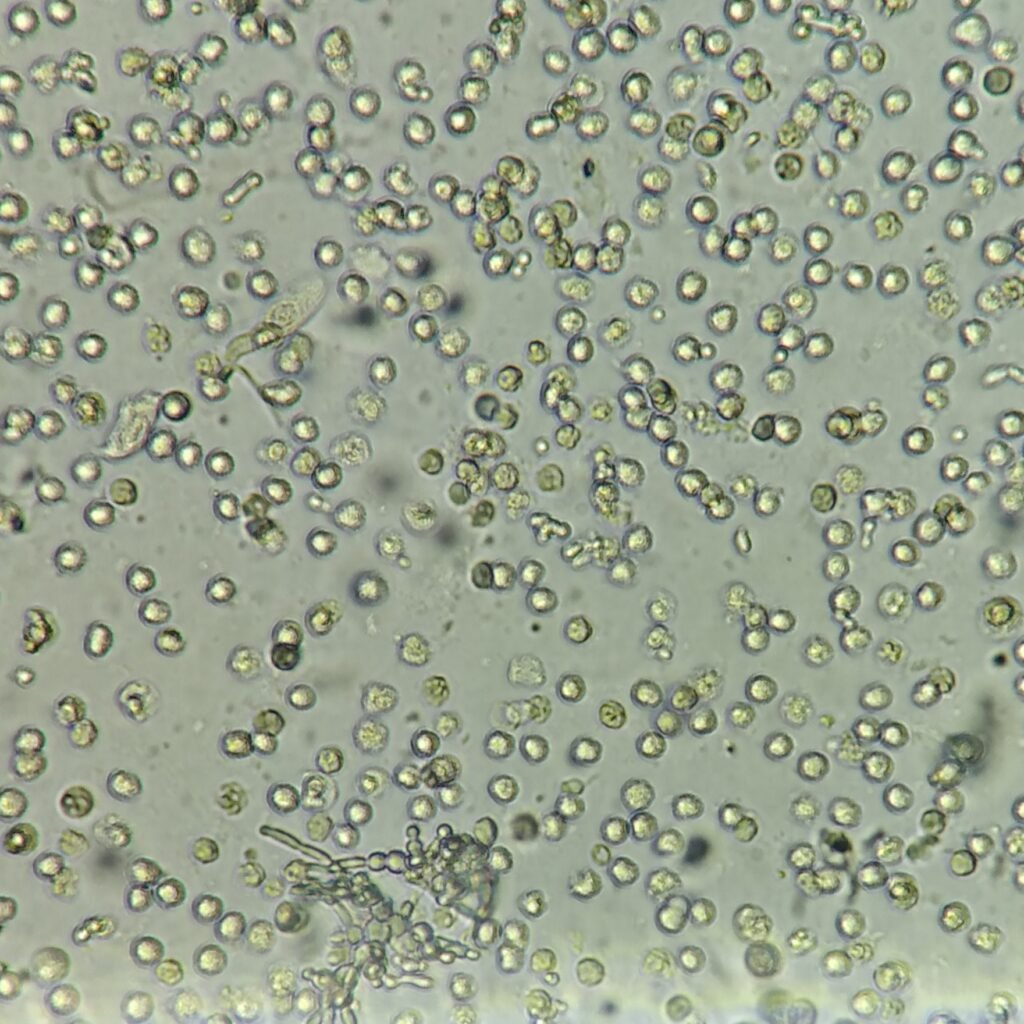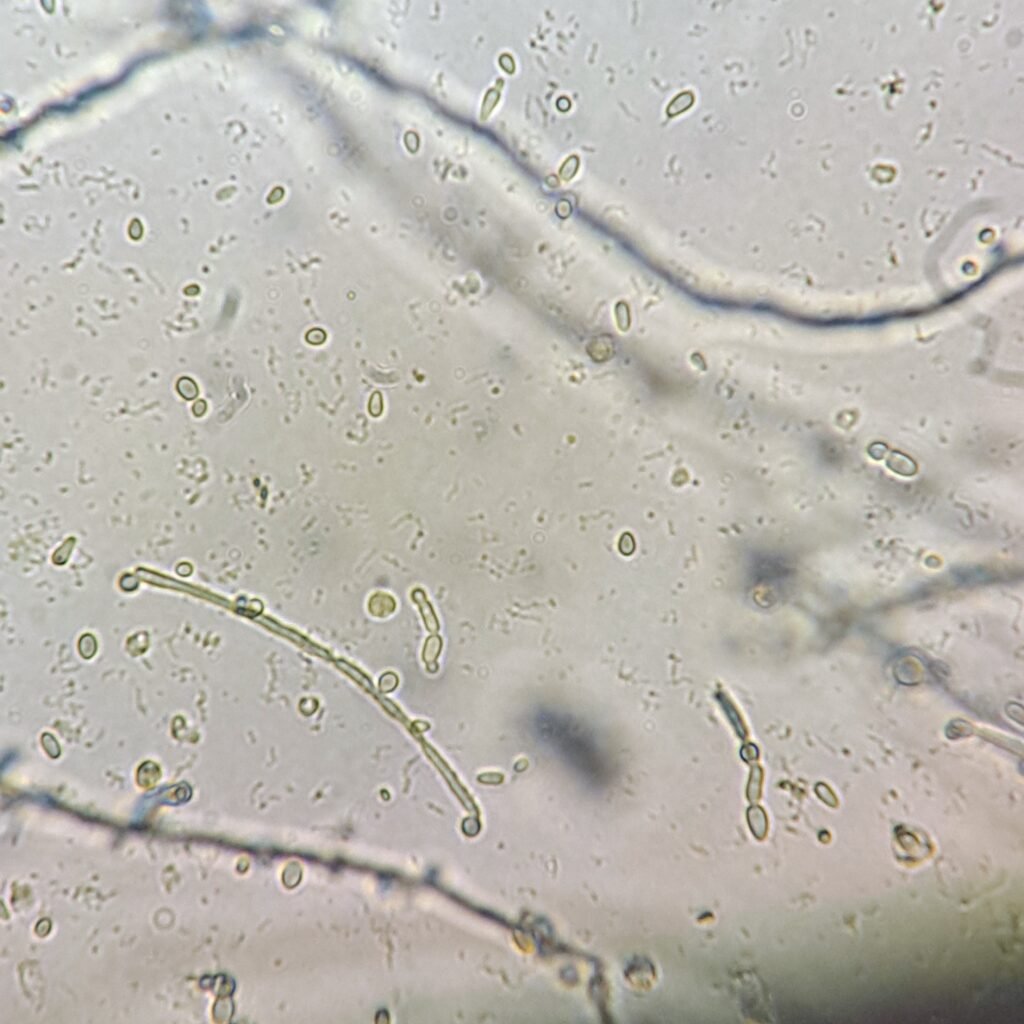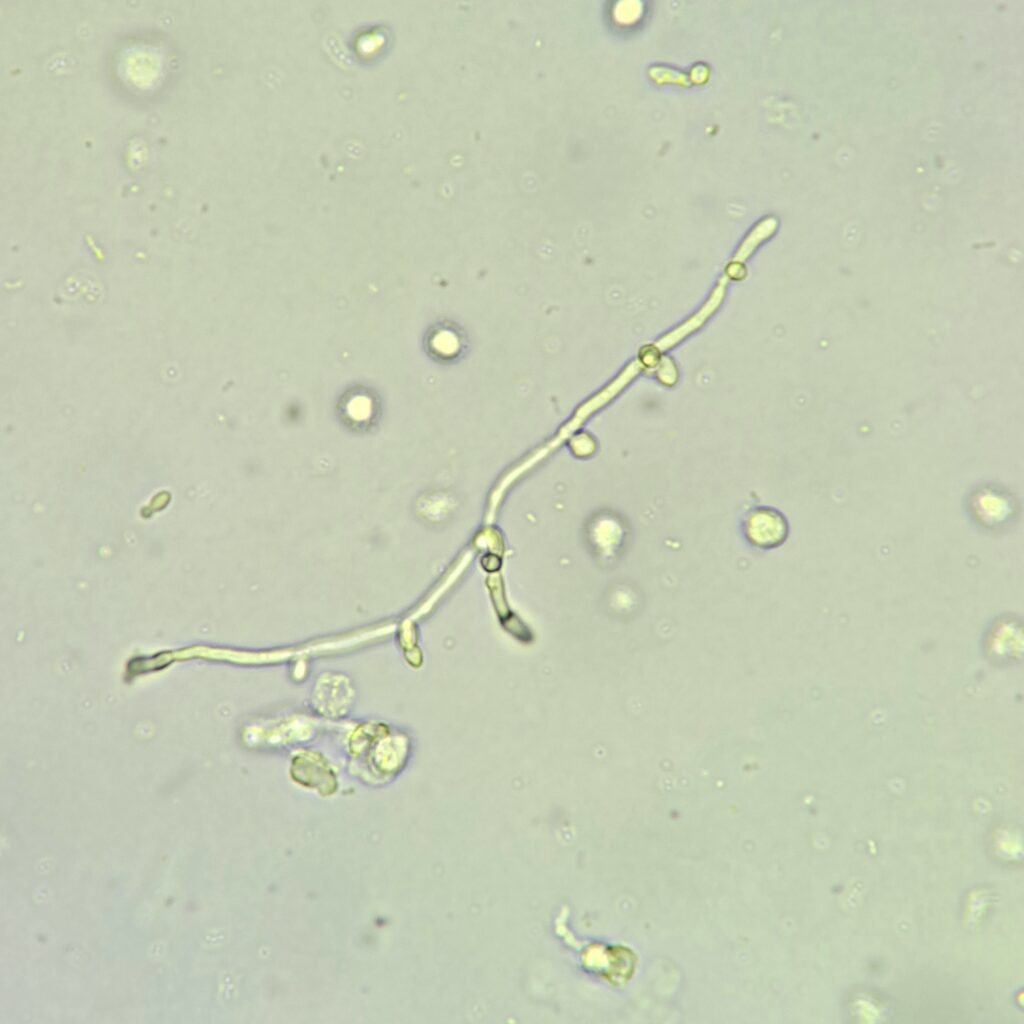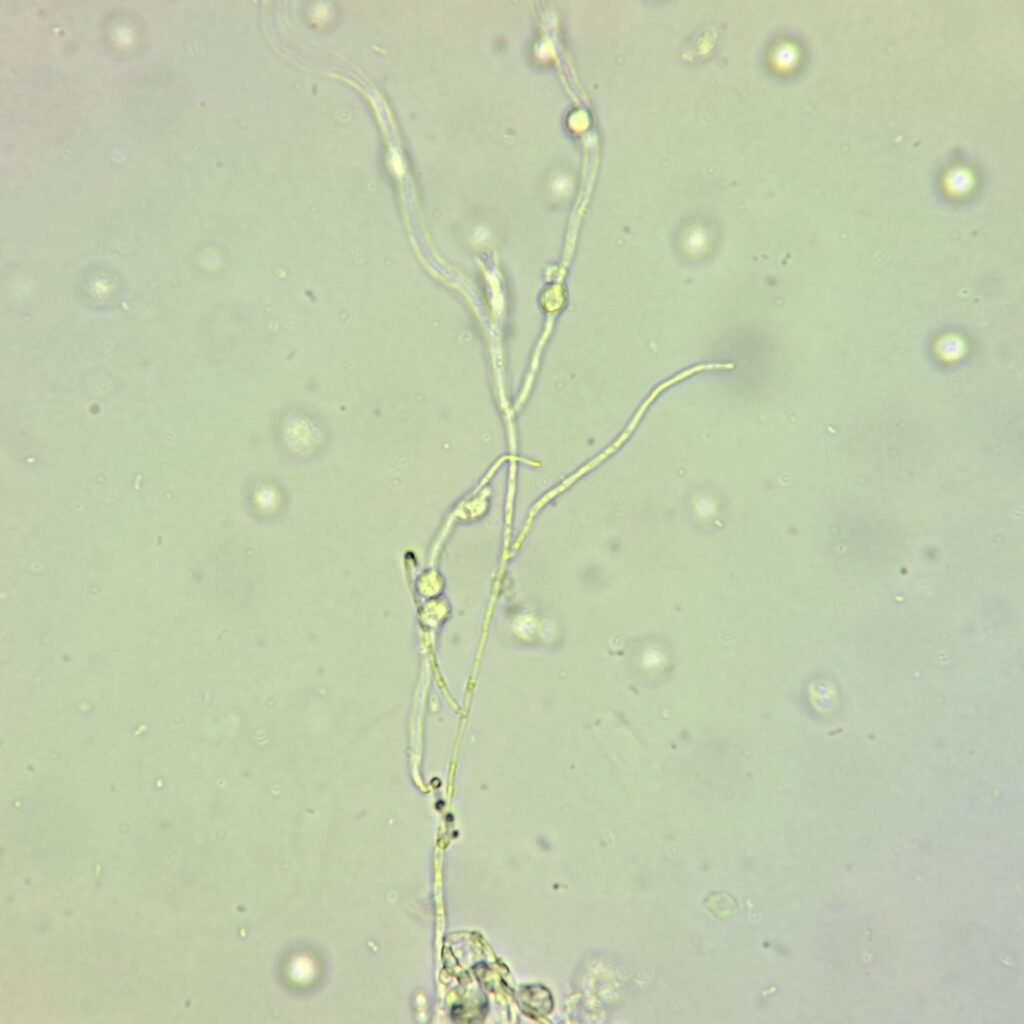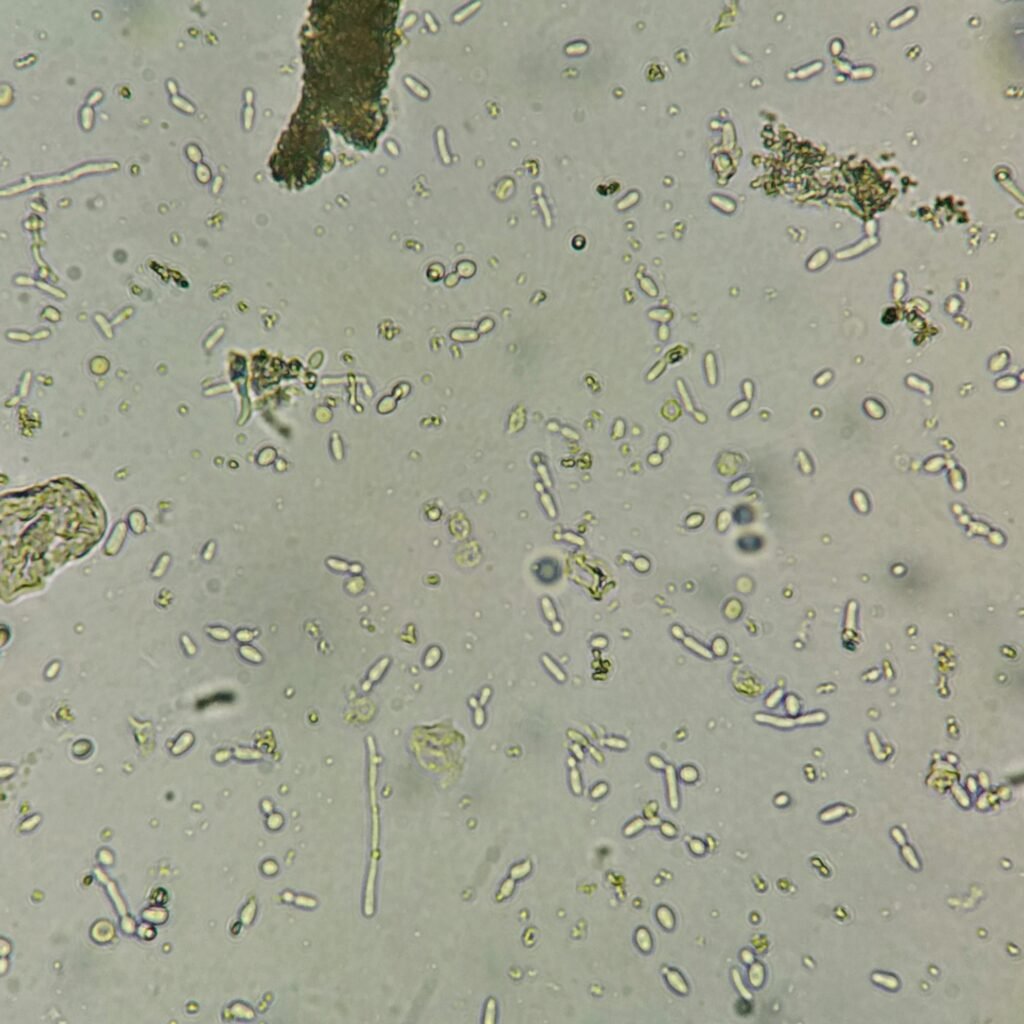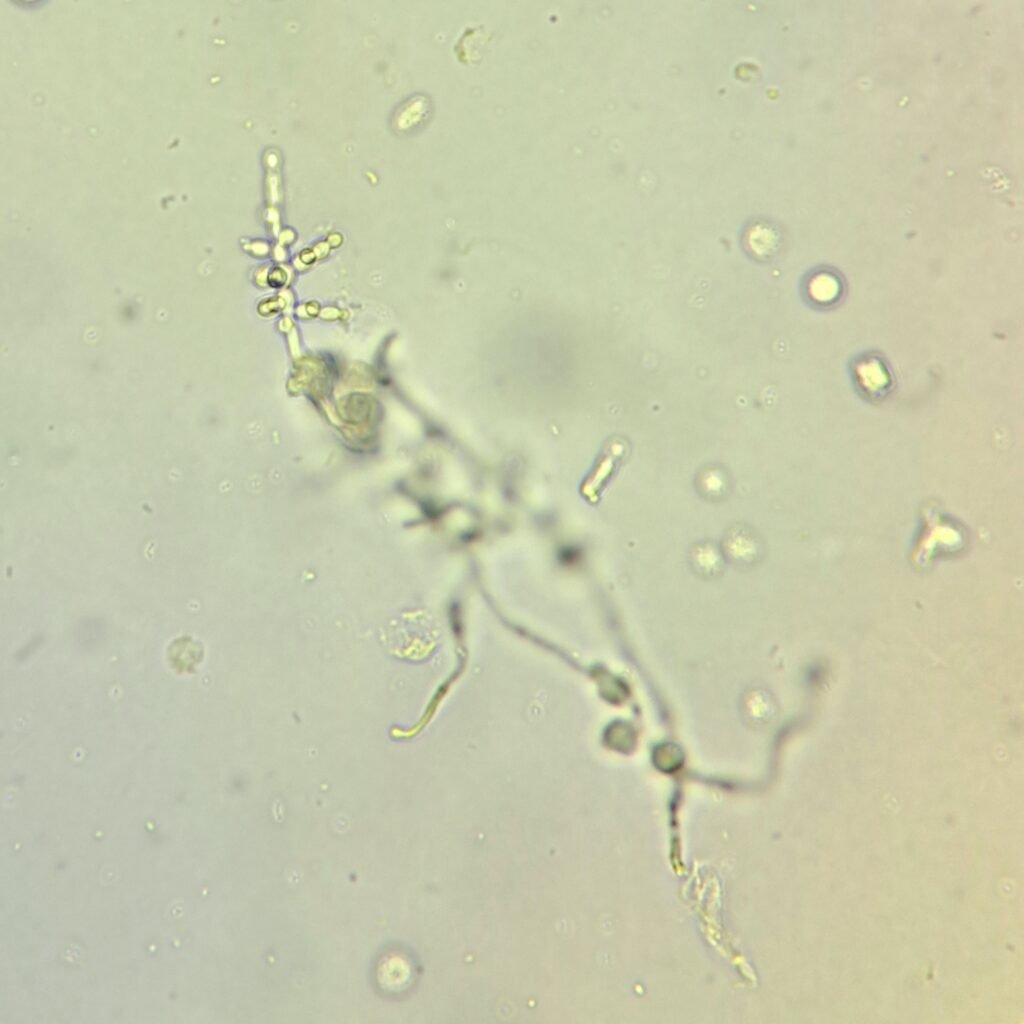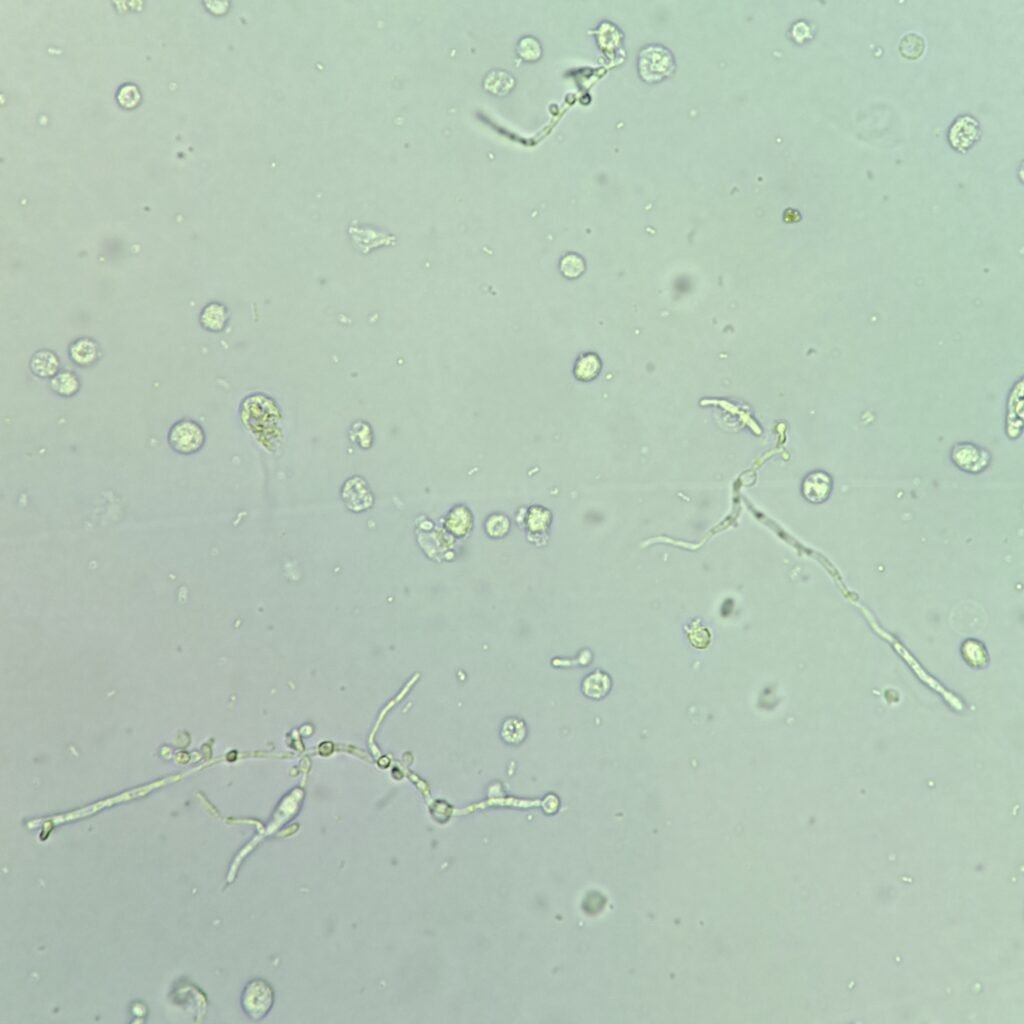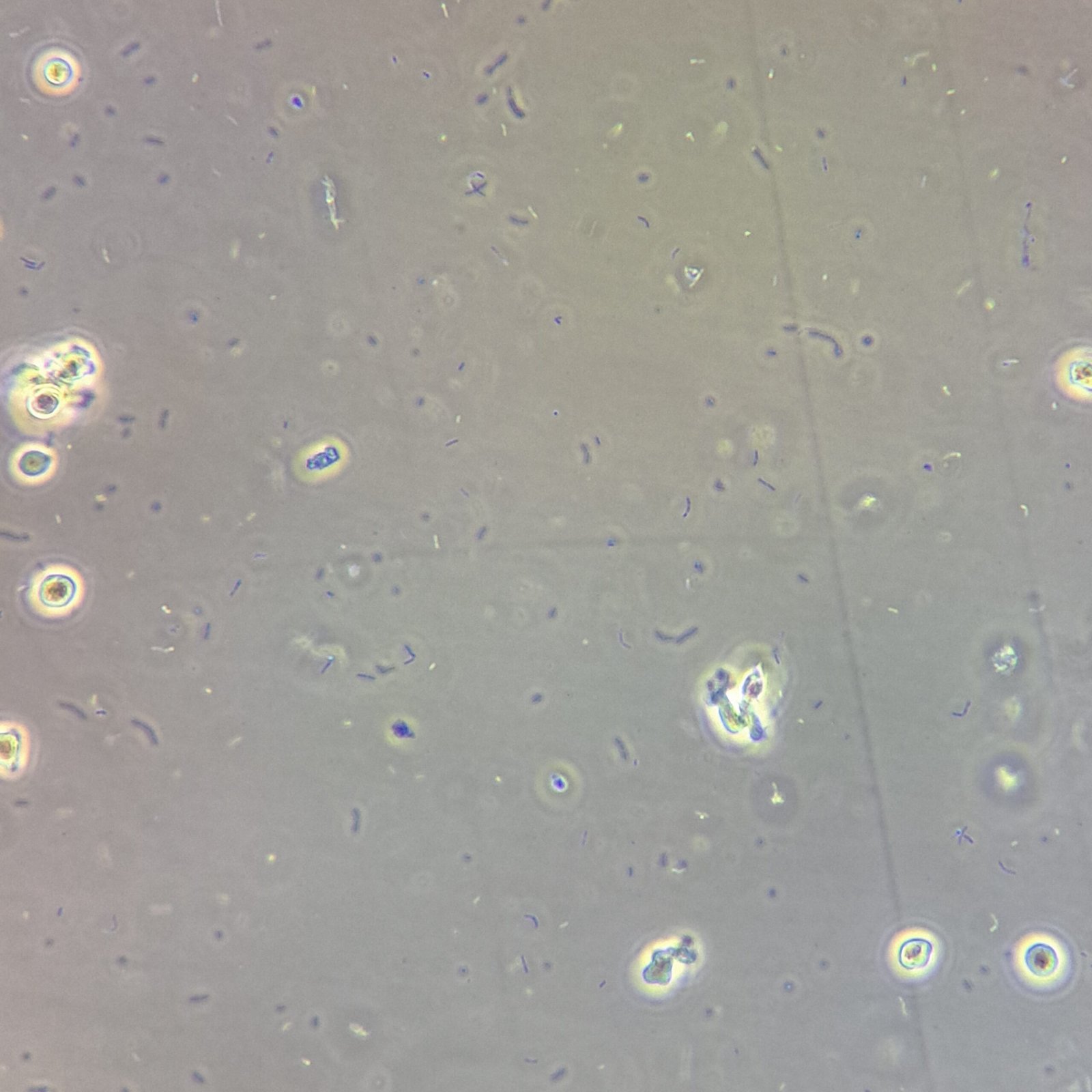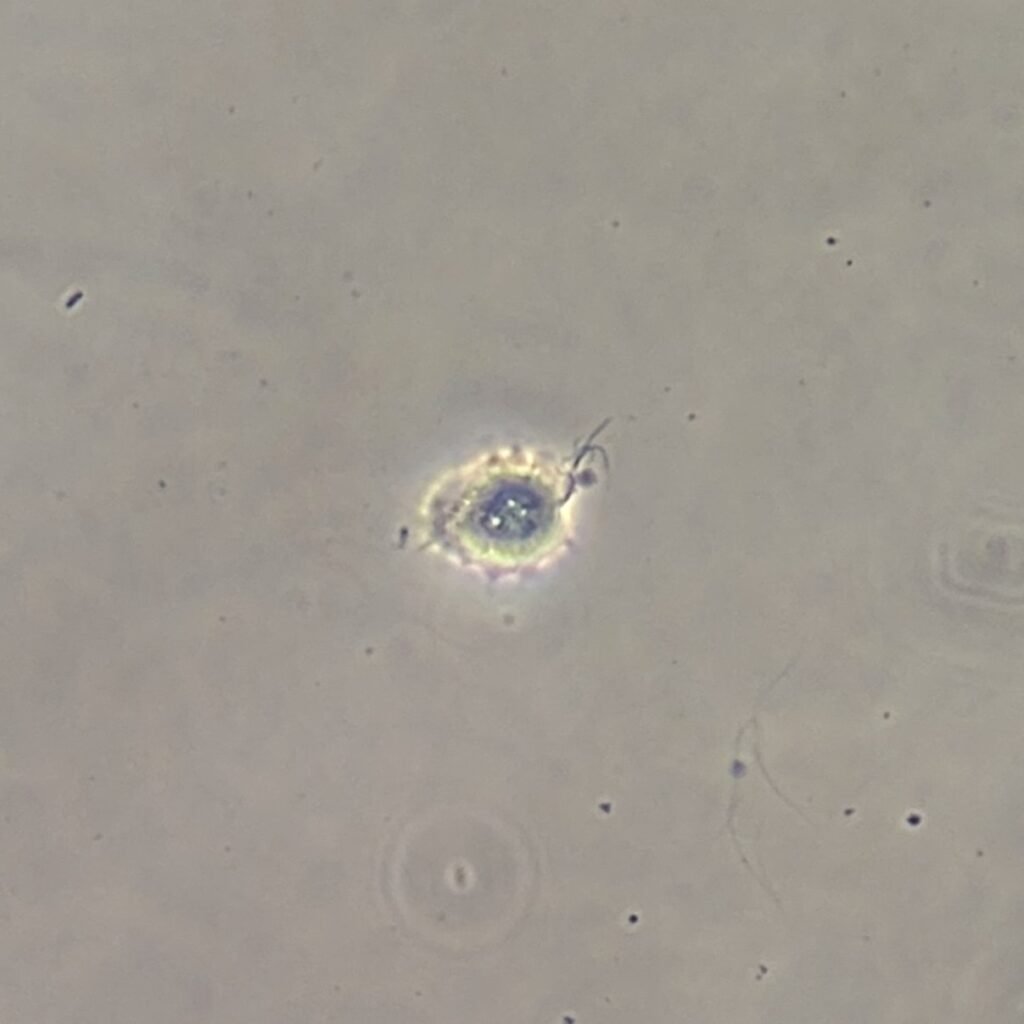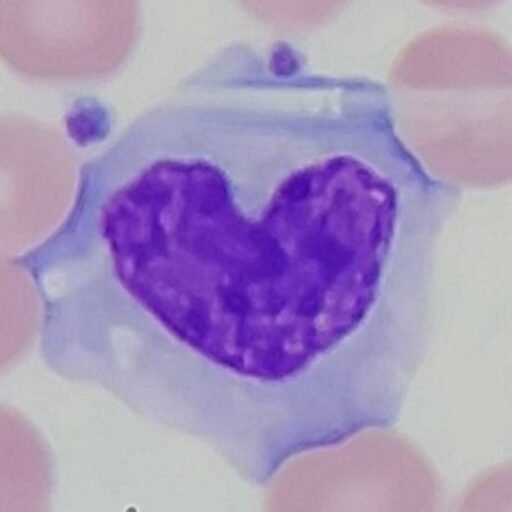
Yeast may be a contaminant. Pseudohyphae is more indicative of serious infection. It can cause urinary tract infections in patients who are susceptible, such as those with indwelling catheters, patients with diabetes mellitus, and those who are immunocompromised.
Appearance
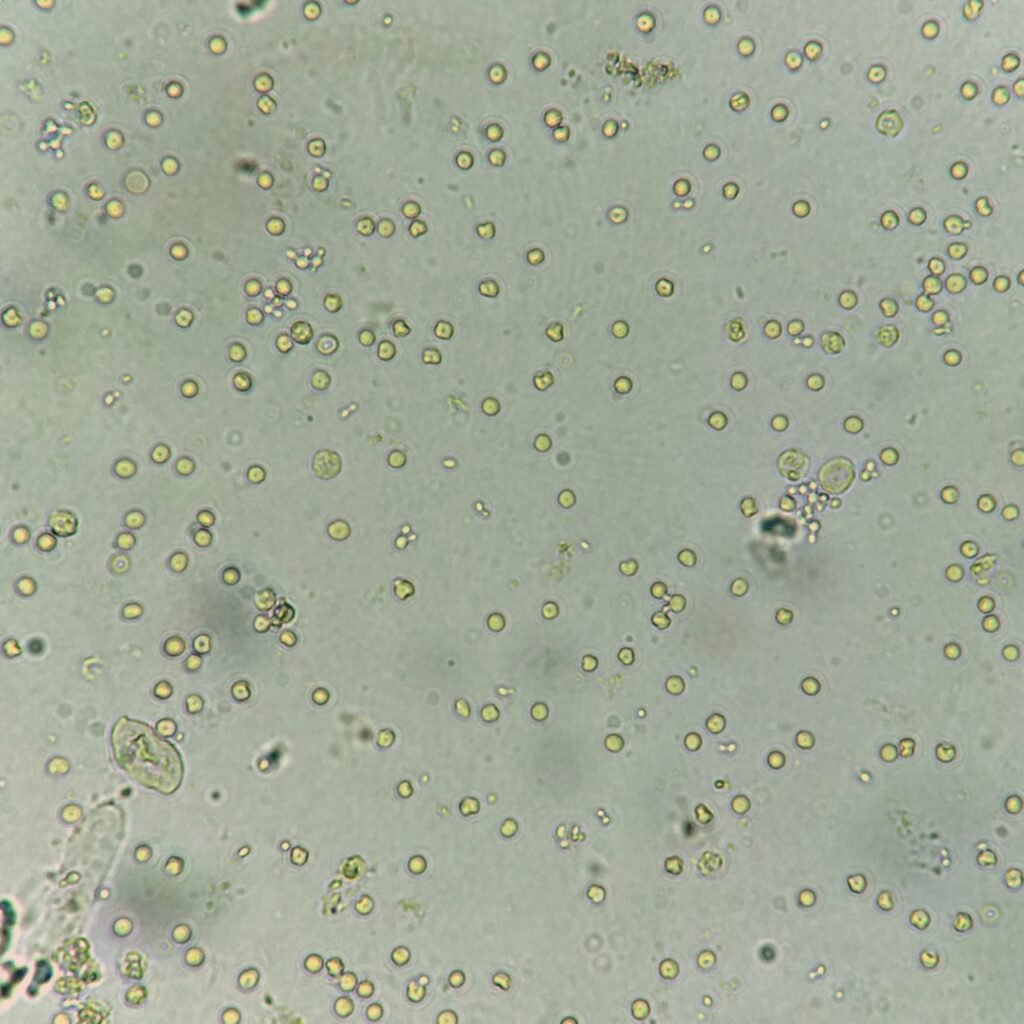
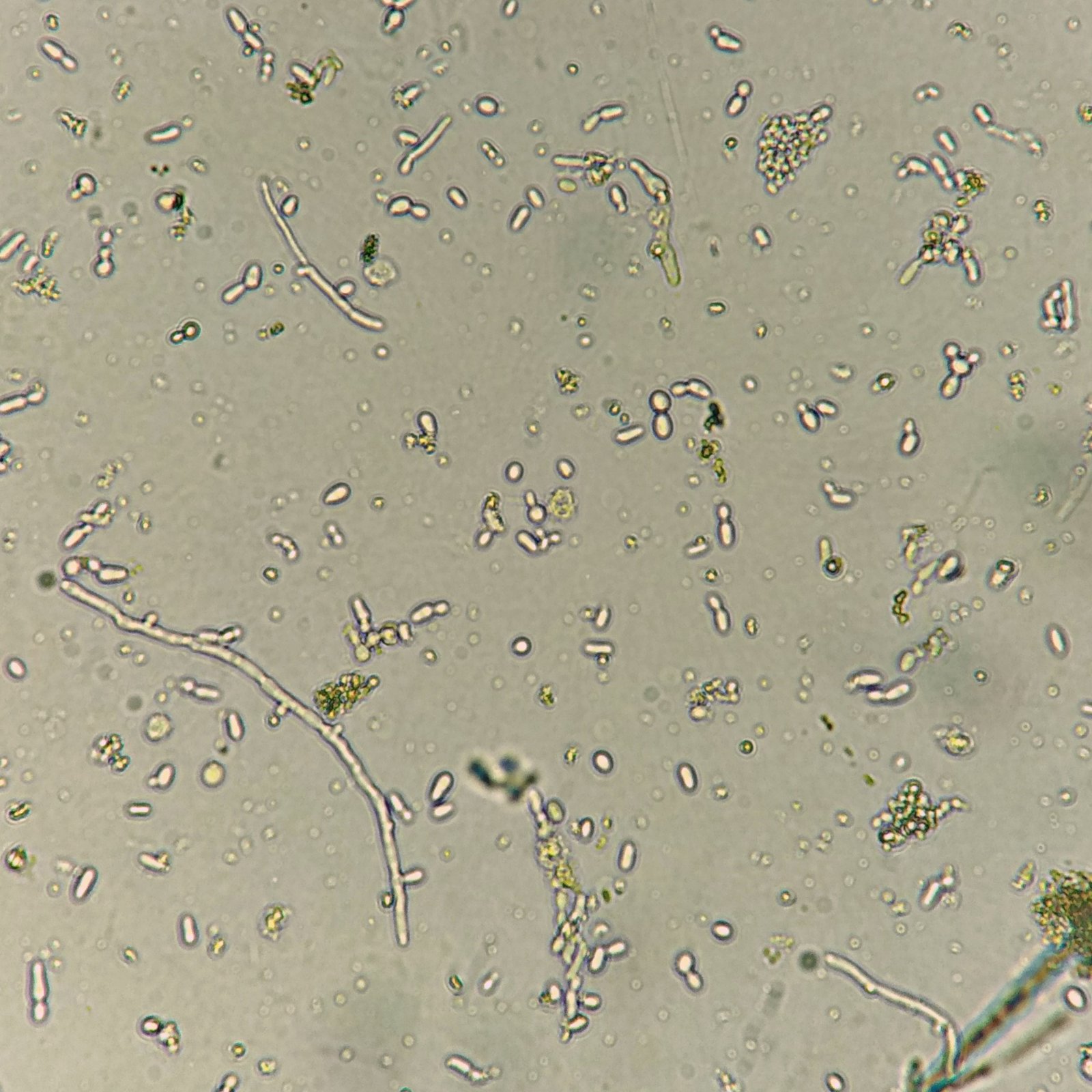
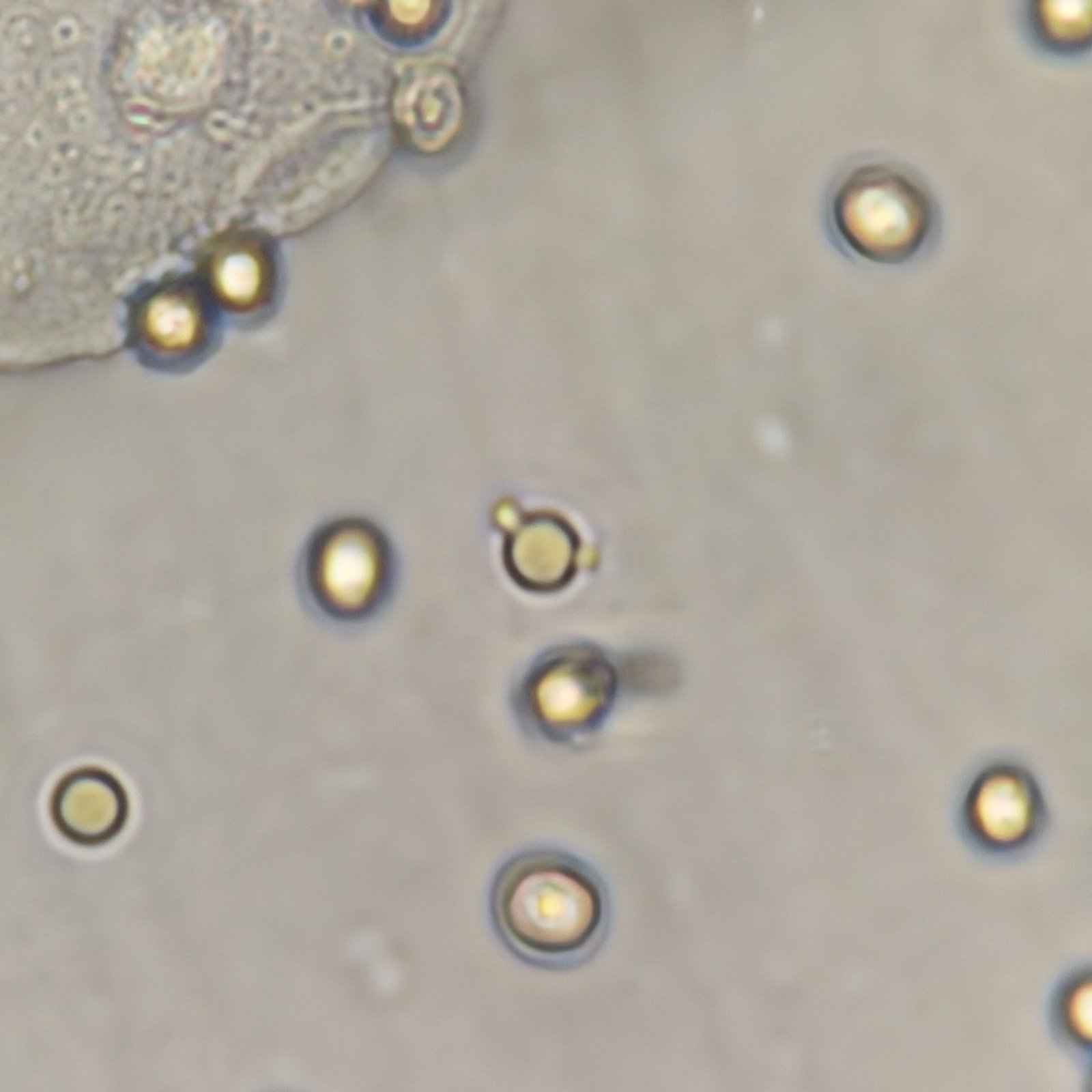
Yeast cells are highly refractile and usually appear as small ovoids which may have buds. This form can be mistaken for dysmorphic RBCs if not careful. Candida may form branching pseudohyphae and is the most common fungus found in urine.
Lookalikes
Dysmorphic red blood cells may be mistaken for budding yeast.
Gallery